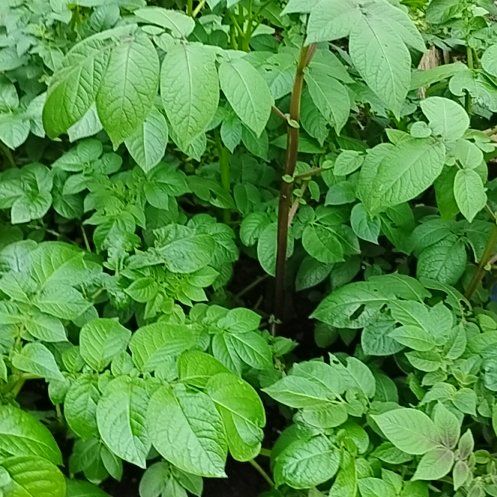
Potato

How to Fertilize Potato

Solanum tuberosum
Reviewed by Kiersten Rankel M.S.
Quick Answer
Work a balanced granular fertilizer (like 10-10-10) into the soil at planting, then side-dress with a nitrogen-rich feed every 3 to 4 weeks until the plants begin to flower. After flowering, stop feeding so the tubers can mature properly.

When Should I Start Feeding My Potato?

Potatoes are planted after the last frost, so your feeding schedule depends on when the ground is workable and soil temperatures reach at least 45 degrees F in your region.

US feeding regions map
Pacific Feb–Jul
Mountain May–Aug
Midwest Apr–Jul
Northeast Apr–Jul
Southeast Feb–Jun
Stay on top of plant care
Get seasonal reminders for watering and fertilizing — personalized for your plants.
Try Greg Free

How Often Should I Fertilize My Potato?

Apply your first dose at planting by mixing granular fertilizer into the soil or trench. This gives the seed potatoes a nutrient-rich start as they sprout.

Side-dress every 3 to 4 weeks once the plants are about 6 inches tall. Pull soil up around the stems (hilling) at the same time, which buries the fertilizer and encourages more tuber sites along the buried stem.

Stop feeding once the plants begin to flower or when the foliage starts to yellow and die back. Late-season nitrogen delays tuber maturation and can reduce storage quality.

Feeding Calendar
Spring (at planting)
Work balanced granular (10-10-10) into the soil at planting depth
Late Spring & Summer
Side-dress with nitrogen-rich fertilizer every 3–4 weeks while hilling
Early Fall
Stop feeding once plants flower or foliage yellows
Late Fall & Winter
No feeding (season is over for this annual crop)

What Is the Best Fertilizer for Potato?

Potatoes do best with a balanced or slightly phosphorus-forward granular fertilizer at planting, such as 10-10-10 or 5-10-10. Phosphorus supports strong root and tuber development early on, which sets the stage for a good harvest.

Once the plants are up and growing, switch to a nitrogen-rich side-dressing to fuel the leafy top growth that powers tuber formation. A 10-5-5 or similar high-nitrogen option works well for these mid-season feedings.

Avoid high-nitrogen fertilizer at planting, as it can push excessive vine growth at the expense of tubers. The goal is to front-load phosphorus and potassium, then add nitrogen steadily through the growing season.

Synthetic
Balanced water-soluble formula for the initial planting dose. Dissolve 1 tablespoon per gallon and drench the planting trench.
Pre-measured spikes with higher phosphorus for root and tuber development. Push 2 spikes into the soil per plant at planting.
Organic
Granular organic with beneficial soil microbes. Apply 1/2 cup per plant at planting and again at first hilling.
Liquid nitrogen source for mid-season side-dressing. Dilute per label and apply every 3 weeks after plants emerge.
Excellent phosphorus source to mix into the planting trench. Promotes tuber development and strong root systems.

How Do I Fertilize My Potato?

1
Prepare the planting trench
Dig a trench 4 to 6 inches deep. Sprinkle balanced granular fertilizer along the bottom and mix it lightly into the soil so it does not directly contact the seed potatoes.
2
Plant your seed potatoes
Place seed potato pieces cut-side down about 12 inches apart in the trench. Cover with 3 to 4 inches of soil. The fertilizer you mixed in will feed the roots as they develop.
3
Side-dress at first hilling
When plants are about 6 inches tall, sprinkle nitrogen-rich fertilizer in a band 4 to 6 inches from the stems. Hill soil up around the plants to cover the fertilizer and encourage more tubers.
4
Repeat every 3 to 4 weeks
Continue side-dressing and hilling through the growing season. Each round of hilling buries more stem, which means more potential tuber sites.
5
Stop at flowering
Once you see flowers (or the vines start to yellow), stop all feeding. The plant is now focused on maturing the tubers underground, and extra nitrogen at this stage reduces quality.

Got More Questions?

Can I use coffee grounds or compost on my Potatoes?
Compost is excellent for Potatoes and can be mixed into the soil at planting. Coffee grounds add only trace nitrogen and can attract slugs, which are a common potato pest. Use them sparingly if at all.
What happens if I over-fertilize my Potatoes?
Too much nitrogen produces enormous vines but small, watery tubers. The plants look impressively healthy above ground while underperforming below. If you suspect over-feeding, stop fertilizing and let the plants redirect energy to the tubers.
Should I fertilize container-grown Potatoes differently?
Container Potatoes need more frequent but lighter feeding because nutrients wash out faster with regular watering. Use half-strength liquid fertilizer weekly instead of full-strength granular every few weeks.
Do Potatoes need extra potassium?
Potassium helps with tuber quality and disease resistance. If your soil test shows low potassium, add a potassium-rich amendment like greensand or wood ash (sparingly) at planting time.
When should I stop fertilizing Potatoes?
Stop as soon as the plants flower or the foliage begins to yellow and die back. Late feeding delays tuber maturation and can cause hollow heart, where the center of the tuber develops an empty cavity.
Stay on top of plant care
Get seasonal reminders for watering and fertilizing — personalized for your plants.
Try Greg Free

About This Article

Kiersten Rankel M.S.
Botanical Data Lead at Greg · Plant Scientist
About the Author
Kiersten Rankel holds an M.S. in Ecology & Evolutionary Biology from Tulane University. A certified Louisiana Master Naturalist, she has over a decade of experience in science communication, with research spanning corals, cypress trees, marsh grasses, and more. At Greg, she curates species data and verifies care recommendations against botanical research.
See Kiersten Rankel's full background on LinkedIn.
Editorial Process
Fertilizer recommendations verified against Solanum tuberosum growth data from Greg's botanical database, cross-referenced with USDA hardiness zone data and published horticultural research.
1,514+ Greg users growing this plant
USDA hardiness zones 3a–10a