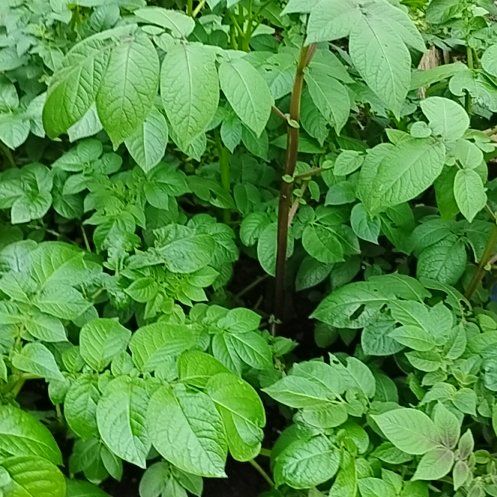
How to Water Potato Plants
Solanum tuberosum
Reviewed by Kiersten Rankel M.S.
Quick Answer
Water potato plants deeply every 2 to 4 days once they start flowering and the potatoes underground are sizing up. Before flowering, water every 4 to 6 days when the top inch of soil is dry — sprouts and young leafy plants need much less than a fruiting plant.
Stop watering 1 to 2 weeks before harvest so the skins toughen up. Potatoes harvested from soggy soil bruise easily and rot in storage.

Stay on top of plant care
Get seasonal reminders for watering and fertilizing — personalized for your plants.
How Often and How Much to Water
Adjust the sliders below for your pot size, light, and setting. The numbers assume loose well-draining soil and a setup with drainage.
Setting
Every
9days
Use
1cup
Average across the active season. See the phase chart below for how this shifts at flowering, harvest, and other stages.
Your Watering Rhythm Across the Season
Potato is an annual, so its water needs shift dramatically across a single growing season rather than across the year. Match your cadence to the growth phase the plant is in.
Just planted
Keep barely moist until sprouts emerge
Sprouts and leaves
Every — days
Flowering and growing potatoes
Every — days
Vines starting to yellow
Every — days
Last two weeks
Stop watering before harvest
How to Water Your Potato
Water at the base of the plants, slowly enough that the water soaks down to the potatoes rather than running off the surface. The steps below keep moisture even without flooding the stems.
1
Pour at the soil in the morning, not on the leaves. Wet leaves in warm weather invite fungus problems that can spread fast across the patch.
2
Soak slowly until the soil feels moist a few inches down — a quick spray runs off and never reaches the potatoes underground.
3
Mulch around the base of the plants with straw or grass clippings to slow evaporation and keep developing potatoes shaded.
Should You Water Your Potato Today?
Potato vines hide what is happening underground. Use the soil check, not the leaves, to decide whether today is a watering day.
Hold off
Soil at finger depth is cool and damp
Vines upright with no afternoon flagging
Mulch around the plants is dark and intact
Lower leaves full and lifted
Soil surface stays smooth with no cracks
Ready for water
Soil 4 inches down is dry and crumbly
Big lower leaves wilt by midday in mild weather
Soil surface has cracked open
Container or grow bag feels light
Stems lean sideways instead of standing upright
If Something Looks Off
Potatoes mostly fail underground before the vines show it. Match what you see above to what is happening at the tuber level before deciding what to fix.
Underwatered
Soil
Dry crumbly soil pulled from the stems
Stem
Vines lean and flag in afternoon heat
Leaves
Lower leaves yellow and crisp at the tips first
Pace
Lifts back up partially after a deep soak
Next steps
Soak the soil slowly with a watering wand or watering can until the soil is wet down to the level of the potatoes
Add 2 to 3 inches of fresh mulch around the plants
Resume an even watering rhythm. The next round of potatoes will be more uniform than the stressed batch
Overwatered
Soil
Stays dark and waterlogged for days, sometimes with a sour smell
Stem
Soft and blackening at the soil line, sometimes collapsing
Leaves
Yellowing from the base up with brown spots on lower leaves
Pace
Sudden collapse after a heavy rain or too much watering
Next steps
Stop watering until the top 3 inches dry out
Pull mulch back from the stems to expose the base and improve airflow
If you suspect rot, dig one potato from the edge. Soft mushy potatoes mean the rot has spread and the rest will not store
Harvest what is salvageable. Cure the firm potatoes in a dark airy spot before storing
Got More Questions?
How long should I wait to water after planting seed potatoes?
Water lightly right after planting to settle the soil around the seed pieces.
Then keep the soil just barely moist for the next 2 weeks until you see green sprouts above the soil. Soggy soil over un-sprouted seed pieces is the top reason for rot before emergence.
How often should I water before my potatoes start flowering?
Less than during fruiting. Once sprouts are up and the plants are pushing leaves, water every 4 to 6 days when the top inch of soil feels dry.
Keep moisture steady rather than swinging from bone-dry to soaked. Heavy watering before flowering pushes leafy growth at the expense of potatoes later.
How do I know when to stop watering before harvest?
Watch the leaves. When the vines yellow and fall over on their own, the potatoes have stopped growing.
Stop watering at that point and let the soil dry for 1 to 2 weeks before digging. Skins toughen during this drying time and the potatoes store much longer.
Can I water potatoes overhead with a sprinkler?
You can, but watering at the base of the plant is far better. Overhead water in warm humid weather sets up fungus problems that can wipe out the foliage and cut into your harvest.
If you only have a sprinkler, run it in the early morning so the leaves dry by midday.
Why are some of my potatoes hollow in the middle?
A hollow center inside a potato shows up when the plant grows fast, then slows, then surges again. Big swings in soil moisture are the usual cause.
Keep watering steady from flowering through harvest. Bigger varieties are more prone to it. Smaller varieties tend to form denser, fully-formed potatoes.
Do potatoes in grow bags need more water than in the ground?
Yes, often twice as much. Fabric bags drain well but they also dry out from the sides as well as the top.
Check a grow bag at finger depth daily once your potatoes are sizing up. A bag that has noticeably lightened in weight is ready for a slow soak from the top until water comes out the bottom.
My potato leaves have brown spots. Is that a watering issue?
Brown spots ringed with yellow are usually fungus problems made worse by wet leaves and high humidity.
Water at the soil line in the morning, not on the leaves, and remove infected leaves promptly. Mulch helps too by stopping splashback from the soil onto the lowest leaves.
Stay on top of plant care
Get seasonal reminders for watering and fertilizing — personalized for your plants.
About This Article

Kiersten Rankel M.S.
Botanical Data Lead at Greg · Plant Scientist
Editorial Process
Watering guidance verified against Solanum tuberosum growth data from Greg's botanical database, cross-referenced with USDA hardiness zone data and published horticultural research.
1,634+ Greg users growing this plant
USDA hardiness zones 3a–10a