
Northern Spinystar
Taxonomy

Escobaria vivipara var. borealis 'Album'
Escobaria
Cactaceae
Caryophyllales

How to care for Northern Spinystar
How often to water your Northern Spinystar

every 12
Northern Spinystar needs 0.5 cups of water every 12 when it doesn’t get direct sunlight and is potted in a 5" pot.
Use our water calculator to personalize watering recommendations to your environment or download Greg for more advanced recommendations for all of your plants.
Water 0.5 cups every
12
Finding light for Northern Spinystar in your home

a window
Northern Spinystar love being close to bright, sunny windows 😎.
Place it less than 1ft from a south-facing window to maximize the potential for growth.
Northern Spinystar does not tolerate low-light 🚫.
Select your region to see how the current weather in your area affects the placement of Northern Spinystar in your home 🏡.
How to fertilize Northern Spinystar

Most potting soils come with ample nutrients which plants use to produce new growth.
By the time your plant has depleted the nutrients in its soil it’s likely grown enough to need a larger pot anyway.
To replenish this plant's nutrients, repot your Northern Spinystar after it doubles in size or once a year—whichever comes first.
-
Is top heavy growth ok for a cactus? #CactusClique I don’t have a ton of cactus experience and Bub is grown from a little piece I found a few years ago. I may have lost track of it on my shelf and its top half seems so big now! It’s a low stakes plant for me so mostly out of curiosity, is it bad to grow like this? Is there a way to fix it? A way to prevent it? I also have no clue if the ID was right, since it was so little when I labeled it I just picked my best guess
-
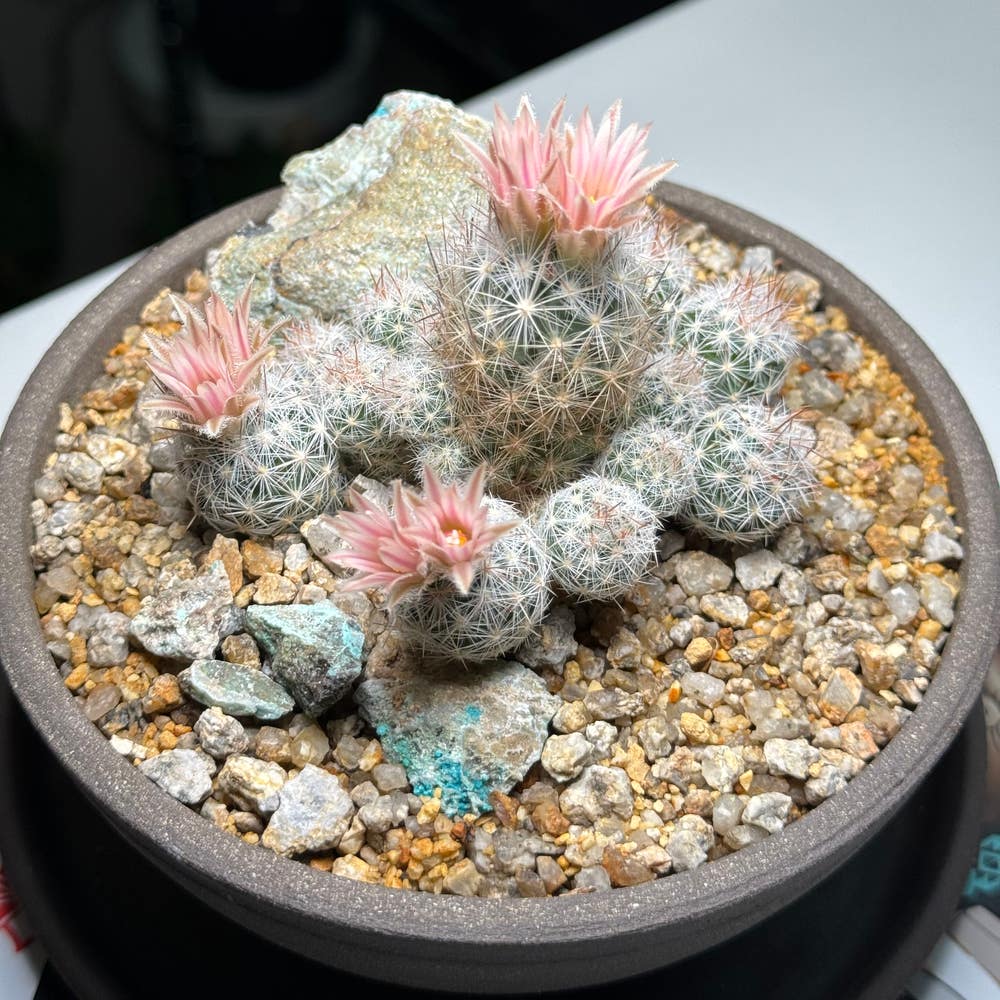
I was lucky enough to finally catch this escobaria in bloom! 🤘🙂↕️🤩 #HappyPlants #PlantsMakePeopleHappy #NewGrowth #PlantAddict #CactusClique #Cactus #Cacti #SucculentSquad #NewBlooms
-
This lady has finally began to bloom this year. Super stoked. I think we’ll see them fully open tomorrow. #HappyPlants #PlantAddict #FloweringPlants #GregGang #Cactus #CactusClique
-
Bets on saving this In a last hail Mary attempt at rescuing this overwatered cactus of unknown species (actually, can anyone recognize it? It used to be just one squat, spherical little boy), I have cut off the dead flesh and am attempting to let it callous over and replant. Never done this with a cactus before. Bets on if it will survive? Or has too much of it been consumed by rot? #cactus #rescueplants


Care Summary for Northern Spinystar
Northern Spinystar
 Greg recommends:
 Water
Water
0.5 cups every 12 days
 Placement
< 1ft from a window
 Nutrients
Repot after 2x growth
Based on the 4” pot your plant is in, and that it doesn’t get direct sunlight.
 Trending in your area

















 Similar to Northern Spinystar

✨ Discover rare plants

Black Monkey Thorn Tr…

Cleistocactus icosago…
Astroloba congesta

Hoya 'Memoria'

Aglaonema Spitfire

Pseudorphipsalis 'Blu…

Cereus peruvianus 'Pa…

Chandelier Plant

Caladium

Skeleton Key Pothos

Tuber Fleeceflower

Blue Moon Wisteria

Aglaonema 'Green Bowl'

Dinteranthus microspe…

Echeveria 'Joan Danie…

Pink Ruby Sedevaria
