
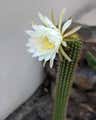
Epiphyllum 'Melon Whip'
Taxonomy

Epiphyllum 'Melon Whip'
Epiphyllum
Cactaceae
Caryophyllales

How to care for Epiphyllum 'Melon Whip'
How often to water your Epiphyllum 'Melon Whip'

every 12
Epiphyllum 'Melon Whip' needs 0.5 cups of water every 12 when it doesn’t get direct sunlight and is potted in a 5" pot.
Use our water calculator to personalize watering recommendations to your environment or download Greg for more advanced recommendations for all of your plants.
Water 0.5 cups every
12
Finding light for Epiphyllum 'Melon Whip' in your home

a window
Epiphyllum 'Melon Whip' love being close to bright, sunny windows 😎.
Place it less than 1ft from a south-facing window to maximize the potential for growth.
Epiphyllum 'Melon Whip' does not tolerate low-light 🚫.
Select your region to see how the current weather in your area affects the placement of Epiphyllum 'Melon Whip' in your home 🏡.
How to fertilize Epiphyllum 'Melon Whip'

Most potting soils come with ample nutrients which plants use to produce new growth.
By the time your plant has depleted the nutrients in its soil it’s likely grown enough to need a larger pot anyway.
To replenish this plant's nutrients, repot your Epiphyllum 'Melon Whip' after it doubles in size or once a year—whichever comes first.
-
How long should this cactus live in a large pot. Mine is 15 years old? #DutchmansPipe
-
Does anyone know what is causing this on my Orchid Cactus? #DutchmansPipe
-
What type of soil to transplant to #DutchmansPipe
-
OMG! It's first blooms ever! I'm even more in love!
-
I just bought this plant on clearance. Is there anything I can do to nurse it back to health other than sunlight and water? #DutchmansPipe
-
What kind of fertilizer is best for a Dutchman’s pipe cactus please #DutchmansPipe
-
So proud of this little one #happyplants #propagationstation
-
#HappyPlants #PlantAddict #PlantsMakePeopleHappy #NewGrowth #PlantTherapy #PlantCorner #DutchmansPipe Am I CRAZY … or is it just this Plant Pat’s Pipper going CRAZY ???? All this new growth…AND could this be a BLOOM??? 💫🤩💫. Check out the last photo !!! Let me know what you think!!! Should I start the Happy Bloom Dance💃🏻 ??? What the heck we are going to do it anyways !!!🎵🎷🎶🎷🎵🎷🎶🎷🎵🎷🎶🎷
-
What kind of fertilizer should I use for epiphyllum? #DutchmansPipe
-
#QueenOfTheNight Soooo a friend of mine gave me this, not even sure what to call it, cutting? Basically looks like a couple of sticks sitting in a pot lol. Any suggestions on how to care for this or to help it thrive? I have it inside because I don’t really have much access to space outside. Oh she also said if any of the leaves fall off, just stick them back into the dirt which I’ve done and now they look like some shriveled fried leaves sticking out of the dirt ha ha #PlantsMakePeopleHappy #HappyPlants #CactusClique #Cactus


Care Summary for Epiphyllum 'Melon Whip'
Epiphyllum 'Melon Whip'
 Greg recommends:
 Water
Water
0.5 cups every 12 days
 Placement
< 1ft from a window
 Nutrients
Repot after 2x growth
Based on the 4” pot your plant is in, and that it doesn’t get direct sunlight.
 Trending in your area














 Similar to Epiphyllum 'Melon Whip'

✨ Discover rare plants

White Apple Moth Orch…

Echeveria Arrow

Hoya sipitangensis

Thelocactus macdowell…

Anastasia Weeping Fig

Crassula 'Purple Drag…

Munstead Lavender

Hoya kalimantan

Vatricania guentheri

Pine Cone Plant

Royal Flush Split Rock

Rhipsalis clavata

Lavandula Pedunculata

Phalaenopsis schiller…

Haworthia emelyae com…

Raphionacme flanaganii

Echeveria Esther
