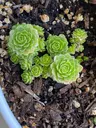
Dypsis procera
Taxonomy

Dypsis procera
Dypsis
Arecaceae
Arecales

How to care for Dypsis procera
How often to water your Dypsis procera

every 9
Dypsis procera needs 0.5 cups of water every 9 when it doesn’t get direct sunlight and is potted in a 5" pot.
Use our water calculator to personalize watering recommendations to your environment or download Greg for more advanced recommendations for all of your plants.
Water 0.5 cups every
9
Finding light for Dypsis procera in your home

a window
Dypsis procera love being close to bright, sunny windows 😎.
Place it less than 1ft from a south-facing window to maximize the potential for growth.
Dypsis procera does not tolerate low-light 🚫.
Select your region to see how the current weather in your area affects the placement of Dypsis procera in your home 🏡.
How to fertilize Dypsis procera

Most potting soils come with ample nutrients which plants use to produce new growth.
By the time your plant has depleted the nutrients in its soil it’s likely grown enough to need a larger pot anyway.
To replenish this plant's nutrients, repot your Dypsis procera after it doubles in size or once a year—whichever comes first.
-
Palm tree help?? I've had this palm tree for about 5 years now, I'm not sure the exact species- it's some exotic varietal I inherited from my uncle- and it's been rapidly declining over the last 6 months or so (check the plant profile for older photos). I'm trying to figure out what's wrong with it and how to save it; I'm leaning towards a pest of some kind, but I don't know if there's also a fungal issue or disease or something going on. Any advice would be greatly appreciated, I'd really like to save it since it's sentimental. #happyplants #plantsmakepeoplehappy #plantaddict #planttherapy #plantcorner #beforeandafter #pestcontrol #rareplants #tropicalplants #help
-
Does anyone know what this is? It’s growing on my Areca Palm. I don’t know if it’s good or not and what to do about it.
-
My Areca Palm is due for fertilizer but doesn’t need water for a few days. Should I water anyway to soak it in? #ArecaPalm
-
The Areca Palm is drying out #ArecaPalm the plant was green lush when I got it. Now it’s drying out. I have put in grow light as well. I repotted it few weeks ago as it had too much water. I water it on schedule as it is showing in the Greg app.
-
Areca palm Will Erika shed leaves? Oh and do they have fruit? I read that on Google.
-
My Areca Palm, Planty, has this new moldy growth. Can anyone identify/give treatment suggestions?
-
Anyone know how to keep leaves from turning yellow? I have 4 that fully turned brown on my plant. #ArecaPalm
-
Over watered soil was like mud so I went to replant it in new soil and the root looks dark brown at the stem is it dying? #ArecaPalm
-
James Dean, our office Palm, is really struggling. Last Friday I elevated it on top of the file cabinet to reach more light. I am hoping the yellowing is due to lack of light But the branches are also folding in half as if they aren’t strong enough to support the tops? Any tips? Greg says water 3/4 cup every 10 days, this doesn’t seem like enough for a tropical plant. Please advise Thanks yall!
-
My golden palm is developing black spots on its stem, also leaves turning yellow what remedy for it, can someone guide me #ArecaPalm


Care Summary for Dypsis procera
Dypsis procera
 Greg recommends:
 Water
Water
0.5 cups every 9 days
 Placement
< 1ft from a window
 Nutrients
Repot after 2x growth
Based on the 4” pot your plant is in, and that it doesn’t get direct sunlight.
 Trending in your area











 Similar to Dypsis procera
✨ Discover rare plants

Hoya pottsii 'Khao Ya…

Begonia lubbersii

Sedum 'White Diamond'

Milky Widow's Thrill

Hoya kalimantan

Scotch Moss

Graptopetalum 'Marqui…

Hoya sipitangensis

Red Mistletoe Cactus

Variegated Arrowhead …

Peperomia 'Harmony's …

Vatricania guentheri

Pink Ruby Sedevaria

Chinese Evergreen 'Ga…

Miss All-American Bea…

Cereus peruvianus 'Pa…

Begonia hydrocotylifo…