
Daphne 'Kilmeston Beauty'
Taxonomy

Daphne odora 'Kilmeston Beauty'
Daphne
Thymelaeaceae
Malvales

How to care for Daphne 'Kilmeston Beauty'
How often to water your Daphne 'Kilmeston Beauty'

every 9
Daphne 'Kilmeston Beauty' needs 0.5 cups of water every 9 when it doesn’t get direct sunlight and is potted in a 5" pot.
Use our water calculator to personalize watering recommendations to your environment or download Greg for more advanced recommendations for all of your plants.
Water 0.5 cups every
9
Finding light for Daphne 'Kilmeston Beauty' in your home

a window
Daphne 'Kilmeston Beauty' love being close to bright, sunny windows 😎.
Place it less than 1ft from a south-facing window to maximize the potential for growth.
Daphne 'Kilmeston Beauty' does not tolerate low-light 🚫.
Select your region to see how the current weather in your area affects the placement of Daphne 'Kilmeston Beauty' in your home 🏡.
How to fertilize Daphne 'Kilmeston Beauty'

Most potting soils come with ample nutrients which plants use to produce new growth.
By the time your plant has depleted the nutrients in its soil it’s likely grown enough to need a larger pot anyway.
To replenish this plant's nutrients, repot your Daphne 'Kilmeston Beauty' after it doubles in size or once a year—whichever comes first.
-
Sunburn Maybe? I have a Daphne x transatlantica ‘Eternal Fragrance’ shrub on my property. It’s beautiful and fragrant and not had any problems for the last 3 years…Now it’s starting to get patches of browning leaves and no flowers. I’m not totally sure what’s causing this. I’m terribly new to plant parenthood so any advice is appreciated. 🙂 #Daphne
-
New plant potted two days ago and one of the leaves has turned black/wilted? #FragrantWinterDaphne I have a Daphne Odora and one leaf has turned black and wilted I purchased two days ago and watered today as the soil was dry due to hot temp (25 degrees C) It's in a azalea mix with peat moss, bark and mulch. Terracotta pot with mesh over the drain hole to prevent blockage I had a perfume princess which just died as I think it got overwatered from recent rain and root rot killed it. This has had around 5 hours sunlight and now in the shade on porch Easterly direction
-
Dramatic Leaf Droop #FragrantWinterDaphne #notsohappyplant It went from perky from the garden center, to miserable in front of my window. Can I save her?


Care Summary for Daphne 'Kilmeston Beauty'
Daphne 'Kilmeston Beauty'
 Greg recommends:
 Water
Water
0.5 cups every 9 days
 Placement
< 1ft from a window
 Nutrients
Repot after 2x growth
Based on the 4” pot your plant is in, and that it doesn’t get direct sunlight.
 Trending in your area











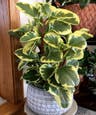
 Similar to Daphne 'Kilmeston Beauty'
✨ Discover rare plants
Carolina Reaper

Fagraea ceilanica

Anthurium Fingers
Astroloba congesta

Picasso's Paintbrush

Sedum 'White Diamond'

Raphionacme flanaganii

Lithops

Chinese Evergreen 'Ga…

Echeveria Arrow

Echeveria Esther

Chinese Evergreen 'Go…

Thelocactus macdowell…

Rainbow Echeveria

Orange Lipstick Plant

Hoya pottsii 'Khao Ya…

Cereus peruvianus 'Pa…
