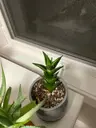
Islander Pepper
Taxonomy

Capsicum annuum 'Islander'
Capsicum
Solanaceae
Solanales

How to care for Islander Pepper
How often to water your Islander Pepper

every 9
Islander Pepper needs 0.5 cups of water every 9 when it doesn’t get direct sunlight and is potted in a 5" pot.
Use our water calculator to personalize watering recommendations to your environment or download Greg for more advanced recommendations for all of your plants.
Water 0.5 cups every
9
Finding light for Islander Pepper in your home

a window
Islander Pepper love being close to bright, sunny windows 😎.
Place it less than 1ft from a south-facing window to maximize the potential for growth.
Islander Pepper does not tolerate low-light 🚫.
Select your region to see how the current weather in your area affects the placement of Islander Pepper in your home 🏡.
How to fertilize Islander Pepper

Most potting soils come with ample nutrients which plants use to produce new growth.
By the time your plant has depleted the nutrients in its soil it’s likely grown enough to need a larger pot anyway.
To replenish this plant's nutrients, repot your Islander Pepper after it doubles in size or once a year—whichever comes first.
-
Hand pollination tips? I'm about to get some more flowers and I don't wanna mess this up! Last time I got flowers on my pepper plant all the flowers dropped, I did try hand pollinating with a makeup brush but maybe I didn't do it enough or somethin? Any tips?
-
Bell Pepper My bell pepper plant seems to look sad. I planted it from seed and it is growing, but always looks just sad lol. It says it needs full sun, it has afternoon sun from the west. I’m wondering if the sun is too intense for it? It has been in the 90s to 109 degrees here. Low humidity, about 35-40%. Any advice? Thanks!
-
HELP! SHE'S COVERED IN THEM 😩😩 Jezebel has mealybugs! 😭😭😭 I just doused her with Sevin. I know, I hate chemicals, too, and I try to avoid them at all costs, but I'm afraid the natural and organic stuff just isn't going to work in this scenario. 😣😩 And Sevin has pretty much every type of mealybug known to man on its list of targeted insects. I have separated her as best I can from everybody else, but I have a tiny property. I guess the one saving grace is that all of my plants are in pots so it's easy to move (most of) them around. The only things I can't really move on my own (due to back issues) are my tomatoes and okra, as they are all in 17+ gallon containers. I went over everybody else with a fine toothed comb and they were all clean (so far as I can tell), with the exception of Sol, my moonflower, but she only had one and I killed that sucker faster than you can say "dead bug." 😑😑 The leaf it was on had been touching Jezebel, so I'm going to attribute the cross contamination to that. Is there anything else I can do? Do you think the Sevin will work?? Or has the infestation already gone too far? I don't want to lose her 😭 I love my Spicy Janes—they raise pizza to a WHOLE new level! @Alucen @FunLentenrose37 @Idplantthat @Malagueña @MariansOasis @princesspitstop @SillyPlantGirl @debbiedo @Ms.Persnickety @planthoe40 @HolyLacealoe @Succulent_Soul #pestcontrol #happyplants #plantsmakepeoplehappy #plantaddict #thewateringhole
-
How big are my peppers supposed to get? #Capsicum
-
How do I know when to transplant #Capsicum
-
Hi everyone, i am growing pepper seedlings, they are starting to germinate and grow, but some are coming out with yellowy leaves, what could be the issue and how do I fix it? #Capsicum
-
This is crazy my pepper plant is thriving they are one of the easiest plant to grow!
-
Why are the leaf tips are turning black? #Capsicum
-
One "mini" pepper..... #Capsicum Now that I have one Pepper the edges of the leaves seem to be burnt. Im so very new. Not sure why.
-
An anyone help with my bell pepper I don’t know what to do

Care Summary for Islander Pepper
Islander Pepper
 Greg recommends:
 Water
Water
0.5 cups every 9 days
 Placement
< 1ft from a window
 Nutrients
Repot after 2x growth
Based on the 4” pot your plant is in, and that it doesn’t get direct sunlight.
 Trending in your area




 Similar to Islander Pepper


✨ Discover rare plants

Euphorbia

Echeveria 'Joan Danie…

Raphionacme flanaganii

Tillandsia caerulea A…

Chinese Evergreen 'Go…
Hoya crassipetiolata

Scindapsus pictus 'Si…
Skeleton Key Pothos

Black Monkey Thorn Tr…

Kudu Lily

Cereus peruvianus 'Pa…

Electric Blue Gecko

Blue Moon Wisteria
Crassula 'Calico Kitt…

Croton Nervia

Philodendron eximium

Kilimanjaro Plant