


Bristly Bellflower
Also known as
Campanula capitata, Campanula cephalaria, Campanula cephalaria cardiophylla, Campanula cephalaria macrophylla, Campanula cephalaria ovaliphylla, Campanula cephalaria polyanthemos, Campanula cerviana, Campanula cervicaria albiflora, Campanula cervicaria capitata, Campanula cervicaria dalmatica, Campanula cervicaria lingulata, Campanula cervicaria longifolia, Campanula cervicaria oblongifolia, Campanula dalmatica, Campanula echiifolia, Campanula glomerata cervicaria, Campanula ligulata, Campanula ligulata publ and Campanula longifolia
Taxonomy

Campanula cervicaria
Campanula
Campanulaceae
Asterales

How to care for Bristly Bellflower
How often to water your Bristly Bellflower

every 9
Bristly Bellflower needs 0.5 cups of water every 9 when it doesn’t get direct sunlight and is potted in a 5" pot.
Use our water calculator to personalize watering recommendations to your environment or download Greg for more advanced recommendations for all of your plants.

Water 0.5 cups every
9
Finding light for Bristly Bellflower in your home

a window
Bristly Bellflower love being close to bright, sunny windows 😎.
Place it less than 1ft from a south-facing window to maximize the potential for growth.
Bristly Bellflower does not tolerate low-light 🚫.
Select your region to see how the current weather in your area affects the placement of Bristly Bellflower in your home 🏡.
How to fertilize Bristly Bellflower

Most potting soils come with ample nutrients which plants use to produce new growth.
By the time your plant has depleted the nutrients in its soil it’s likely grown enough to need a larger pot anyway.
To replenish this plant's nutrients, repot your Bristly Bellflower after it doubles in size or once a year—whichever comes first.
-
Why did your flower leaves suddenly dry up and get too much sun? #CanterburyBells
-
How can I save it? #PeachLeafBellflower
-
I have no idea Is this lil guy going to die off like a tulip or will I have foliage all year? If it dies off Can I keep it in the house or should I plant or should I throw it in the compost?
-
Why did Trader Joe’s fail me? I broke rules. I didn’t check the roots until after my trip. When I came home, all the little flowers had shriveled 😔. This is what I found strangling the roots. This stuff was tough. I also gave her new soil. Do you think Laverne will recover? 🤞🥺 #PlantsMakePeopleHappy
-
💗
-
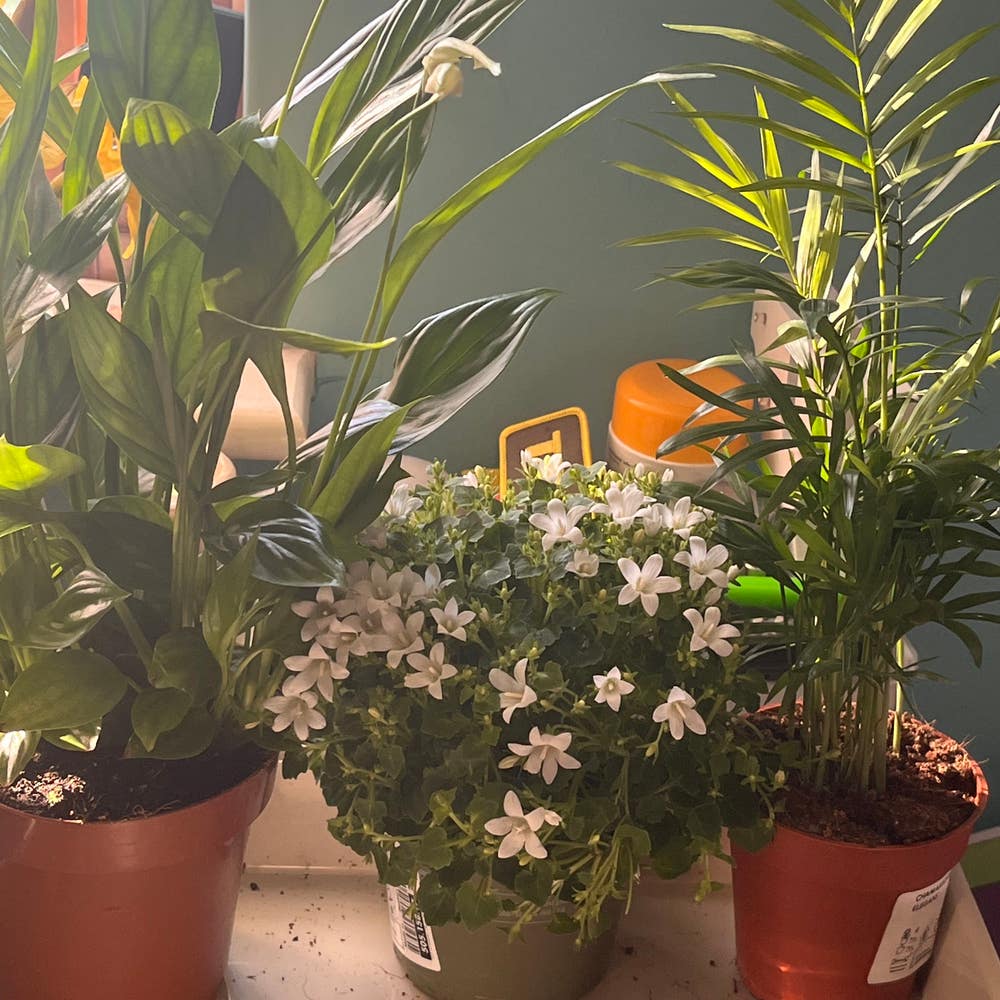
Nightmare campanula ! Hiya, wonder if anyone can tell me where I’m going wrong with my indoor campanula? It’s placed in pretty good sunlight, currently being watered every 5-6 days. I’ve struggled to find a water schedule as it dropped all of its flowers within weeks of purchase and I’m really confused what the problem is? Lately the leaves are looking a bit miserable too. Is it overwatered or too close to sunlight?? (Attached is before and after)

Care Summary for Bristly Bellflower

Bristly Bellflower
 Greg recommends:
 Water
Water
0.5 cups every 9 days
 Placement
< 1ft from a window
 Nutrients
Repot after 2x growth
Based on the 4” pot your plant is in, and that it doesn’t get direct sunlight.
 Trending in your area
















 Similar to Bristly Bellflower

✨ Discover rare plants

Haworthia emelyae com…

Graptoveria 'Douglas …

Chinese Evergreen 'Go…

Thelocactus macdowell…

Cereus peruvianus 'Pa…

Pseudorphipsalis 'Blu…

Fernleaf Lavendar

Ceropegia simoneae

Hoya fitchii

Cleistocactus icosago…

Carolina Reaper

Tuber Fleeceflower

Fagraea ceilanica

Begonia hydrocotylifo…

Munstead Lavender

Sedeveria 'Blue Elf'
