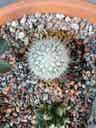
Green-Flowered Milkweed
About Green-Flowered Milkweed
Green-Flowered Milkweed is a super rare houseplant 🌿 that needs regular watering to thrive. They do best in long-lasting, direct light ☀️ and should be less than 1 foot from a window.
Green-Flowered Milkweed likes soil that is good at retaining moisture. Your plant shouldn't need added fertilizers if you repot each time it doubles in size.
⚠️ Green-Flowered Milkweed is extremely dangerous if consumed. If you, a family member, or a pet has ingested any amount of plant material contact Poison Control, US (800) 222-1222, or your veterinarian immediately. These plants are not recommended for homes with children, cats, or dogs.
Taxonomy

Asclepias asperula
Asclepias
Apocynaceae
Gentianales
Also known as
green-flowered milkweed and spider antelope horns

How to care for Green-Flowered Milkweed
How often to water your Green-Flowered Milkweed

every 9
Green-Flowered Milkweed needs 0.5 cups of water every 9 when it doesn’t get direct sunlight and is potted in a 5" pot.
Use our water calculator to personalize watering recommendations to your environment or download Greg for more advanced recommendations for all of your plants.

Water 0.5 cups every
9
Finding light for Green-Flowered Milkweed in your home

a window
Green-Flowered Milkweed love being close to bright, sunny windows 😎.
Place it less than 1ft from a south-facing window to maximize the potential for growth.
Green-Flowered Milkweed does not tolerate low-light 🚫.
Select your region to see how the current weather in your area affects the placement of Green-Flowered Milkweed in your home 🏡.
How to fertilize Green-Flowered Milkweed

Most potting soils come with ample nutrients which plants use to produce new growth.
By the time your plant has depleted the nutrients in its soil it’s likely grown enough to need a larger pot anyway.
To replenish this plant's nutrients, repot your Green-Flowered Milkweed after it doubles in size or once a year—whichever comes first.
-
What’s up with my Butterfly Milkweed? Is it sick or is it just normal stuff that happens in the fall. My first time growing one. NC Area 7 #pollinatorgarden #pollinatorfriendly #OutdoorGrowing
-
If a lantern fly eats the scarlet milkweed, will it die?
-
Small brown spots on leaves #SwampMilkweed
-
how often does it flower
-
My plant arrived looking pretty sick. Bottom leaves falling off. Any tips?
-
Help save my milkweed ! 😢 Hi there! I transplanted my milkweed from a nursery into my flower bed about 5 days ago. Since then it has been very up and down of looking normal to shriveled up like in the photos. Today it is very limp and I am worried about its survival. I read that I could be over watering or under watering. For context I am in south Texas with high heat and this is a full sun location. I appreciate any and all advice.
-
What type of caterpillar is this? #SwampMilkweed
-
What happening to my plant. Leaves are falling
-
I finally see small white small catipillers eating holes in the leaves of my plants. How can I control that? #Asclepias
-
Good evening, Something is putting holes in some of the leaves on my plant. They are planted outside. Can anyone tell me how to treat the problem? Thanks #Asclepias

Care Summary for Green-Flowered Milkweed

Green-Flowered Milkweed
 Greg recommends:
 Water
Water
0.5 cups every 9 days
 Placement
< 1ft from a window
 Nutrients
Repot after 2x growth
Based on the 4” pot your plant is in, and that it doesn’t get direct sunlight.