
Ardisia samarensis
Taxonomy

Ardisia samarensis
Ardisia
Primulaceae
Ericales

How to care for Ardisia samarensis
How often to water your Ardisia samarensis

every 9
Ardisia samarensis needs 0.5 cups of water every 9 when it doesn’t get direct sunlight and is potted in a 5" pot.
Use our water calculator to personalize watering recommendations to your environment or download Greg for more advanced recommendations for all of your plants.
Water 0.5 cups every
9
Finding light for Ardisia samarensis in your home

a window
Ardisia samarensis may have difficulty thriving, and will drop leaves 🍃, without ample sunlight.
Place it less than 3 feet from a south-facing window to maximize the potential for growth.
Select your region to see how the current weather in your area affects the placement of Ardisia samarensis in your home 🏡.
How to fertilize Ardisia samarensis

Most potting soils come with ample nutrients which plants use to produce new growth.
By the time your plant has depleted the nutrients in its soil it’s likely grown enough to need a larger pot anyway.
To replenish this plant's nutrients, repot your Ardisia samarensis after it doubles in size or once a year—whichever comes first.
-
Can shoebutton be replant #ShoebuttonArdisia
-
Look at this beautiful growth on my shoebutton! I haven’t even had it a week and there is already this new growth!
-
Have any of you seen or have this plant? Ok so I received this plant from a cutting and it did super good in their house but now it looks like this yellowing leafs and sad structure any help?
-
Tips of the leaves are turning brown, but rest of leaves feel healthy— what can I do?? #ChristmasBerry
-
Shoe Button Question When does a Shoe Button produce flowers? Mine is at least a year old but I see no indication that it might.
-
@SunnyAmber17 My coworker is the best! She gifted me with two beautiful plants this morning. My addiction of plants is growing because of her.
-
sad plant for some reason timmy seems ro always be sad. i usually place him less than a foot away from the window, is this a good distance? why does he always seem so sad? #ShoebuttonArdisia
-
I received a garden pot as a gift and have no idea what this plant is. Any ideas?

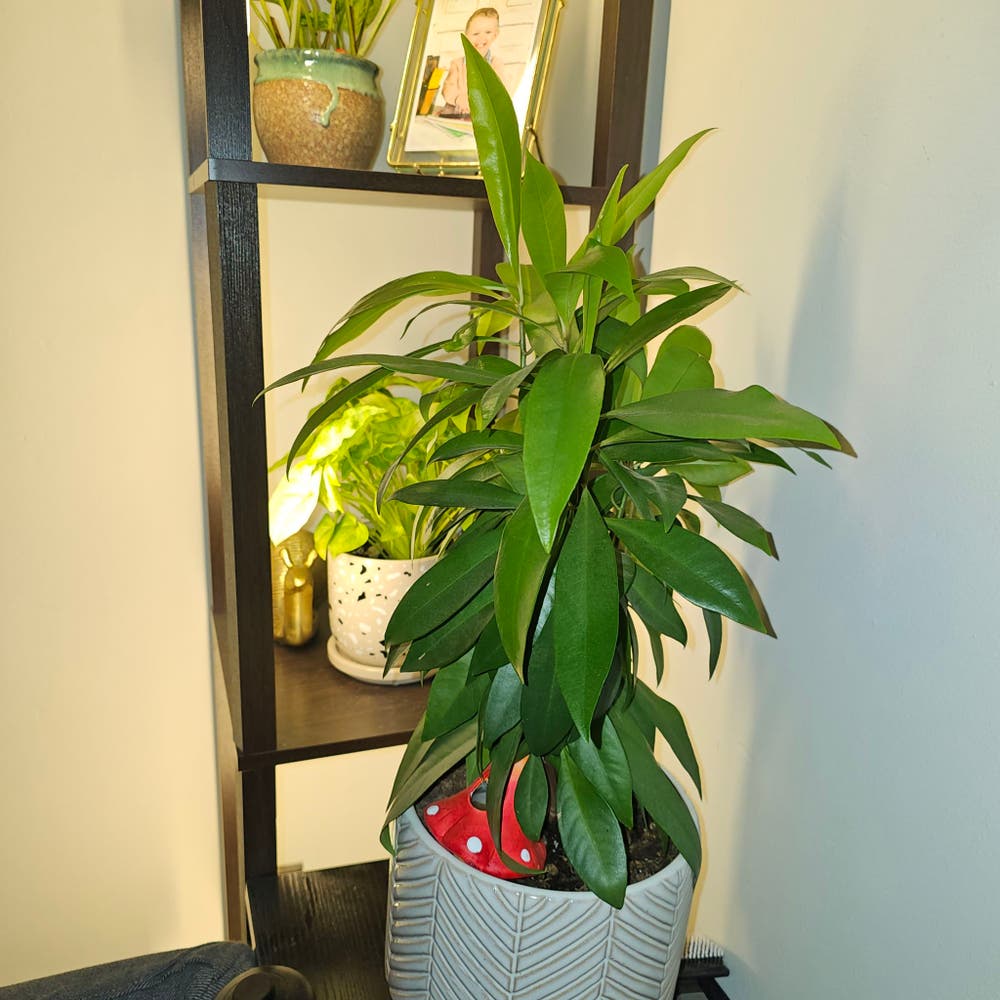

Care Summary for Ardisia samarensis
Ardisia samarensis
 Greg recommends:
 Water
Water
0.5 cups every 9 days
 Placement
< 3ft from a window
 Nutrients
Repot after 2x growth
Based on the 4” pot your plant is in, and that it doesn’t get direct sunlight.
 Trending in your area








 Similar to Ardisia samarensis
✨ Discover rare plants

Miss All-American Bea…

Bonsai Crassula

Blue Moon Wisteria

Euphorbia

Variegated Arrowhead …

Sedum 'White Diamond'
Hoya crassipetiolata
Carolina Reaper

Scotch Moss

Tuber Fleeceflower
Hoya 'Memoria'

Sarcochilus fitzgeral…

Phalaenopsis schiller…

Chinese Evergreen 'Go…

Parrot Pitcher Plant
Skeleton Key Pothos

Maroon Pitcher Plant
