
Chamisson's Aphelandra
Taxonomy

Aphelandra chamissoniana
Aphelandra
Acanthaceae
Lamiales

How to care for Chamisson's Aphelandra
How often to water your Chamisson's Aphelandra

every 9
Chamisson's Aphelandra needs 0.5 cups of water every 9 when it doesn’t get direct sunlight and is potted in a 5" pot.
Use our water calculator to personalize watering recommendations to your environment or download Greg for more advanced recommendations for all of your plants.
Water 0.5 cups every
9
Finding light for Chamisson's Aphelandra in your home

a window
Chamisson's Aphelandra may have difficulty thriving, and will drop leaves 🍃, without ample sunlight.
Place it less than 3 feet from a south-facing window to maximize the potential for growth.
Select your region to see how the current weather in your area affects the placement of Chamisson's Aphelandra in your home 🏡.
How to fertilize Chamisson's Aphelandra

Most potting soils come with ample nutrients which plants use to produce new growth.
By the time your plant has depleted the nutrients in its soil it’s likely grown enough to need a larger pot anyway.
To replenish this plant's nutrients, repot your Chamisson's Aphelandra after it doubles in size or once a year—whichever comes first.
-
Why are the tips on my plant browning? I had 2 leaves fall off before repotting and thought it was from overwatering, but can low humidity/dryness cause this too? #ZebraPlant
-
What are these white things?! I’m freaking out! I saw these in the water reservoir of my zebra plant! What are they? My plant is now outside sitting in time out and I’m thoroughly washing the pot!!!
-
Does anyone know why my Zebra plant is turning brown on the tips? #ZebraPlant
-
First new plant in a while! My mom gave us this random plant as a gift but she looks good! Anything I should know from your personal experience with these fellas? I got them in a southern facing window BUT under other plants so it should be getting mostly filtered sunlight not a full blast. #ZebraPlant #NewPlants
-
Plant mature (purchased from a greenhouse
-
It’s been already 9 month since it stopped growing. The leaves are drying one by one no matter what I do 😭 #ZebraPlant
-
what do I do with this guy now? #ZebraPlant
-
My New Baby! I swear I was only going to Home Depot to look at pots & this baby just followed me out of there so I took it home 🤗💗 now to think of a name 🥹 wish me luck! #PlantAddict #PlantsMakePeopleHappy #PlantTherapy #PlantCorner #PlantLove #TheThread #PlantHaul
-
I have brown spots on my Zebra what can I do? #ZebraPlant
-
Why is it drooping like this? It was watered and only ever drooped when it’s needed water. #ZebraPlant


Care Summary for Chamisson's Aphelandra
Chamisson's Aphelandra
 Greg recommends:
 Water
Water
0.5 cups every 9 days
 Placement
< 3ft from a window
 Nutrients
Repot after 2x growth
Based on the 4” pot your plant is in, and that it doesn’t get direct sunlight.
 Trending in your area








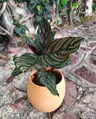

 Similar to Chamisson's Aphelandra
✨ Discover rare plants
Phalaenopsis schiller…

Vatricania guentheri

Aglaonema 'Green Bowl'

Sedeveria 'Blue Elf'

Treasure Flower
Carolina Reaper

Ceropegia simoneae

Anthurium 'Fantasy Lo…

Echeveria Arrow

Royal Flush Split Rock

Hoya fitchii

Rhipsalis clavata

Betel

Ruby Ball

Large Leaf Elephant B…

Crassula 'Calico Kitt…

Black Monkey Thorn Tr…
