Why Are My Madagascar Physic Nut Leaves Droopy?
Jatropha mahafalensis
By the Greg Editorial Team
Apr 25, 2024•3 min read
This article was created with the help of AI so we can cover more plants for you. May contain errors. See one? Report it here.
Perk up your Physic Nut's sad leaves 🍂 by decoding their distress signals and mastering plant care! 🌟
- 🌱 Overwatering? Yellow leaves and soggy soil are telltale signs.
- 💧 Underwatering? Look for wilted leaves and dry soil.
- 🌡️ Consistent environment with steady temps and light prevents droopiness.
Spotting the Signs of Distress
💦 Recognizing Overwatering
Yellow leaves and soggy soil are your Madagascar Physic Nut's way of saying it's had more than its fill. If the leaves are falling off at a mere touch, it's time to reassess your watering habits.
🏜️ Identifying Underwatering
When the leaves of your plant look as sad as a wilted lettuce leaf and the soil is as dry as a bone, it's a clear SOS for hydration. A pot that feels lighter than your last grocery bag is another hint that it's time to water.
🚰 Poor Drainage Symptoms
If your plant's pot feels like a swamp and the soil clings to your fingers with desperation, you've got a drainage drama on your hands. Roots that are more brown and mushy than a healthy snack are a sign of root rot due to waterlogged conditions.
🌞 Environmental Stress Indicators
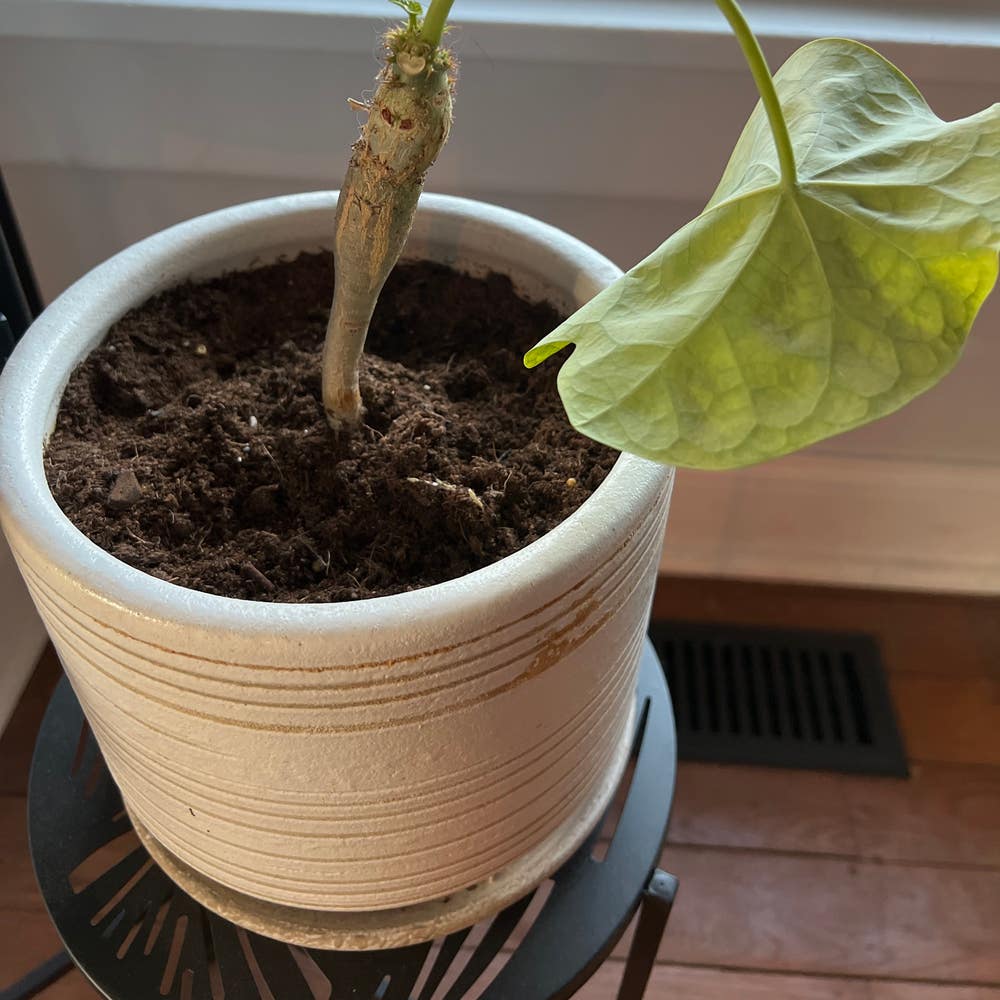
Leaves drooping like they've heard disappointing news could be a sign of environmental stress. Look out for temperature swings and inconsistent lighting, which can throw your plant's mood out of whack.
Turning the Tide on Droopiness
💧 Fine-Tuning Your Watering Technique
Watering your Madagascar Physic Nut is a balancing act. The goal is to hit that sweet spot where the soil is neither the Sahara Desert nor a swamp. Check the soil before you water; if the top inch is dry, it's time to hydrate. Use room-temperature water to avoid shocking the roots and always water at the base to keep the foliage dry.
🌱 Soil and Drainage Makeover
Drainage is your plant's lifeline. Ensure your pot has drainage holes and consider mixing in perlite or pumice with your soil to increase aeration. A well-draining soil mix is like a good mattress—supportive but breathable. Keep tabs on the soil's moisture level; it should feel like a wrung-out sponge, not a drenched towel.
🌿 Crafting the Perfect Environment
Your Madagascar Physic Nut craves a consistent environment. Aim for steady temperatures and bright, indirect sunlight. Too much heat or light? You might need to up the watering ante. Humidity should be like your favorite background music—there, but not overwhelming. A gentle breeze, from a fan or open window, can prevent the air from stagnating. Remember, the plant's vibe trumps the calendar—observe and adjust as needed.
Pro Tips to Keep Leaves Perky
💧 Watering Wisdom
Crafting a schedule that's just right for watering is key. Stick to a routine that adapts to the seasons—more water in the summer heat, less during the winter chill. Use the finger test; if the top inch of soil feels dry, it's time to quench your plant's thirst.
🌱 Soil Vigilance
Regular checks and tweaks are crucial for soil success. Mix in grit or perlite to improve drainage and organic matter to feed your plant. A terracotta pot can help wick away excess moisture, keeping roots snug and preventing overwatering.
🌿 Environmental Harmony
Consistency in the plant's environment promotes leaf cheer. Avoid placing your Madagascar Physic Nut in drafty areas or in direct sunlight, which can stress the leaves. Maintain a steady temperature and humidity level to keep your plant's environment as stable as possible.
⚠️ Safety First
This content is for general information and may contain errors, omissions, or outdated details. It is not medical, veterinary advice, or an endorsement of therapeutic claims.
Always consult a qualified healthcare professional before using any plant as food, medicine, or supplement.
Never eat any plant (or feed one to pets) without confirming its identity with at least two trusted sources.
If you suspect poisoning, call Poison Control (800) 222-1222, the Pet Poison Helpline (800) 213-6680, or your local emergency service immediately.
Spotted an error? Please report it here.
Ensure your Madagascar Physic Nut thrives with perfectly balanced watering ⚖️ using Greg's custom reminders based on your plant's unique needs.