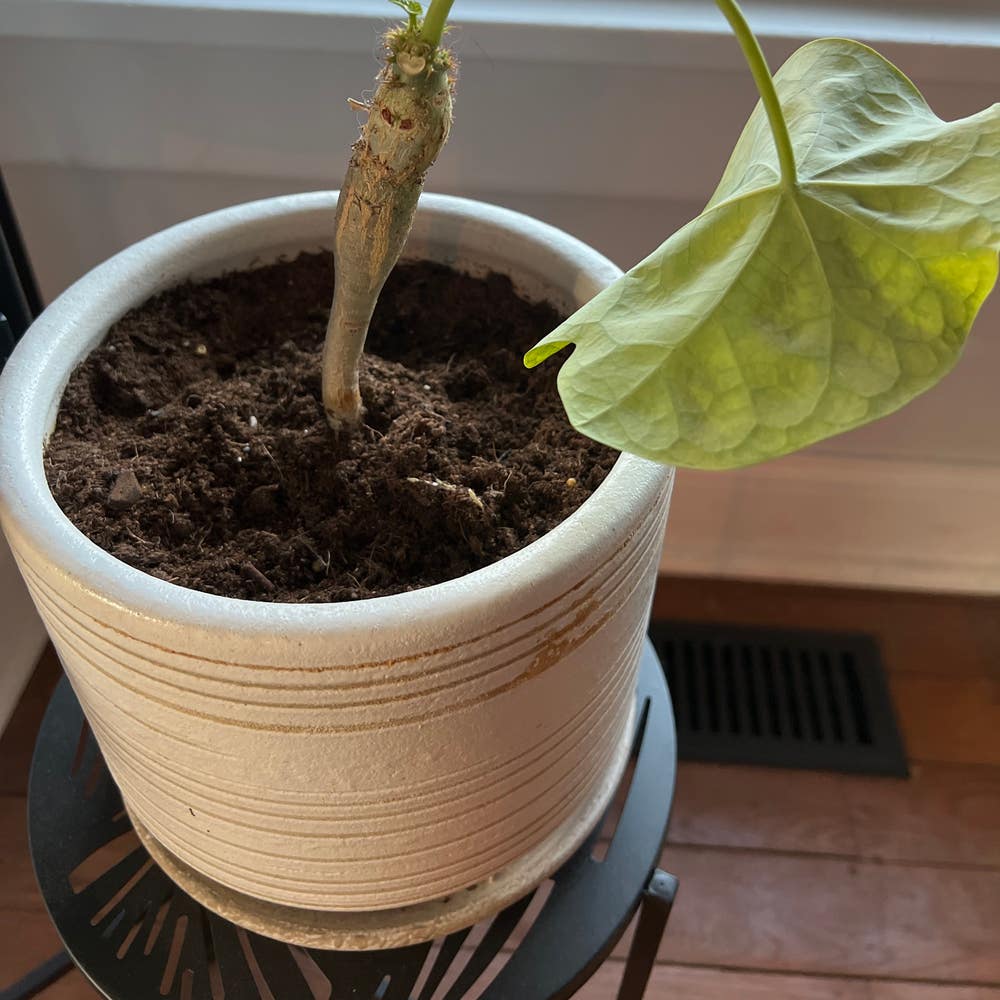
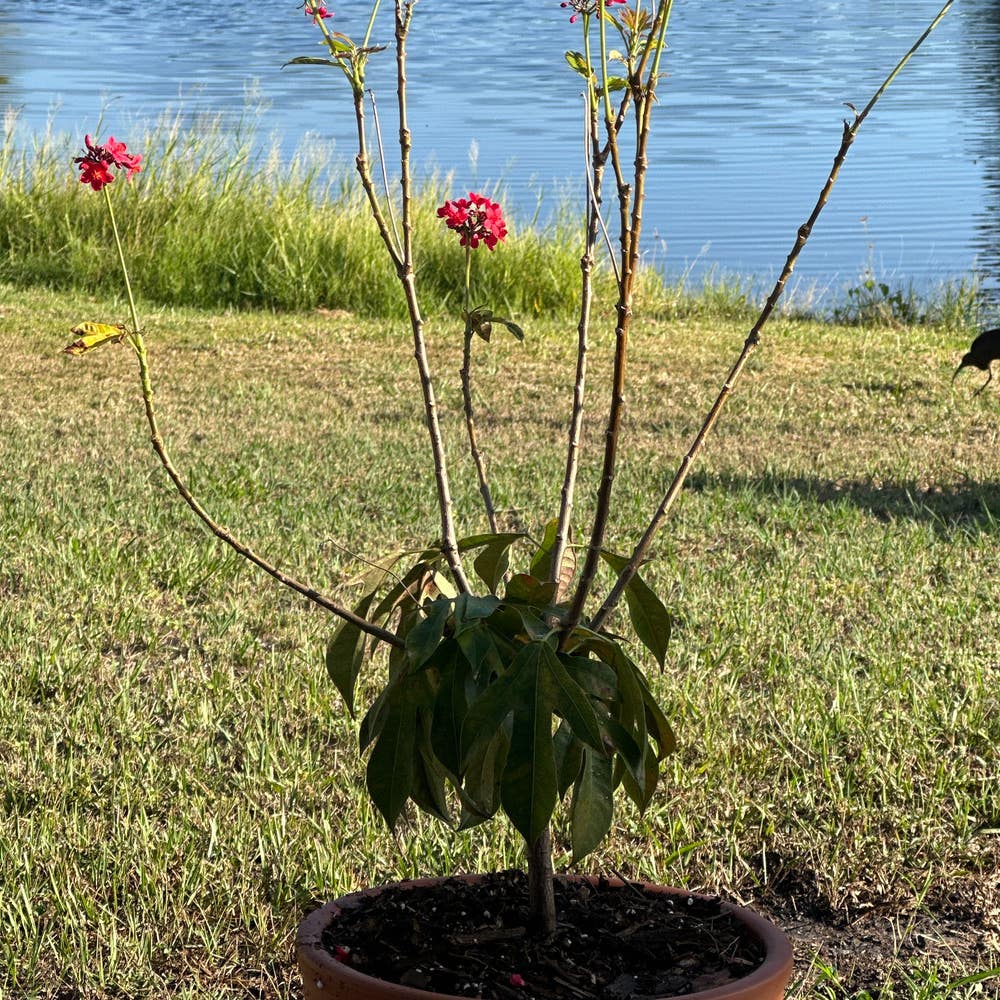
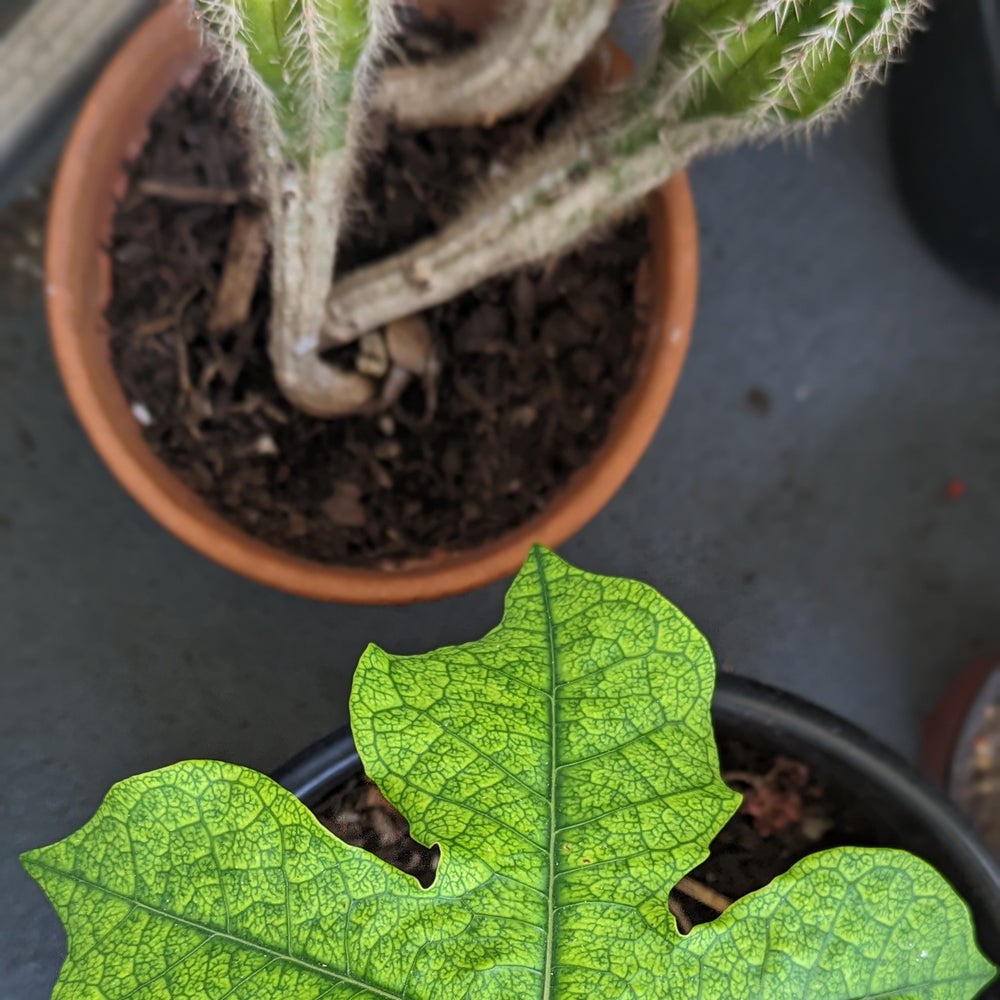
How Much Should I Water My Madagascar Physic Nut?
Jatropha mahafalensis
By the Greg Editorial Team
Apr 25, 2024•4 min read
This article was created with the help of AI so we can cover more plants for you. May contain errors. See one? Report it here.
Nurture your Madagascar Physic Nut to lush perfection with our savvy watering guide 🌿💧.
- 🌱 Test soil dryness with a finger or moisture meter.
- 🍂 Droopy leaves mean thirst; adjust watering accordingly.
- 💧 Seasons and pot size influence watering frequency.
When to Water Your Madagascar Physic Nut
💧 Checking the Soil's Moisture Level
Testing soil dryness is straightforward. Plunge a finger into the soil up to the second knuckle; if it's dry, water your plant. For precision, opt for a moisture meter, which can give you a clear indication of when to water by measuring the soil's moisture content.
🛠 Tools You Can Use
Besides your trusty finger, moisture meters are the tech-savvy choice. Ensure the probes are clean for accurate readings. If you're not into gadgets, a simple bamboo stick or even a paper towel pressed against the soil can serve as a proxy for moisture.
🌱 Understanding the Plant's Thirst Cues
Look out for droopy leaves—a classic sign of thirst. However, don't rely solely on visuals; always double-check the soil's moisture. If the soil feels like a dry sponge, it's time to quench your plant's thirst.
🍃 How the Leaves Tell a Story
Leaves are like the plant's mood ring. If they're perky, you're on the right track. Wilting or yellowing? That's your cue to investigate further and possibly adjust your watering schedule. Remember, consistency is key, but so is adaptability to your plant's feedback.
Creating the Perfect Watering Schedule
💧 Seasonal Watering Adjustments
Summer's heat demands more frequent watering for your Madagascar Physic Nut, aligning with its natural growth spurt. Contrastingly, winter's chill signals a time for restraint; the plant's thirst diminishes as it enters dormancy. Adjust your watering to the rhythm of the seasons, always with a watchful eye on soil moisture.
🌱 The Role of Pot Size and Type
Container size is a game-changer for watering frequency. Larger pots retain moisture longer, demanding less frequent visits with the watering can. Smaller pots, on the flip side, dry out quicker, calling for more regular sips. The material of the pot also plays a role; porous materials like terra cotta allow soil to dry out faster than plastic or glazed ceramic. Choose wisely to match your plant's and your own lifestyle needs.
The Consequences of Over and Underwatering
🚰 Spotting Trouble Early
Early Signs of Distress
When your Madagascar Physic Nut starts to look more like a deflated balloon than a vibrant plant, take note—it's likely underwatered. Leaves may droop, showcasing a lack of turgor pressure, which is plant-speak for "I'm thirsty!" Conversely, overwatering leads to leaves that feel squishy and look swollen, as if they've gorged on water. If the soil sticks to your fingers, it's a red flag that you've been a bit too generous with the watering can.
Immediate Actions
If you've overwatered, hold off on the H2O and let the soil dry out. For underwatering, give your plant a thorough drink, ensuring the water reaches the roots without drowning them. Adjust your watering schedule accordingly, and remember, your plant is not a fan of extremes.
🏥 Long-Term Impact on Plant Health
Growth and Flowering
Overwatering can turn your plant's root zone into a no-oxygen zone, leading to root rot and a weakened plant that's an open invitation for fungal and bacterial pathogens. On the flip side, underwatering can lead to stunted growth and a lack of flowering. Your Madagascar Physic Nut needs a balanced diet of water to thrive, not too much and not too little.
Preventing Future Issues
Keep a close eye on your plant's soil and leaves. Adjust your watering habits to the season and your home environment. Remember, a happy plant is one that receives just the right amount of water, and your Madagascar Physic Nut will thank you with lush growth and vibrant flowers.
Best Practices for Watering Madagascar Physic Nut
💧 Watering Techniques for Success
Deep watering nurtures your Madagascar Physic Nut by encouraging root growth deep into the soil. This method involves watering until moisture seeps out of the drainage holes, ensuring the roots are thoroughly quenched. On the flip side, light watering only wets the surface, which can lead to shallow root systems and a weaker plant.
Morning is the best time to water. It gives the plant time to absorb moisture before the heat of the day, reducing evaporation losses and the risk of fungal diseases that can thrive in cooler, damp nighttime conditions.
🎚 Fine-Tuning Your Approach
Your home environment is the stage, and your Madagascar Physic Nut is the star. Adjust watering based on the humidity, temperature, and light in your space. If your leaves are drooping or the soil feels like a dry wasteland, it's a call for hydration.
Be ready to change your routine as the seasons shift. Your plant's water needs will ebb and flow just like your own cravings for hot or cold drinks throughout the year. Keep an eye on the soil moisture and the plant's overall demeanor to know when it's time to switch things up.
⚠️ Safety First
This content is for general information and may contain errors, omissions, or outdated details. It is not medical, veterinary advice, or an endorsement of therapeutic claims.
Always consult a qualified healthcare professional before using any plant as food, medicine, or supplement.
Never eat any plant (or feed one to pets) without confirming its identity with at least two trusted sources.
If you suspect poisoning, call Poison Control (800) 222-1222, the Pet Poison Helpline (800) 213-6680, or your local emergency service immediately.
Spotted an error? Please report it here.
Keep your Madagascar Physic Nut flourishing 🌿 by adapting your watering with Greg's smart reminders that account for pot size, seasonal changes, and your home's specific conditions.