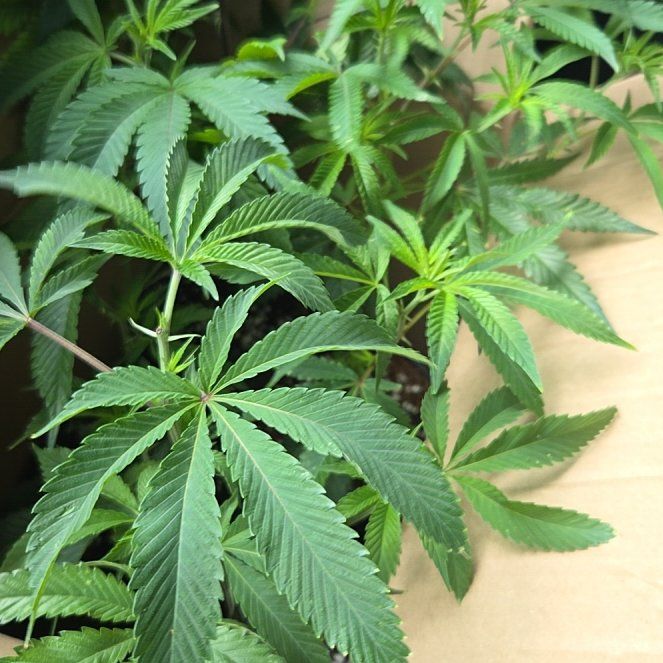
How to Water Cannabis
Cannabis sativa
Reviewed by Kiersten Rankel M.S.
Quick Answer
Water your cannabis plant when the top inch of soil is dry and the pot feels noticeably light, usually every 3 to 5 days while the plant is growing leaves and every 2 to 4 days once it is flowering. Letting the soil dry out between waterings drives healthy root growth more reliably than a fixed schedule.
Pour at the soil, not on the leaves. Wet leaves and wet buds during flowering invite mold fast in a dense flower.

Stay on top of plant care
Get seasonal reminders for watering and fertilizing — personalized for your plants.
How Often and How Much to Water
Adjust the sliders below for your pot size, light, and setting. The numbers assume a light airy potting mix with plenty of perlite and a pot with drainage.
Setting
Every
9days
Use
1cup
Average across the active season. See the phase chart below for how this shifts at flowering, harvest, and other stages.
Your Watering Rhythm Across the Season
Marijuana is an annual, so its water needs shift dramatically across a single growing season rather than across the year. Match your cadence to the growth phase the plant is in.
Just sprouted
Every — days
Growing leaves
Every — days
Flowering
Every — days
Buds ripening
Every — days
Last few days
Stop watering 2-3 days before harvest
How to Water Your Marijuana
Soak fully, drain fully, then wait. The steps below set up the wet-to-dry rhythm a home cannabis plant needs to grow strong roots.
1
Use room-temperature water — cold water from the tap can shock the roots.
2
Pour slowly all around the soil surface until water runs out the bottom of the pot. That tells you the rootball is fully soaked.
3
Empty the saucer within 15 minutes so the roots are not sitting in water.
4
Lift the pot to feel its weight before watering again. When it feels noticeably lighter than after the last soak, it is time.
Should You Water Your Marijuana Today?
Cannabis tells you what it needs by feel before it tells you with leaves. Lift the pot and check the top inch of soil before every watering.
Hold off
Pot feels heavy
Top inch of soil is dark and cool
Leaves reach upward and are full of water
Soil sits tight against the pot wall
Stems upright and rigid
Ready for water
Pot feels light
Top inch of soil is dry
Lower leaves droop or curl under
Visible gap between soil and pot wall
If Something Looks Off
Cannabis under stress can show the same drooping leaves whether it is under or overwatered. The pot weight and the soil dampness tell you which one you are dealing with.
Underwatered
Soil
Bone-dry through the pot and pulled from the wall
Stem
Firm but the whole plant is light when lifted
Leaves
Droop limp from the leaf stalk, often paper-thin
Pace
Bounces back within hours of watering
Next steps
Water slowly until water comes out the bottom of the pot
Move out of direct or strong grow lights for a day so the leaves can recover
If the soil pulled away and water runs straight through, set the pot in a bowl of water for 15 minutes to soak the rootball from below
Overwatered
Soil
Dark and heavy for days, sometimes with a sour smell
Stem
Soft or browning at the base of the main stem
Leaves
Droop down with curling tips, leaves feel thick and heavy not papery
Pace
Decline keeps building even when you stop watering, with new growth slowing
Next steps
Stop watering until the pot feels noticeably lighter, often a week or more
Add airflow with a small fan around the plant to help the soil dry faster
If the soil does not dry within 7 to 10 days, slip the plant out. Healthy roots are pale and firm; rotting roots are dark and mushy
If you see rot, trim the bad roots and repot in fresh airy potting mix
Got More Questions?
How long should I wait to water after transplanting?
Water deeply right after transplanting to settle the new soil around the rootball.
Then wait until the pot feels noticeably light before the next watering. Roots grow faster into slightly drier soil after a move.
Do I need to test the pH of my water?
For a casual home plant in regular potting soil, no. Tap water and a balanced potting mix work fine.
pH testing matters more if you are running hydroponics or noticing nutrient problems on every plant. Start without it and only add the complexity if the plants tell you they need it.
Should I water differently when my plant starts flowering?
Yes, the plant drinks faster during flowering. Expect to water every 2 to 4 days instead of every 3 to 5.
Keep pouring at the soil line, not on the buds. Wet buds in dense flowers invite mold and can ruin a harvest in a few days.
Why are my fan leaves drooping the morning after I watered?
A short droop within hours of watering is normal. The plant is still pulling water up the stem.
Droop that lasts more than a day with heavy wet soil is overwatering. Wait until the pot feels noticeably lighter before the next watering and add airflow with a small fan.
Can I use tap water on my cannabis plant?
Yes, tap water is fine for most home plants. If your tap is heavily chlorinated, leave the water out overnight in an open container so the chlorine can evaporate before you use it.
Hard water can leave a white crust on top of the soil over time. If that builds up, water with plain water until you see it running clean out the bottom of the pot to rinse the salts out.
How do I know when to stop watering before harvest?
Stop watering 2 to 3 days before you cut the plant down. Slightly dry soil at harvest helps the buds dry more evenly afterward.
Watch the buds. When most of the white hairs have turned amber or brown, the plant is close to harvest. That is your signal to slow down on water and start preparing.
Stay on top of plant care
Get seasonal reminders for watering and fertilizing — personalized for your plants.
About This Article

Kiersten Rankel M.S.
Botanical Data Lead at Greg · Plant Scientist
Editorial Process
Watering guidance verified against Cannabis sativa growth data from Greg's botanical database, cross-referenced with USDA hardiness zone data and published horticultural research.
7,111+ Greg users growing this plant
USDA hardiness zones 8a–11b