

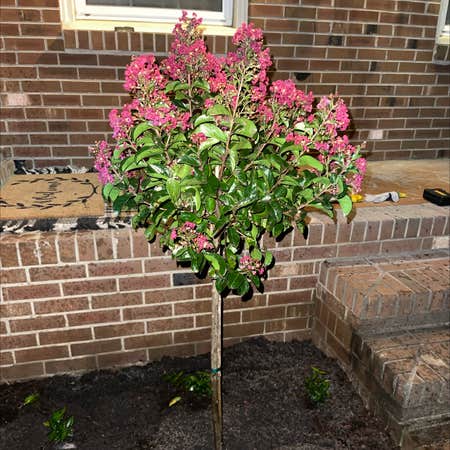


Crape Myrtle

3.5 out of 5 (2 experiences)
 Blooms easily
 Survivor
About Crape Myrtle
Crape Myrtle is a super popular houseplant 🌿 that is easy to grow and needs regular watering to thrive. They do best in long-lasting, direct light ☀️ and should be less than 1 foot from a window.
Plant parents describe this plant as easy to bloom and being a survivor with a whopping 2005 being grown with Greg around the world. Check out the reviews below for more details!🌟
Crape Myrtle likes soil that is well draining. Your plant shouldn't need added fertilizers if you repot each time it doubles in size.
Crape Myrtle belongs to the Lagerstroemia genus, and is native to the Central Himalayas to South and Indo-China, and the Philippines.
Taxonomy

Lagerstroemia indica
Lagerstroemia
Lythraceae
Myrtales
Also known as
Crepe Myrtle, Lagerstroemia indica. and Lagerstroemia indaca

How to care for Crape Myrtle
How often to water your Crape Myrtle

every 9
Crape Myrtle needs 0.5 cups of water every 9 when it doesn’t get direct sunlight and is potted in a 5" pot.
Use our water calculator to personalize watering recommendations to your environment or download Greg for more advanced recommendations for all of your plants.

Water 0.5 cups every
9
Finding light for Crape Myrtle in your home

a window
Crape Myrtle love being close to bright, sunny windows 😎.
Place it less than 1ft from a south-facing window to maximize the potential for growth.
Crape Myrtle does not tolerate low-light 🚫.
Select your region to see how the current weather in your area affects the placement of Crape Myrtle in your home 🏡.
How to fertilize Crape Myrtle

Most potting soils come with ample nutrients which plants use to produce new growth.
By the time your plant has depleted the nutrients in its soil it’s likely grown enough to need a larger pot anyway.
To replenish this plant's nutrients, repot your Crape Myrtle after it doubles in size or once a year—whichever comes first.
-
I would like to know when a good time to trim them up would be. #CapeMyrtle
-
Does Cape Myrtle need to be cut back? #CapeMyrtle
-
I have 2 Cape Myrtles that have been established in my yard since approximately 2009. I just noticed some webbing on the blooms and some small white nodules on some branches. Has anyone else experienced this, or have any idea what is going on? #HappyPlants
-
Planted yesterday, leaves drooping! Planted yesterday by professional. He said water 8 gallons a day for 3 weeks. But soil around root was soaked this morning, so only gave 3-4 gallons, then 3 more a few hours later. Definitely more blossoms today, but the leaves are droopy and a few have yellow-brown spots. Is it just shock and should recover, or am I over/under-watering? I’m also adding some pics of some of the leaves. Only a few are like this.
-
Hat are these webs in our crepe Myrtle? #CapeMyrtle
-
Is it sick? How can i fix it. It s in full sun outdoors. #CapeMyrtle
-
It has a whitish substance on the new leaves. I had it trimmed in March, what can that be? #CapeMyrtle


Care Summary for Crape Myrtle

Crape Myrtle
 Greg recommends:
 Water
Water
0.5 cups every 9 days
 Placement
< 1ft from a window
 Nutrients
Repot after 2x growth
Based on the 4” pot your plant is in, and that it doesn’t get direct sunlight.
What other plant parents say
Blooms easily 1
Survivor 1


 10/06/2021
My poor cape myrtle is hanging on by a thread. I think I overwatered it in the beginning but at times it seems it’s not getting enough water! Too finicky
 Trending in your area














 Similar to Crape Myrtle


✨ Discover rare plants

Ace of Spades

Burro's Tail

Crassula 'Calico Kitt…

Euphorbia

Kilimanjaro Plant
White Apple Moth Orch…

Sarcochilus fitzgeral…

Croton Nervia

Lithops

Maroon Pitcher Plant

Echeveria Arrow

Philodendron eximium

Orange Lipstick Plant

Dinteranthus microspe…

Philodendron 'Silver …

Echeveria 'Joan Danie…

Lavandula Pedunculata
