


Wellingtonia
Also known as
Giant Sequoia, Giant Sequoia, Bigtree, Big-tree, Giant redwood, Sierra redwood, Sierran redwood and Big tree
Taxonomy

Sequoiadendron giganteum
Sequoiadendron
Cupressaceae
Pinales

How to care for Wellingtonia
How often to water your Wellingtonia

every 9
Wellingtonia needs 0.5 cups of water every 9 when it doesn’t get direct sunlight and is potted in a 5" pot.
Use our water calculator to personalize watering recommendations to your environment or download Greg for more advanced recommendations for all of your plants.

Water 0.5 cups every
9
Finding light for Giant Sequoia in your home

a window
Wellingtonia love being close to bright, sunny windows 😎.
Place it less than 1ft from a south-facing window to maximize the potential for growth.
Wellingtonia does not tolerate low-light 🚫.
Select your region to see how the current weather in your area affects the placement of Wellingtonia in your home 🏡.
How to fertilize Wellingtonia

Most potting soils come with ample nutrients which plants use to produce new growth.
By the time your plant has depleted the nutrients in its soil it’s likely grown enough to need a larger pot anyway.
To replenish this plant's nutrients, repot your Wellingtonia after it doubles in size or once a year—whichever comes first.
-
What do I do if the tips of my sequoia are turning brown and the base of the tree is brown #GiantSequoia
-
What up with my giant sequoia It’s barely growing but not dying and the top seems to be a weird bluish color any advice and what soil should it be in it’s in coast of Maine acid loving plant soil right now
-
Had to prune back my sequoias heavily due to a mistake on my part, they seem to be doing a bit better now (+moss) #sequoia #NewGrowth #PlantTherapy #moss
-
My sequoia is dying :( help! This giant sequoia sapling has been the same size for almost 3 years so we recently repotted it. It then quickly started to decline, showing signs of fungal root rot (we realized the terra cotta pot we moved it to had formerly had a plant that died of root rot). Quickly got it out of that pot, cut away a lot of the mushy roots, treated it with a hydrogen peroxide solution and repotted it in this container with well draining soil. But it’s still declining! Anything else we can do to save it? What fungicide can we use? I’ve saved a plant from severe root rot once before by switching it to a hydroponic setup, would that work for a sequoia? Help!!
-
I watered my sequoia a bunch and let it drain, was this a good idea? It’s in a well draining pot so I think it’ll be fine, it’s also a sapling so ehhhhh #GiantSequoia #PlantTherapy #NewPlantMom
-
I am killing my tree. I have never had one and don’t really know what I’m doing. Can anyone help? #HappyPlants #GiantSequoia #Redwood #GiantSequoia
-
Does anyone know why my needles are curling and what to do about it #GiantSequoia
-
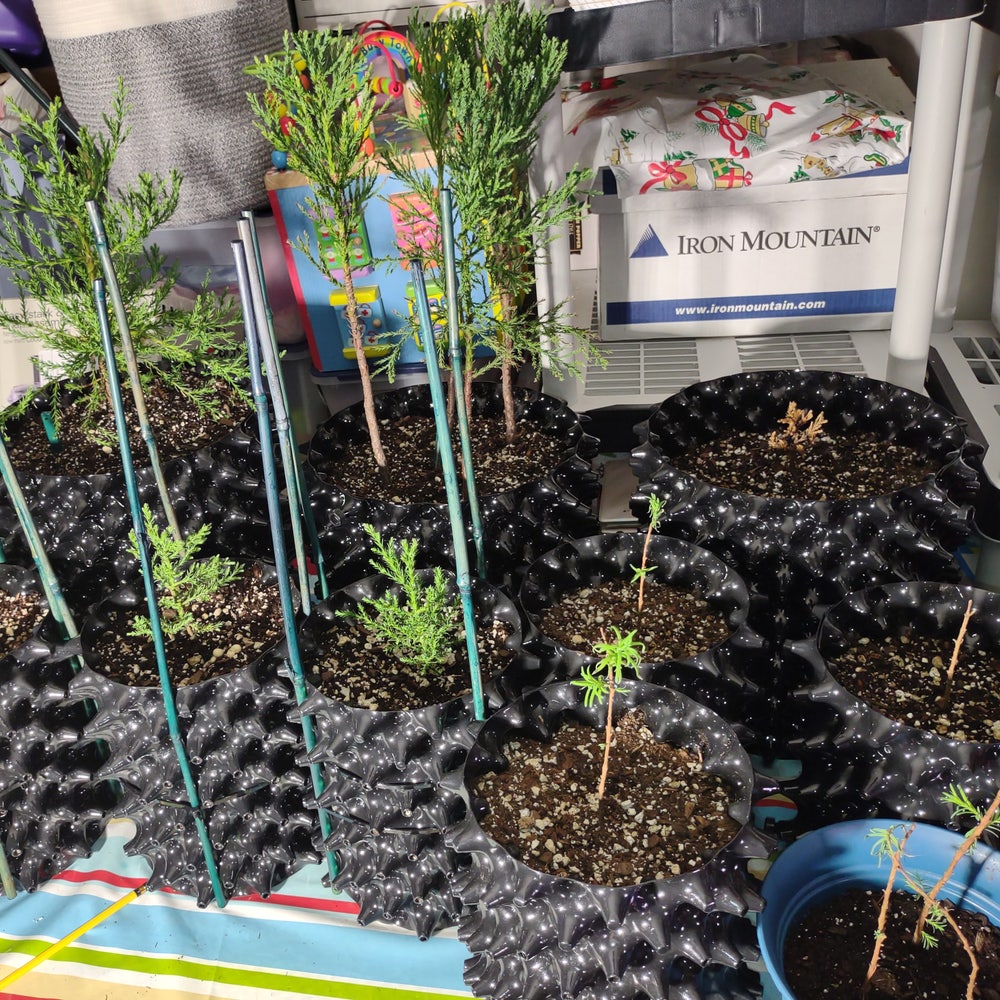
Gunther, Pokey, & Gang. They are in a temporary holding pattern as I treat them with propiconazole because their friend Ollie is sick and they have all been exposed, but are mostly okay and will hopefully be back outside and reunited soon!
-
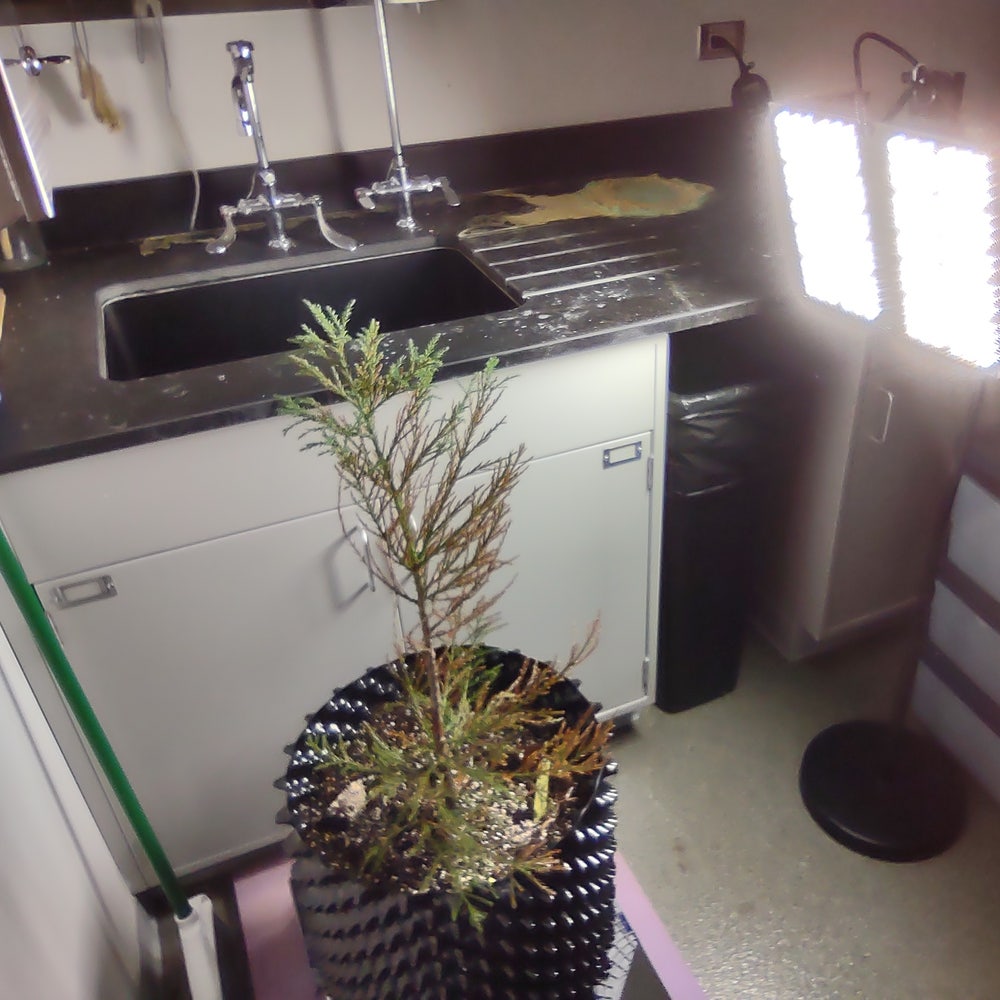
Day 94 being sick. Ollie began her first treatment of Propiconazole. State lab confirmed Phomopsis juniperovora. She's lost a lot of foliage & will lose most of what's left, but new foliage is already growing, and I'm optimistic I can save her.
-
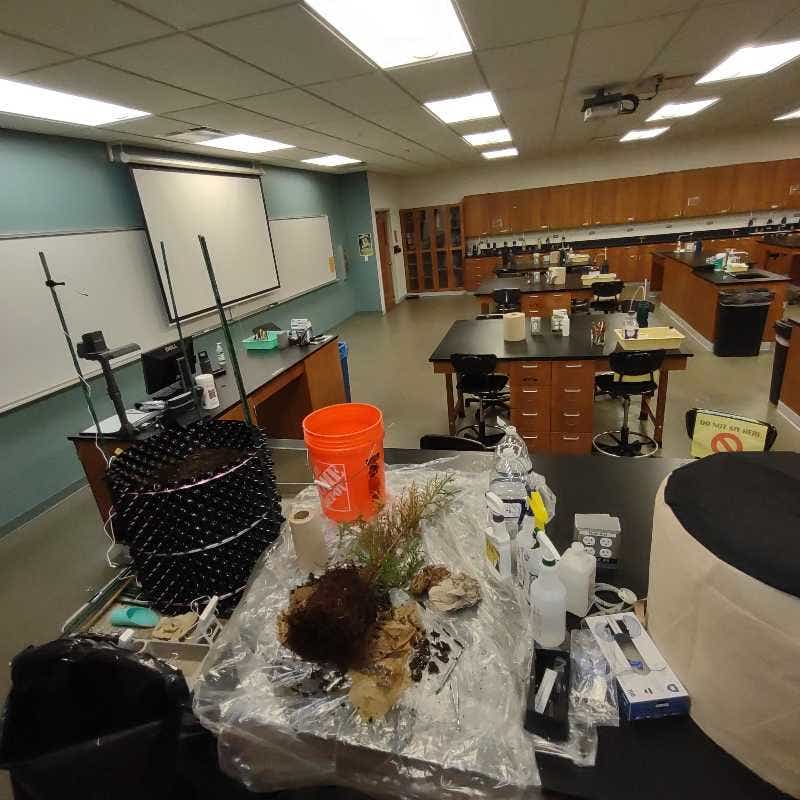
#giantsequoia Ollie is showing signs of Improvement, despite having a lot of white branches from an unknown origin. She turned mostly brown and white and then black. Our theory is a lack of photosynthesis and depletion of chlorophyll from a copper toxicity resulting in an iron chlorosis. We think the black parts are iron deposits "clotting". She underwent exploratory surgery and no signs of infection were indicated. Presently, treating with iron and manganese chelation and playing the waiting game. She has been moved to a lab with a controlled environment.


Care Summary for Wellingtonia

Wellingtonia
 Greg recommends:
 Water
Water
0.5 cups every 9 days
 Placement
< 1ft from a window
 Nutrients
Repot after 2x growth
Based on the 4” pot your plant is in, and that it doesn’t get direct sunlight.
 Trending in your area

Florist Kalanchoe

Coleus

Cylindrical Snake Pla…

Polka Dot Begonia

Venus Fly Trap
Dieffenbachia
Split Leaf Philodendr…
Golden Pothos
Gold Dust Croton

Golden Barrel Cactus
Pothos N' Joy
Triostar Stromanthe
Song of India

Emerald Ripple Pepero…
Money Tree
Polka Dot Plant

Ponytail Palm
Marble Queen Pothos
 Similar to Wellingtonia


✨ Discover rare plants

Radiator Plant

Vatricania guentheri

Blue Moon Wisteria

Aloe 'Lavender Star'

Royal Flush Split Rock

Pine Cone Plant

Parrot Pitcher Plant

Red Mistletoe Cactus

Starfish Snake Plant

Rhipsalis clavata

Anthurium 'Fantasy Lo…
Philodendron 'Silver …

Scotch Moss

Fernleaf Lavendar

Kilimanjaro Plant

Graptoveria 'Douglas …

Chinese Evergreen 'Go…
