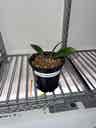
Orange Coneflower 'Anthony Brooks'
Taxonomy

Rudbeckia fulgida var. sullivantii 'Anthony Brooks'
Rudbeckia
Asteraceae
Asterales

How to care for Orange Coneflower 'Anthony Brooks'
How often to water your Orange Coneflower 'Anthony Brooks'

every 9
Orange Coneflower 'Anthony Brooks' needs 0.5 cups of water every 9 when it doesn’t get direct sunlight and is potted in a 5" pot.
Use our water calculator to personalize watering recommendations to your environment or download Greg for more advanced recommendations for all of your plants.
Water 0.5 cups every
9
Finding light for Orange Coneflower 'Anthony Brooks' in your home

a window
Orange Coneflower 'Anthony Brooks' love being close to bright, sunny windows 😎.
Place it less than 1ft from a south-facing window to maximize the potential for growth.
Orange Coneflower 'Anthony Brooks' does not tolerate low-light 🚫.
Select your region to see how the current weather in your area affects the placement of Orange Coneflower 'Anthony Brooks' in your home 🏡.
How to fertilize Orange Coneflower 'Anthony Brooks'

Most potting soils come with ample nutrients which plants use to produce new growth.
By the time your plant has depleted the nutrients in its soil it’s likely grown enough to need a larger pot anyway.
To replenish this plant's nutrients, repot your Orange Coneflower 'Anthony Brooks' after it doubles in size or once a year—whichever comes first.
-
Novice needs guidance. The leaves of my #philodendron Moonlight turned yellow almost overnight. What have I done to my poor plant!? What can I do now? Thank you! #Philodendron
-
Will my plant ever bloom? Back in march, My mom and I were at five below, and I stumbled upon those cheap little grow kits. The brand of the grow kits was Buzzy. We bought coneflower grow kits. One for me and one for Little sis. We bought them because each year on March 12th we celebrate “Plant-A-Flower day” by planting seeds. So on March 12th we planted those coneflowers. I don’t remember this super clearly, but we’ve tried those grow kits before and they didn’t work, therefore my mom was hesitant that they wouldn’t grow, but they were like a dollar at five below. Welp, they sprouted after three-four weeks! Fast forward to now, they haven’t even bloomed , and some seeds are still sprouting now. I mean, it did take a month for them to sprout, so maybe it will take a long time for them to bloom, but it’s but THREE months. I’m starting to think they won’t bloom by autumn, and then they will just die by the cold. Before the Greg app, We only watered the every two weeks, so the Greg app will definitely help, but do you have any suggestions on how to get them to bloom? #coneflower #growkits
-
Hi everyone! I'm completely new to the plant world, just bought a bunch yesterday. This morning my black eyed Susan was looking fine, perky and healthy. But hours later, droopy and sad! Anyone know why? Did I over water it, does it not like the hot humid weather? I watered yesterday but not today, and it's been mid 80sF.
-
I just bought this plant at Home Depot a couple days ago and now it looks like it’s wilting 🙁 I have it placed right outside my front door. My house is south facing and do get a lot of light throughout the day. I just put some water and brought it inside. I’m thinking maybe the sun is too much? Please help 🙏 #NewPlantMom #BlackEyedSusan
-
🎶 Happy birthday to me! 🎶 Technically it’s a couple if days early, but my plant arrived today! 🥳 I had my mini rose on my apartment patio for the last five years, but decided a couple of months ago to plant her in the ground at my parents’ place. (Side note: best decision ever! She’s flourishing like she hasn’t in years!) I’m trying a small variety of Black Eyed Susan, both to enjoy the blooms, and hopefully to help feed the local finches! #PlantsMakePeopleHappy #OutdoorGrowing #PatioGarden
-
Is that powdery mildew on it? #BlackEyedSusan
-
I think I burn mine today :/ #BlackEyedSusan


Care Summary for Orange Coneflower 'Anthony Brooks'
Orange Coneflower 'Anthony Brooks'
 Greg recommends:
 Water
Water
0.5 cups every 9 days
 Placement
< 1ft from a window
 Nutrients
Repot after 2x growth
Based on the 4” pot your plant is in, and that it doesn’t get direct sunlight.
 Trending in your area

















 Similar to Orange Coneflower 'Anthony Brooks'
✨ Discover rare plants
Philodendron 'Silver …

Munstead Lavender

Crassula 'Purple Drag…

Ace of Spades

Cleistocactus icosago…
Stanhopea tigrina

Euphorbia baioensis

Pink Ruby Sedevaria

Betel

Graptoveria 'Douglas …

Scindapsus pictus 'Si…

Aglaonema 'Green Bowl'

Croton Nervia
Philodendron 'Gabby'

Royal Flush Split Rock
Chinese Evergreen 'Ga…

Anthurium Fingers