
Rebutia senilis var. pallidior
Taxonomy

Rebutia senilis var. pallidior
Rebutia
Cactaceae
Caryophyllales

How to care for Rebutia senilis var. pallidior
How often to water your Rebutia senilis var. pallidior

every 12
Rebutia senilis var. pallidior needs 0.5 cups of water every 12 when it doesn’t get direct sunlight and is potted in a 5" pot.
Use our water calculator to personalize watering recommendations to your environment or download Greg for more advanced recommendations for all of your plants.
Water 0.5 cups every
12
Finding light for Rebutia senilis var. pallidior in your home

a window
Rebutia senilis var. pallidior love being close to bright, sunny windows 😎.
Place it less than 1ft from a south-facing window to maximize the potential for growth.
Rebutia senilis var. pallidior does not tolerate low-light 🚫.
Select your region to see how the current weather in your area affects the placement of Rebutia senilis var. pallidior in your home 🏡.
How to fertilize Rebutia senilis var. pallidior

Most potting soils come with ample nutrients which plants use to produce new growth.
By the time your plant has depleted the nutrients in its soil it’s likely grown enough to need a larger pot anyway.
To replenish this plant's nutrients, repot your Rebutia senilis var. pallidior after it doubles in size or once a year—whichever comes first.
-
How often should I water a Fabris' Rebutia? How often should I be watering my cactus and how much water? Is it healthy how I'm watering it right now (which is like hardly ever 😅) How can I tell? #cactus
-
Temperature I’m unsure about what temp to have this plant in. I’ve never had plants before, that actually survive😂 so I’m really trying to keep them alive
-
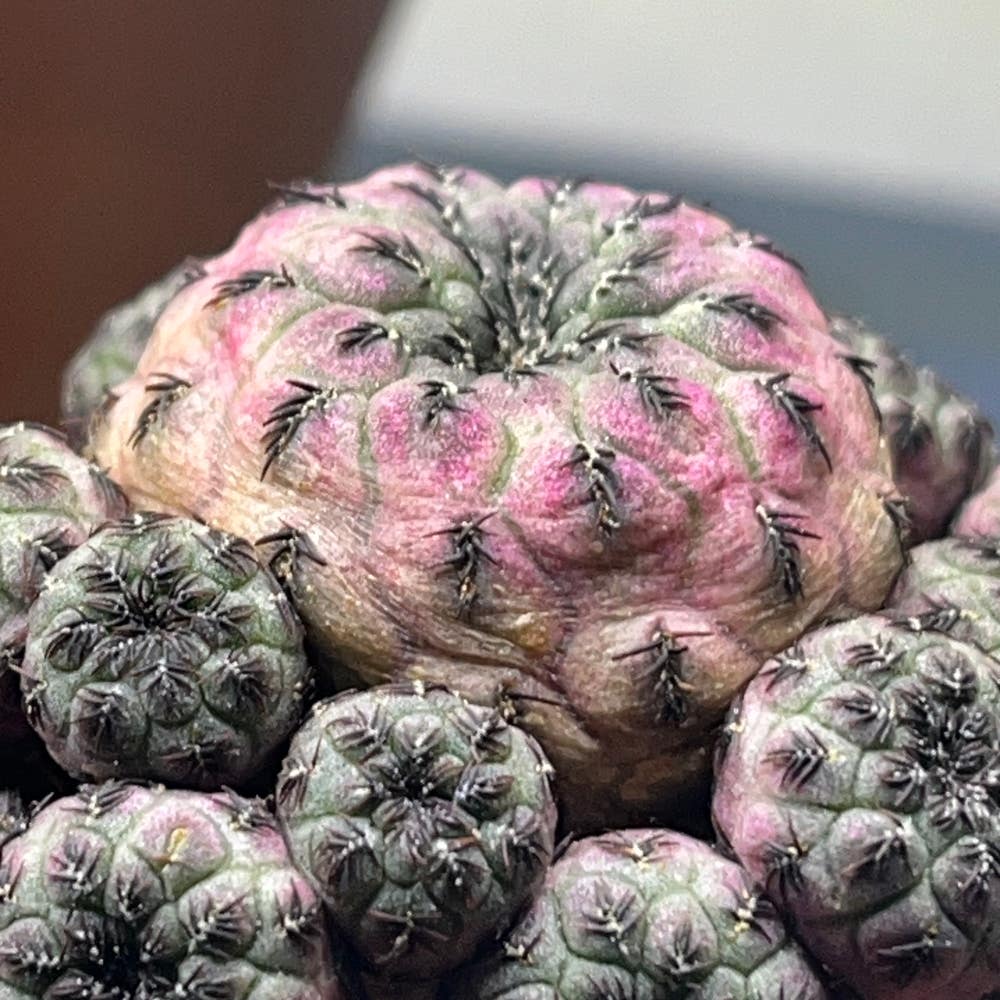
Rot or lack of water ? What can I do to fix this. A month ago I got this Sulcorbutia rauschii, she looked much better, even though she still seemed a little soft. I have missed a couple watering days recently however she is showing some discoloration (the middle cactus/biggest one) it’s yellowish brown. She is soft but that could be because of the lack of water. She has many pups, I’m wondering if I could cut those off and if it’s okay to do so, if they don’t have roots. Or if I should wait for them to have roots. The roots were really healthy when I got her, & I planted her in bonsai jack mix with added Soil. I water her every 15 days or so & she is under grow lights for 10+ hours a day. #CactusClique #Cacti #Cactus #RootRot #PropagationStation #Propagation #PlantAddict #HappyPlants #grafting
-
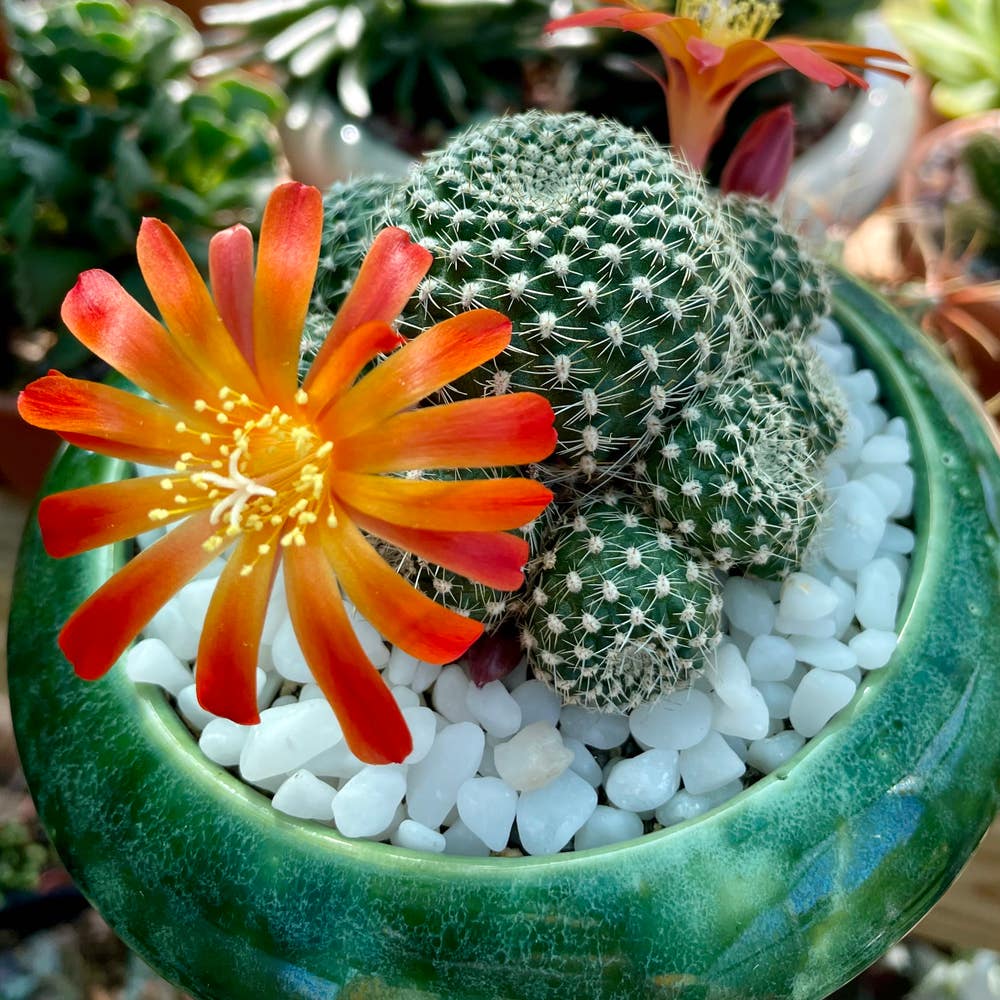
The flowers! 🤯 Thank you @SirLiquorice for recommending Rebutia to me because this little guy flowers all the time! And the color of the flowers is stunning! It is absolutely perfect for the vintage pot. I LOVE this cactus! #PlantsMakePeopleHappy #PlantAddict #CactusClique #Cactus #CactusFlowers
-
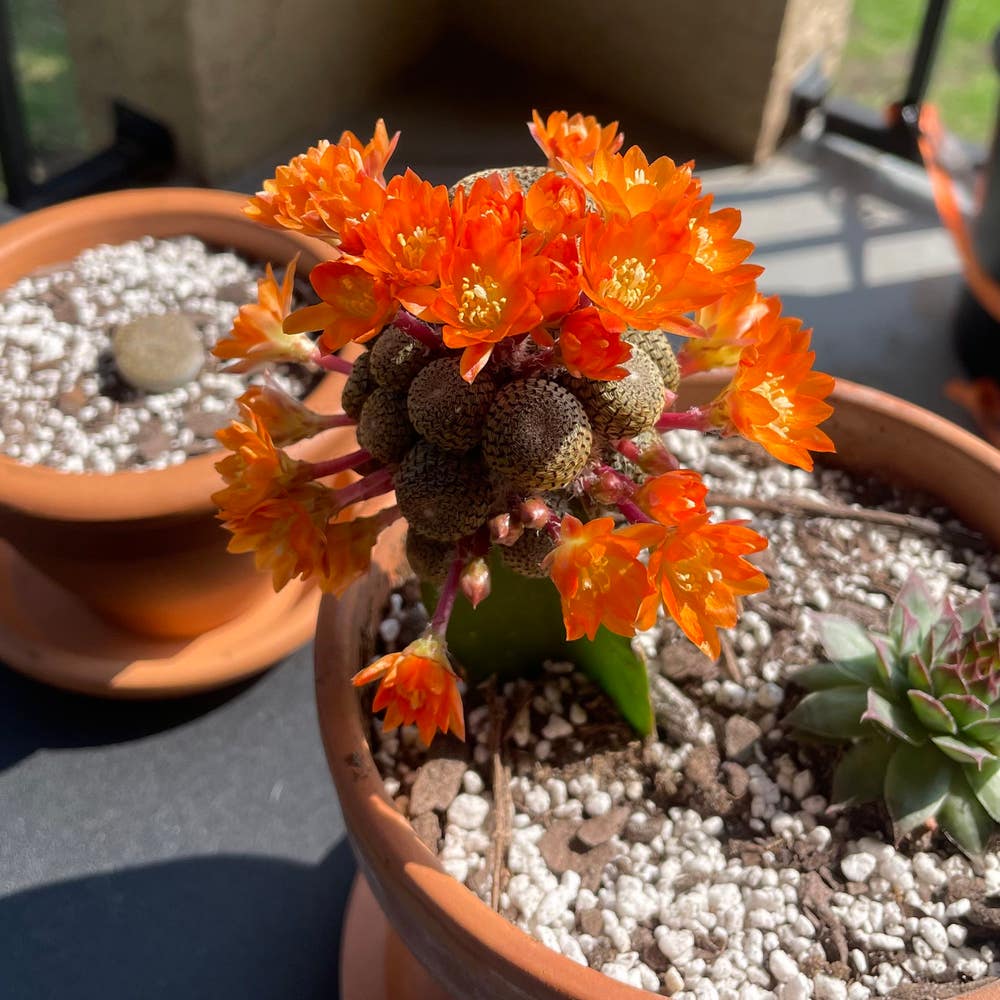
Such cute lil flowers! So proud of my flower child. 🥹🧡🔥 #RebutiaHeliosa #CactusFlowers #cactusmom #HappyPlants #NewPlantMom

Care Summary for Rebutia senilis var. pallidior
Rebutia senilis var. pallidior
 Greg recommends:
 Water
Water
0.5 cups every 12 days
 Placement
< 1ft from a window
 Nutrients
Repot after 2x growth
Based on the 4” pot your plant is in, and that it doesn’t get direct sunlight.
 Trending in your area












 Similar to Rebutia senilis var. pallidior

✨ Discover rare plants

Miss All-American Bea…

Rainbow Echeveria

Sedeveria 'Blue Elf'

Electric Blue Gecko

Scindapsus pictus 'Si…

Cleistocactus icosago…

Burro's Tail

Red Mistletoe Cactus
Philodendron 'Gabby'

Kilimanjaro Plant
Hoya crassipetiolata

Begonia hydrocotylifo…

Sarcochilus fitzgeral…

Chandelier Plant

Croton Nervia

Hoya pottsii 'Khao Ya…

Aglaonema Spitfire
