

Asian pear
About Asian pear
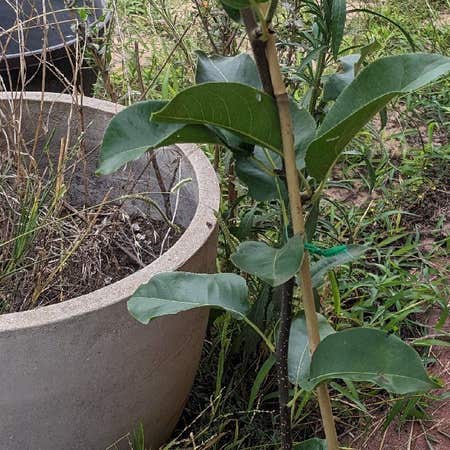
Asian pear is a super rare houseplant 🌿 that is a fun challenge to grow and needs regular watering to thrive. They do best in long-lasting, direct light ☀️ and should be less than 1 foot from a window.
Asian pear likes soil that is well draining. Your plant shouldn't need added fertilizers if you repot each time it doubles in size.
Asian pear belongs to the Pyrus genus, and is native to South China to Southeast Asia and Korea.
Taxonomy

Pyrus pyrifolia
Pyrus
Rosaceae
Rosales
Also known as
Asian pear, Japanese pear, Chinese pear, Korean pear, Taiwanese pear, apple pear, zodiac pear, papple, sand pear and nashi pear

How to care for Asian pear
How often to water your Asian pear

every 9
Asian pear needs 0.5 cups of water every 9 when it doesn’t get direct sunlight and is potted in a 5" pot.
Use our water calculator to personalize watering recommendations to your environment or download Greg for more advanced recommendations for all of your plants.

Water 0.5 cups every
9
Finding light for Asian pear in your home

a window
Asian pear love being close to bright, sunny windows 😎.
Place it less than 1ft from a south-facing window to maximize the potential for growth.
Asian pear does not tolerate low-light 🚫.
Select your region to see how the current weather in your area affects the placement of Asian pear in your home 🏡.
How to fertilize Asian pear

Most potting soils come with ample nutrients which plants use to produce new growth.
By the time your plant has depleted the nutrients in its soil it’s likely grown enough to need a larger pot anyway.
To replenish this plant's nutrients, repot your Asian pear after it doubles in size or once a year—whichever comes first.
-
Why are the leaves turning brown on my tree #CalleryPear
-
Why the tree pear dried? Could be due to the hot weather? It had may pears and also dried. It is her 3rd summer
-
Planted this kieffer pear tree two days ago; should I be worried about the tiny branch-things at the bottom turning brown? When I planted this, I saw the little bits shooting up at the bottom and they were green. Two days later, they’ve turned brown. It doesn’t have any other branches or leaves right now, so I don’t know whether she’s dying in real time or what #PearTree
-
Why is my pear trees leaves yellowing with the middle staying green then the leaf yellowing more and falling off #PearTree
-
I love Spring😊! The flowers are starting to come back 🌺. I asked my fiance to get me a piece of this tree 🌳 across from us. This is Priscilla the Callery Pear Tree. I hope she lives! #plantsmakepeoplehappy #growlights #planttherapy #mothernature


Care Summary for Asian pear

Asian pear
 Greg recommends:
 Water
Water
0.5 cups every 9 days
 Placement
< 1ft from a window
 Nutrients
Repot after 2x growth
Based on the 4” pot your plant is in, and that it doesn’t get direct sunlight.
 Trending in your area









 Similar to Asian pear
✨ Discover rare plants

Hoya fitchii

Kilimanjaro Plant

Aeonium 'Blushing Bea…

Aloe 'Lavender Star'

Euphorbia

Electric Fern

Euphorbia baioensis

Rainbow Echeveria
Hoya crassipetiolata

Chandelier Plant

Hoya pottsii 'Khao Ya…

Starfish Snake Plant

Haworthia emelyae com…

Thelocactus macdowell…
Skeleton Key Pothos

Philodendron 'Glorius'

Orange Lipstick Plant