What's Wrong with My Majesty Palm?

Common Majesty Palm Problems
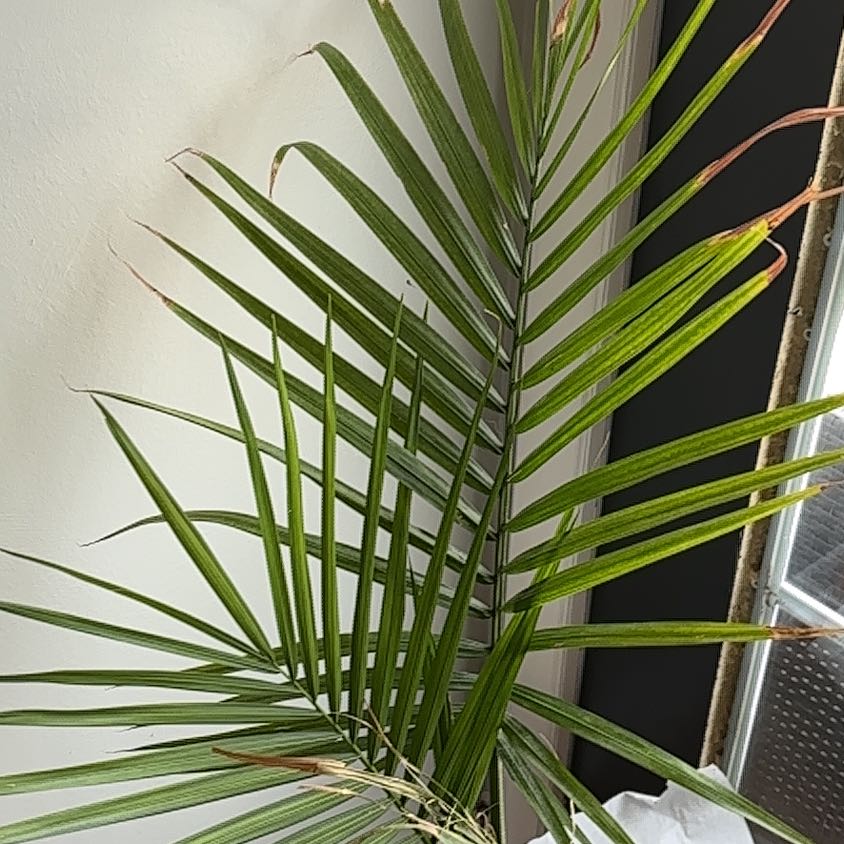
Brown leaf tips
Majesty Palm evolved along Madagascar riverbanks where humidity stays high year-round. Its long, arching fronds lose moisture rapidly in dry indoor air, and the tips brown first because they are furthest from the root supply. Most homes run at 30-40% humidity, well below what this palm needs.
In the wild, this palm grows at the water's edge with roots in perpetually moist soil. When indoor soil dries out completely between waterings, moisture is pulled from the frond tips first. The browning looks identical to humidity damage, so check both soil and air.
Majesty Palm is sensitive to fluoride and chlorine in tap water. Minerals accumulate in the frond tips over repeated waterings and cause crispy tip burn that persists even after humidity and watering are improved. The damage looks like a narrow, sharp line across the tip rather than a gradual fade.
Yellow fronds
Chronic dry spells cause older fronds to yellow and die back as the plant pulls moisture and nutrients from them to protect new growth. Majesty Palm is a riparian species that will not tolerate long dry stretches, so drought is the most common trigger when whole fronds yellow uniformly.
Even though this palm loves moisture, it still needs oxygen at the roots. Soil that stays waterlogged rather than moist suffocates the roots, which then rot and can no longer absorb nutrients. Yellow fronds starting at the base and working upward, combined with soggy soil, point to overwatering rather than drought.
Majesty Palm is a heavy feeder compared to most indoor palms. If watering is steady but older fronds still yellow from the tips inward, the plant has likely run low on magnesium or nitrogen. Potting mix loses fertility within a few months, and palms in bright light exhaust it even faster.
Spider mites
Spider mites are the signature Majesty Palm pest. Dry indoor air is their main invite, and this palm suffers dry air poorly to begin with. Fine webbing appears between leaflets and on frond undersides, with pale stippled speckles on the upper frond surface. The long, dense fronds give mites a large surface to colonize before the infestation becomes obvious.
Dying fronds
Whole fronds turning brown and dying back from the base usually signals root rot. Majesty Palm is prone to rot when the pot lacks drainage or sits in a saucer of standing water, because the roots need moisture but also need air. Rot spreads fast in warm indoor conditions.
Repeated dry spells exhaust this riparian palm faster than most houseplants. Once a frond dies back fully from chronic drought, it will not recover. The oldest lower fronds die first, but if the center spear is still green and intact, the plant can recover with corrected watering.
Leggy, sparse growth
Majesty Palm needs bright indirect light to maintain its full, dense frond structure. In low light, the plant stretches toward whatever light it can find and produces fewer, spindlier fronds with wider spacing between them. New fronds come out thin and pale instead of deep green and robust.
Soft, sinking trunk
A softening or visibly sunken trunk base is a late sign of root rot on Majesty Palm. By the time the trunk collapses inward, the roots below are largely gone and the rot is climbing the stem. This is urgent. The plant cannot recover once the trunk base is completely soft.
Preventing Majesty Palm Problems
About This Article
