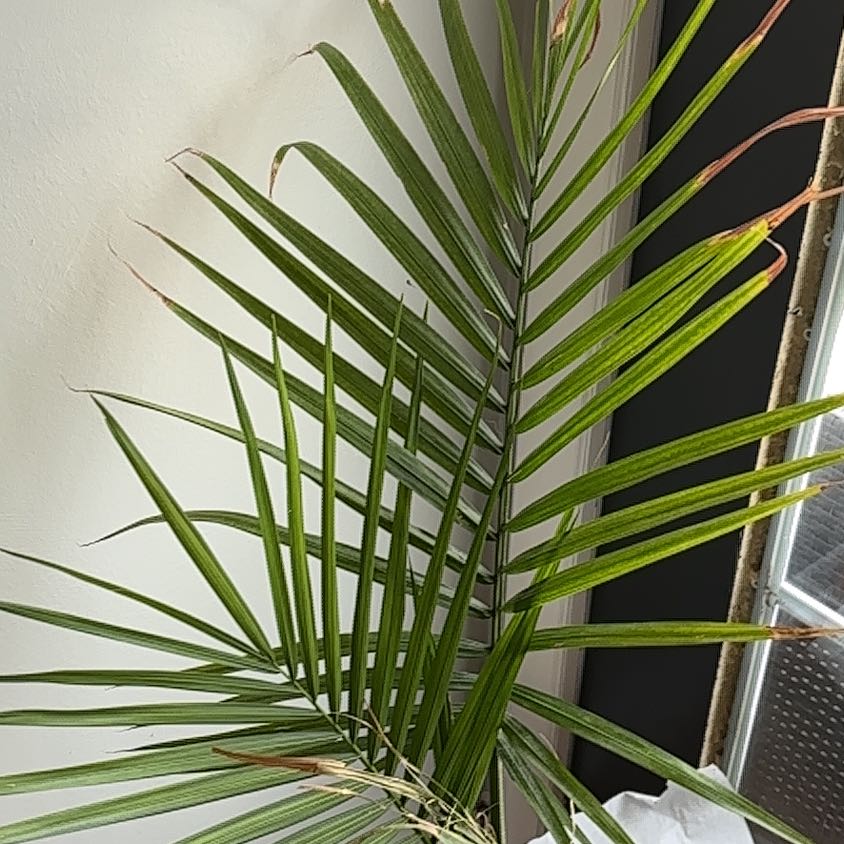
How to Water Majesty Palm
Ravenea rivularis
Reviewed by Kiersten Rankel M.S.
Quick Answer
Water your Majesty Palm every 5 to 8 days when the top inch of soil feels dry. Stretch to 9 to 12 days from late November through February.
Soak until water runs out the drainage holes, then drain the saucer. Use room-temperature water and pair with bright light and humidity above 50%.

Stay on top of plant care
Get seasonal reminders for watering and fertilizing — personalized for your plants.
How Often and How Much to Water
Adjust the sliders below for your pot size, light, and setting. The numbers assume a peat-free moisture-retaining mix with extra perlite and a pot with drainage.
Setting
Every
9days
Use
1cup
Your Watering Rhythm Across the Year
Soil dries faster in the growing season, which varies by region. Slow down watering in the off-season to avoid overwatering.
Pacific
Mountain
Midwest
Northeast
Southeast
JFMAMJJASOND
Growing season
Growing season
9days
Resting season
3–4weeks
How to Water Your Majesty Palm
Soak the rootball, drain fully, and keep the crown dry. Majesty Palms hate sitting in soggy soil and they crisp at the tips when the soil swings dry too long.
1
Pour room-temperature water at the soil line. Cold winter tap water can slow recovery on this tropical species.
2
Water slowly until it runs out the drainage holes so the rootball is fully soaked.
3
Empty the saucer after 10 minutes. Standing water at the base rots the lower trunk.
4
Use distilled or filtered water if your tap is heavily fluoridated. Majesty Palms brown at the tips with chlorine and fluoride buildup over time.
Should You Water Your Majesty Palm Today?
Always check before you pour. Majesty Palms crisp at the tips going too dry and rot at the base going too wet, so the soil check decides for you.
Hold off
Fronds feel firm and look glossy
New spear standing tall in the center
Top inch of soil still feels damp
Soil sits tight against the pot wall
Pot feels heavy when lifted
Ready for water
Older fronds drooping outward
Tips of fronds curling under
Top inch of soil dry to the touch
Visible gap between soil and pot wall
Pot feels light when lifted
If Something Looks Off
Underwater and overwater both end in browning fronds and a sad-looking palm. The soil and the pace of decline tell you which one is happening.
Underwatered
Soil
Dry through the pot and pulled away from the wall
Leaves
Crispy brown tips spreading inward on older fronds first
Pace
Slow decline that bounces back within a day of soaking
Next steps
Set the pot in a basin of room-temperature water for 20 to 30 minutes
Drain fully and move out of harsh afternoon sun while it recovers
Expect the fronds to lift back up within 12 to 24 hours
Existing brown tips will not reverse, but the green parts still photosynthesize. Wait for new spear growth before fertilizing
Overwatered
Soil
Stays dark and damp for days with a sour smell
Stem
Soft or browning at the base of the trunks
Leaves
Lower fronds yellow all over and feel limp
Pace
Sudden collapse that worsens even after you stop watering
Next steps
Stop watering immediately and move to a bright airy spot
Slide the plant out of the pot and trim any dark mushy roots back to firm white tissue
Repot in fresh peat-free moisture-retaining mix with extra perlite in a clean pot
Wait until the top 2 inches of soil are dry before the first watering
Remove fronds that have yellowed completely or rotted at the base
Got More Questions?
Can I use tap water on my Majesty Palm?
Tap water is fine for most homes, but Majesty Palms are sensitive to chlorine and fluoride and slowly brown at the tips with heavily treated water.
If your tips keep crisping despite good watering and humidity, switch to filtered, distilled, or rainwater. Letting tap water sit out overnight helps with chlorine but does nothing for fluoride.
Why are the tips of my fronds turning brown?
Brown tips on a Majesty Palm usually mean low humidity, fluoride or salt buildup from tap water, or a soil that swung too dry between waterings.
Check humidity first. If your home runs below 40% in winter, run a humidifier. Then swap to filtered water and tighten the cadence so the soil never goes bone-dry. Existing brown tips will not heal, but new fronds will come in clean.
Do gnats around the pot mean I am overwatering?
Yes. Fungus gnats need consistently moist topsoil to lay eggs. If you keep seeing little flies hop off the soil, your top inch is staying damp too long.
Let the top inch dry between waterings, top with a thin layer of horticultural sand or fine grit, and the gnats die out within a couple of weeks.
How long can my Majesty Palm go without water if I travel?
Around 7 to 10 days at most. Majesty Palms are not drought tolerant and they punish missed waterings with crispy tips that never grow back.
For longer trips, ask someone to deep-water once. Pulling the plant back from a strong window helps too, since less light means slower water use.
Should I mist my Majesty Palm for humidity?
Misting is not a useful way to raise humidity. The water evaporates in minutes and ambient humidity barely changes.
A humidifier nearby is the only reliable fix. Group the palm with other plants for a small assist, but do not rely on misting or pebble trays to keep this plant happy.
Can I use a self-watering pot for my Majesty Palm?
It can work but it is risky. Majesty Palms want consistent moisture, which a self-watering pot delivers, but they also rot quickly if the wick keeps the lower roots saturated.
If you try one, use a chunky mix with extra perlite, refill the reservoir only when it is fully empty, and check the trunk base every couple of weeks for any softness.
Stay on top of plant care
Get seasonal reminders for watering and fertilizing — personalized for your plants.
About This Article

Kiersten Rankel M.S.
Botanical Data Lead at Greg · Plant Scientist
Editorial Process
Watering guidance verified against Ravenea rivularis growth data from Greg's botanical database, cross-referenced with USDA hardiness zone data and published horticultural research.
10,764+ Greg users growing this plant
USDA hardiness zones 9b–11b