
Phalaenopsis 'Happy Valentine'
Taxonomy

Phalaenopsis 'Happy Valentine'
Phalaenopsis
Orchidaceae
Asparagales

How to care for Phalaenopsis 'Happy Valentine'
How often to water your Phalaenopsis 'Happy Valentine'

every 9
Phalaenopsis 'Happy Valentine' needs 0.5 cups of water every 9 when it doesn’t get direct sunlight and is potted in a 5" pot.
Use our water calculator to personalize watering recommendations to your environment or download Greg for more advanced recommendations for all of your plants.
Water 0.5 cups every
9
Finding light for Phalaenopsis 'Happy Valentine' in your home

a window
Phalaenopsis 'Happy Valentine' may have difficulty thriving, and will drop leaves 🍃, without ample sunlight.
Place it less than 3 feet from a south-facing window to maximize the potential for growth.
Select your region to see how the current weather in your area affects the placement of Phalaenopsis 'Happy Valentine' in your home 🏡.
How to fertilize Phalaenopsis 'Happy Valentine'

Most potting soils come with ample nutrients which plants use to produce new growth.
By the time your plant has depleted the nutrients in its soil it’s likely grown enough to need a larger pot anyway.
To replenish this plant's nutrients, repot your Phalaenopsis 'Happy Valentine' after it doubles in size or once a year—whichever comes first.
-
Orchid tips So I was gifted an orchid and was told I should cut the blooms off so the orchid can focus on regrowing roots? (There was a lot of root rot so I had to cut a lot of them.)
-
When do I kno when to replant this #PhalaenopsisOrchid
-
Best medium and setup?? I rescued this gorgeous little lady—a Miniature Phalaenopsis—from Sprouts Farmers Market for $3 this morning! 😱😱 I think she'll be happy in this location, but I highly doubt she'll be thrilled if she stays in her pot, and I think she's just in regular soil. I wish there were a way to put her in with Athena and train her to climb Athena's stalks 😂😂 @Alucen @DreamMachine @FunLentenrose37 @Idplantthat @IWantThatPlant @Malagueña @MariansOasis @princesspitstop @SillyPlantGirl @uhhh.haileyyy @debbiedo @Kittylover1612 @MamaLinne @Ms.Persnickety @planthoe40 @HolyLacealoe @Succulent_Soul #happyplants #plantsmakepeoplehappy #plantaddict #planttherapy #orchidlovers #phalaenopsisorchid #thewateringhole
-
Should these roots be covered? #PhalaenopsisOrchid
-
What's going on with my orchid plant? Hello everyone. This is my first post here in the community. Could anyone tell me what is going on with my beloved orchid plant? How can I save it? I believe I left it one day under the scorching sun, by mistake? Can that be the reason? I now have it in my kitchen near the window, but it's turning its bright green leaves into brown and probably dying. Please save. #orchidlovers #floweringplants
-
My orchid is in its dormant form right now. I followed the instructions on re-blooming. How long does it normally take to come back to life? #PhalaenopsisOrchid
-
Leaves at the bottom are bending down. Other orchid I have bends up #PhalaenopsisOrchid
-
My baby’s soul is full of very time black bugs. Why? He still looks healthy and is growing, but I’m concerned about the pests. What should I do? #PhalaenopsisOrchid
-
Orchid pests help! Hello guys! I recently discovered both white thin bugs and brown circular bugs(both very tiny and not fluffy) on my orchid plant roots. I noticed when I bought the orchid from the Lowe’s clearance that the roots looked sunburned but thought nothing of it until now. I realize it might be pest damage, so does anyone know what the best next steps might be? I’m lost and don’t know what to do :/ @DreamMachine @Ms.Persnickety @stephongreg edit: just realized that they could definitely be benificial pests, and the white ones look a lot like springtails. Not too sure about the other ones though? My other plants seem unaffected.
-
I need help with my orchid!! 😞 I got this orchid a few months ago I believe it was—and it had been planted in a really hard substance that I had decided to repot it out of and into bark. Ever since then, it’s went way downhill and all of its roots died and were cut off and now it looks like this 😞. I feel so disappointed and I would love to know if there’s a way to bring her back, and what steps to take! And maybe if it is salvageable, would adding moss in the mix fix it? And what could I do until then? #PlantAddict #NewGrowth #OrchidLovers #PhalaenopsisOrchid #Phalaenopsis #Orchid #helpneeded #PlantsMakePeopleHappy #PlantCorner #TheWateringHole


Care Summary for Phalaenopsis 'Happy Valentine'
Phalaenopsis 'Happy Valentine'
 Greg recommends:
 Water
Water
0.5 cups every 9 days
 Placement
< 3ft from a window
 Nutrients
Repot after 2x growth
Based on the 4” pot your plant is in, and that it doesn’t get direct sunlight.
 Trending in your area

Golden Barrel Cactus

Rattlesnake Plant

Pothos N' Joy

Swiss Cheese Vine

Green Prayer Plant

Baby Rubber Plant

Painter's Palette

Blushing Bride Air Pl…

Majesty Palm

Lipstick Echeveria

Rubber Plant

Spider Plant

Marble Queen Pothos

Arrowhead Plant

Elephant Bush

Jelly Bean Plant

White Bird of Paradise

Emerald Ripple Pepero…
 Similar to Phalaenopsis 'Happy Valentine'
✨ Discover rare plants

Fernleaf Lavendar

Crassula 'Purple Drag…

Philodendron eximium

Scindapsus pictus 'Si…

Aglaonema Spitfire

Philodendron 'Silver …
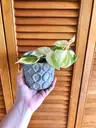
Philodendron 'Gabby'

Croton Nervia

Pine Cone Plant

Red Mistletoe Cactus
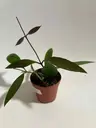
Hoya 'Memoria'

Echeveria 'Joan Danie…

Parrot Pitcher Plant

Vatricania guentheri

Begonia lubbersii

Tillandsia caerulea A…

Large Leaf Elephant B…
