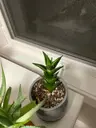
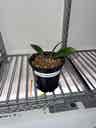
Passiflora filamentosa
Taxonomy

Passiflora filamentosa
Passiflora
Passifloraceae
Malpighiales

How to care for Passiflora filamentosa
How often to water your Passiflora filamentosa

every 9
Passiflora filamentosa needs 0.5 cups of water every 9 when it doesn’t get direct sunlight and is potted in a 5" pot.
Use our water calculator to personalize watering recommendations to your environment or download Greg for more advanced recommendations for all of your plants.
Water 0.5 cups every
9
Finding light for Passiflora filamentosa in your home

a window
Passiflora filamentosa love being close to bright, sunny windows 😎.
Place it less than 1ft from a south-facing window to maximize the potential for growth.
Passiflora filamentosa does not tolerate low-light 🚫.
Select your region to see how the current weather in your area affects the placement of Passiflora filamentosa in your home 🏡.
How to fertilize Passiflora filamentosa

Most potting soils come with ample nutrients which plants use to produce new growth.
By the time your plant has depleted the nutrients in its soil it’s likely grown enough to need a larger pot anyway.
To replenish this plant's nutrients, repot your Passiflora filamentosa after it doubles in size or once a year—whichever comes first.
-
A little lizard was hanging out in my garden today 🦎🩷 #OutdoorGrowing #FloweringPlants #TropicalPlants #GardenLove
-
The granadilla vine has always been one of my favourite plants. Those delicate green spirals are called tendrils. They grow outward searching for something to touch, and the moment they find it, the cells on one side grow faster than the other, causing the tendril to curl into a helix. What fascinates me most is the gentleness of the strategy. The granadilla does not strangle or suffocate its neighbours. It simply reaches, curls, and holds lightly — suspending itself on tiny green springs. #HappyPlants #PlantsMakePeopleHappy #granadilla #PassionFruit
-
Oh the aesthetics of a granadilla plant 🌀 #HappyPlants #PlantsMakePeopleHappy #PlantAddict
-
Can you use these pods for seed #Maypop
-
An you use the fruit to plant seeds #BluePassionFlower
-
My passion flower has a fruit on it!!!!
-
Hi! I have several passion flower plants all in ground thriving but this one. It was fine for a couple of weeks but now withering. We do have a lot of rain and sun here in Florida but the other passionflowers are all ok. Any ideas? Thanks!! #PassionFruit
-
Someone is going to bloom soon!!! I missed getting a picture of the bloom yesterday. We won’t let that happen again. They are so 🤩 beautiful when fully opened.
-
I have 2 cuttings from a friend that I’ve put in water to root. They’ve not rooted at all after 2 months (!) but have grown a bunch new leaves (I had trimmed the leaves down). How can I get them to root so I can plant them? #PassionFruit
-
Passionate is Growing


Care Summary for Passiflora filamentosa
Passiflora filamentosa
 Greg recommends:
 Water
Water
0.5 cups every 9 days
 Placement
< 1ft from a window
 Nutrients
Repot after 2x growth
Based on the 4” pot your plant is in, and that it doesn’t get direct sunlight.