
Amazonian Basil
Taxonomy

Ocimum campechianum
Ocimum
Lamiaceae
Lamiales

How to care for Amazonian Basil
How often to water your Amazonian Basil

every 9
Amazonian Basil needs 0.5 cups of water every 9 when it doesn’t get direct sunlight and is potted in a 5" pot.
Use our water calculator to personalize watering recommendations to your environment or download Greg for more advanced recommendations for all of your plants.
Water 0.5 cups every
9
Finding light for Amazonian Basil in your home

a window
Amazonian Basil love being close to bright, sunny windows 😎.
Place it less than 1ft from a south-facing window to maximize the potential for growth.
Amazonian Basil does not tolerate low-light 🚫.
Select your region to see how the current weather in your area affects the placement of Amazonian Basil in your home 🏡.
How to fertilize Amazonian Basil

Most potting soils come with ample nutrients which plants use to produce new growth.
By the time your plant has depleted the nutrients in its soil it’s likely grown enough to need a larger pot anyway.
To replenish this plant's nutrients, repot your Amazonian Basil after it doubles in size or once a year—whichever comes first.
-
Is my basil healthy? Is my basil healthy? #basil
-
Any Basil owners? This is my sweet basil plant its called basilic i bought it on my 13th birthday on june 13th its my only plant im buying more@basil
-
New Plant, Help So, I got this plant right before a week long vacation. I left it for a family member to take care of. Neither of us have ever had a Thai basil. He was happy and bright green before I left, and now he’s cranky. Looks dead, but his leafs aren’t crunchy so I’m hoping he can be saved. What do I need to do to bring him back to health and how should I take care of him in general?? #NewPlants #HappyPlants #NewPlantMom #NewGrowth #PlantsMakePeopleHappy
-
Browning Stem I am new to plants and trying my hardest to learn! Just potted a bunch of herbs and my Sweet Basil is browning and hardening at the base of the stem. Any advice is welcome!
-
Nats? Ima start with, I have no rotten food or anything of the sort in my house. Nothing else has the nats. Only my basil plant. Why could this be happening and how do I stop it?? #HappyPlants #PlantAddict #PlantsMakePeopleHappy #NewPlantMom #PestControl
-
Hi! My holy basil was in a great condition and all@of a sudden I lost one and the other one turned out like this. Am I gonna loose my holy basil? Please help
-
My basil is dying and I don’t know whyyyyy😭 and suggestions or tips
-
All of a sudden it looks wilted I got my basil for probably a week now from the grocery store. It was doing okay, not 100% thriving, but still fine although the weather at my place was still cold and gloomy, but it stays inside with me (24°C). Two days ago I got an indoor growing light and has it close to my basil. I noticed it looks droopy so I put the light further but now it looks wilted. I also try to seperate the basil since they were a bundle I bought from the store, hopefully it will not steal the water and nutritions from one another. Checked the roots as well when I repot it- they were pretty thin and long, light brown colour. I knew I also made a mistake a few days ago, that I water it way too frequently. I don't know how to make this any better - should I prepare for the worse case: my first dead basil? Thankss #basil #wiltedbasil #droopy
-
Hi! For some reason my Tulsi plant is growing skinny, leaves are drooping and loosing leaves at the bottom of the plant. Please refer to the image.
-
I just bought this the other day at Walmart and it looked like it was thriving, and the soil was already wet. Now a couple days later it looks like it is dying. What do I do?! #SweetBasil


Care Summary for Amazonian Basil
Amazonian Basil
 Greg recommends:
 Water
Water
0.5 cups every 9 days
 Placement
< 1ft from a window
 Nutrients
Repot after 2x growth
Based on the 4” pot your plant is in, and that it doesn’t get direct sunlight.
 Trending in your area










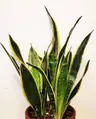

 Similar to Amazonian Basil
✨ Discover rare plants
Ace of Spades

Echeveria Esther

Rhipsalis clavata

Chinese Evergreen 'Go…

Philodendron 'Glorius'

Scotch Moss

Scindapsus pictus 'Si…

Parrot Pitcher Plant

Ceropegia simoneae

Cleistocactus icosago…

Pink Ruby Sedevaria

Tuber Fleeceflower

Graptoveria 'Douglas …
Philodendron 'Silver …

Begonia hydrocotylifo…
