
Purrsian Blue Nepeta
Taxonomy

Nepeta 'Purrsian Blue'
Nepeta
Lamiaceae
Lamiales

How to care for Purrsian Blue Nepeta
How often to water your Purrsian Blue Nepeta

every 9
Purrsian Blue Nepeta needs 0.5 cups of water every 9 when it doesn’t get direct sunlight and is potted in a 5" pot.
Use our water calculator to personalize watering recommendations to your environment or download Greg for more advanced recommendations for all of your plants.
Water 0.5 cups every
9
Finding light for Purrsian Blue Nepeta in your home

a window
Purrsian Blue Nepeta love being close to bright, sunny windows 😎.
Place it less than 1ft from a south-facing window to maximize the potential for growth.
Purrsian Blue Nepeta does not tolerate low-light 🚫.
Select your region to see how the current weather in your area affects the placement of Purrsian Blue Nepeta in your home 🏡.
How to fertilize Purrsian Blue Nepeta

Most potting soils come with ample nutrients which plants use to produce new growth.
By the time your plant has depleted the nutrients in its soil it’s likely grown enough to need a larger pot anyway.
To replenish this plant's nutrients, repot your Purrsian Blue Nepeta after it doubles in size or once a year—whichever comes first.
-
White Stuff??? Hello fellow plant lovers! I was wondering if any of you know what wrong with my catnip plant? I recently bought it & repotted it, but now there is white stuff on a bunch of the leaves. This is my first catnip plant, so I’m not sure if this is normal?? I tried wiping it off but it didn’t work. I have never had this happen to any of my other plants so I have no idea what it is or how to treat it if it’s something bad. Absolutely any suggestions would be much appreciated!! - PlantLuvRgrl
-
I’m thinking one of the neighbor cats damaged it. I don’t know if I should cut it or if that’s even a good spot to cut it. But it’s just not coming back. I have it under a grow light as it’s cloudy today. My seedlings are doing well if this fails. #Catnip
-
Is it normal for catnip to be this much of a drama queen? We had a couple days of rain and clouds and it’s droopy. I changed the pot and soil to better draining. Just hoping he perks back up. #Catnip
-
Hello! My #Catnip is droopy. It has these tiny blooms growing, except it looks very glum. What should I do? I think the sprinklers were running right on the plant, so I moved it. Are the sprinklers watering it too much or is there something else going wrong?
-
Why does she look so sad? :( #Catnip The catnip I'm growing for my cat (Bean and Cheese Taco) has started wilting in some areas. She has enough light and water and she has some plant food. Is it like a fertilizer issue?
-
Is this plant better indoors or out? #Catmint
-
How often and what type of fertilizer is recommended for catnip? #Catnip
-
New catnip plant
-
He is pale with tiny leaves. He is inside under a grow light because of the severe heat outside. Is he getting too much light maybe? #Catnip
-
Sad Catnip hello! i’m new to having a lot of plants at once but not new to having plant babies. my catnip is extra droopy in the inner layers and i’m just wondering if she’s sick or if that’s just a biproduct of the wind we got yesterday. while i was away she got a little beat up. pic for reference. thank y’all! ♡


Care Summary for Purrsian Blue Nepeta
Purrsian Blue Nepeta
 Greg recommends:
 Water
Water
0.5 cups every 9 days
 Placement
< 1ft from a window
 Nutrients
Repot after 2x growth
Based on the 4” pot your plant is in, and that it doesn’t get direct sunlight.
 Trending in your area










 Similar to Purrsian Blue Nepeta
✨ Discover rare plants

Miss All-American Bea…

Starfish Snake Plant

Tuber Fleeceflower

Royal Flush Split Rock

Munstead Lavender

Betel

Maroon Pitcher Plant

Rainbow Echeveria
Carolina Reaper

Radiator Plant

Milky Widow's Thrill

Rhipsalis clavata

Aloe 'Lavender Star'

Chinese Evergreen 'Go…

Lithops

Chandelier Plant
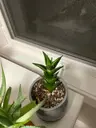
Astroloba congesta
