

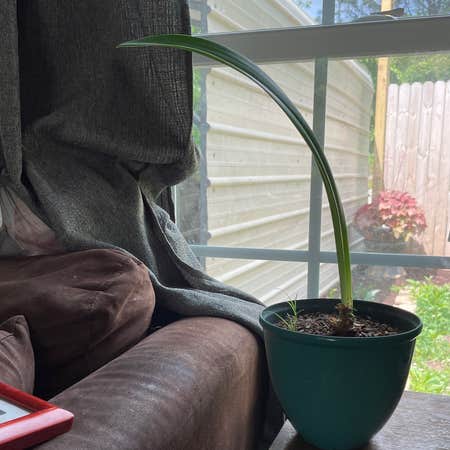


Striped Barbados Lily
About Striped Barbados Lily
Striped Barbados Lily is a relatively rare houseplant 🌿 that needs regular watering to thrive. They do best in long-lasting, direct light ☀️ and should be less than 1 foot from a window.
Striped Barbados Lily likes soil that is well draining. You may want to supplement with a gentle, organic fertilizer throughout the peak growing season.
⚠️ Striped Barbados Lily is extremely dangerous if consumed. If you, a family member, or a pet has ingested any amount of plant material contact Poison Control, US (800) 222-1222, or your veterinarian immediately. These plants are not recommended for homes with children, cats, or dogs.
Taxonomy

Hippeastrum striatum
Hippeastrum
Amaryllidaceae
Asparagales

How to care for Striped Barbados Lily
How often to water your Striped Barbados Lily

every 9
Striped Barbados Lily needs 0.5 cups of water every 9 when it doesn’t get direct sunlight and is potted in a 5" pot.
Use our water calculator to personalize watering recommendations to your environment or download Greg for more advanced recommendations for all of your plants.

Water 0.5 cups every
9
Finding light for Striped Barbados Lily in your home

a window
Striped Barbados Lily love being close to bright, sunny windows 😎.
Place it less than 1ft from a south-facing window to maximize the potential for growth.
Striped Barbados Lily does not tolerate low-light 🚫.
Select your region to see how the current weather in your area affects the placement of Striped Barbados Lily in your home 🏡.
How to fertilize Striped Barbados Lily

Most potting soils come with ample nutrients which plants use to produce new growth.
By the time your plant has depleted the nutrients in its soil it’s likely grown enough to need a larger pot anyway.
To replenish this plant's nutrients, repot your Striped Barbados Lily after it doubles in size or once a year—whichever comes first.
-
Don’t mind my yellow leaves but this might be a stupid question… why is my amaryllis sprouting from the side like this? Could it be another bloom? Or is it sprouting a baby? I know the bulb isn’t properly covered btw, I bought it from a store while it was in bloom and didn’t want to repot until the flowers died to prevent further stress. #Amaryllis #help #HappyPlants
-
What’s wrong with her? SOS #Amaryllis #help #HappyPlants #PlantAddict #PlantTherapy #PlantCorner #BeforeAndAfter #DIYPlanter
-
#PlantsMakePeopleHappy #GregPlantShop #PlantsMakePeopleHappy
-
Meet my new plant who was almost forgotten about stored in a weird spot after being gifted it for Xmas and found it in time for it to bloom!!! #stripedtubedamaryllis
-
What do I do now the the blooms are gone and it’s just leaves? #StripedTubedAmaryllis
-
When my amaryllis is done blooming do I pinch the top off? Or just cut the whole stem off? #StripedTubedAmaryllis
-
Potted deep enough? Couldn't resist the amaryllis bulbs on sale at the gardening store and got a "Flamenco Queen" bulb. I read that amaryllis should be potted with 2/3 of the bulb buried but how necessary is that? As you can see, it's more half buried. TIA #greggang! #amaryllis #flamencoqueen #hippeastrum #winterflowers #winterplants #ForcingBulbs #plantsmakepeoplehappy #plantfriendsarethebestfriends #happyplants #
-
Brought in all the amaryllis after the deer feast. We didn’t repot the babies this year, so the big one is sharing a pot with two of her kids
-
How do I get my Amarillis to bloom? Hello! I have had my amarillis for a few years and it randomly decided to bloom a few months ago. It is still green and I was wondering how I could make it flower again for the holidays? Thank you
-
I got this from someone and not sure what to do with it. Chop it? Or leave it be? She said it bloomed twice in the fall. Is this what they do during spring/summer? She wasnt able to have it by sunlight which I think is why it hasn't done much. Please help #StripedTubedAmaryllis


Care Summary for Striped Barbados Lily

Striped Barbados Lily
 Greg recommends:
 Water
Water
0.5 cups every 9 days
 Placement
< 1ft from a window
 Nutrients
Repot after 2x growth
Based on the 4” pot your plant is in, and that it doesn’t get direct sunlight.
 Trending in your area













 Similar to Striped Barbados Lily

✨ Discover rare plants

Croton Nervia
Phalaenopsis schiller…

Fagraea ceilanica

Echeveria Esther

Anthurium Fingers

Pine Cone Plant
Rosularia platyphylla

Aloe 'Lavender Star'

Anastasia Weeping Fig

Kudu Lily
Thelocactus macdowell…

Electric Blue Gecko

Aglaonema 'Green Bowl'

Aeonium 'Blushing Bea…

Crassula 'Calico Kitt…

Lithops
