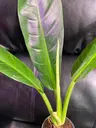
Spanish Stopper
Taxonomy

Eugenia foetida
Eugenia
Myrtaceae
Myrtales

How to care for Spanish Stopper
How often to water your Spanish Stopper

every 9
Spanish Stopper needs 0.5 cups of water every 9 when it doesn’t get direct sunlight and is potted in a 5" pot.
Use our water calculator to personalize watering recommendations to your environment or download Greg for more advanced recommendations for all of your plants.
Water 0.5 cups every
9
Finding light for Spanish Stopper in your home

a window
Spanish Stopper may have difficulty thriving, and will drop leaves 🍃, without ample sunlight.
Place it less than 3 feet from a south-facing window to maximize the potential for growth.
Select your region to see how the current weather in your area affects the placement of Spanish Stopper in your home 🏡.
How to fertilize Spanish Stopper

Most potting soils come with ample nutrients which plants use to produce new growth.
By the time your plant has depleted the nutrients in its soil it’s likely grown enough to need a larger pot anyway.
To replenish this plant's nutrients, repot your Spanish Stopper after it doubles in size or once a year—whichever comes first.
-
I'm so proud of my baby. She sprouted 2 weeks ago and she's already getting so big. She sprouted 2 weeks ago and she's already getting so big. Her brothers haven't sprouted yet but they already have roots so I'm hoping they'd be out soon. I want to make them into bonsai. I think their little pumpkins would be soooo pretty when the start fruiting. #plantsmakepeoplehappy #happyplants #newgrowth #bonsaibaby I guess my question is how long would it take for her brothers to join her. I'm getting antsy.
-
My plant suffered damage from snow is it possible to save
-
I found a few of these fruits in the woods and brought them home to figure out what they were. They’ve been outside and have dried out to release seeds. I’d like to plant the seeds, but want to know more about them. Any helpers?
Care Summary for Spanish Stopper
Spanish Stopper
 Greg recommends:
 Water
Water
0.5 cups every 9 days
 Placement
< 3ft from a window
 Nutrients
Repot after 2x growth
Based on the 4” pot your plant is in, and that it doesn’t get direct sunlight.
 Trending in your area











 Similar to Spanish Stopper
✨ Discover rare plants

Cleistocactus icosago…
Chinese Evergreen 'Ga…

Echeveria Arrow

Radiator Plant

Blue Moon Wisteria

Electric Fern
Astroloba congesta

Haworthia emelyae com…

Sedeveria 'Blue Elf'

Peperomia 'Harmony's …

Aloe 'Lavender Star'

Pseudorphipsalis 'Blu…

Pink Ruby Sedevaria

Raphionacme flanaganii

Euphorbia
Hoya 'Memoria'

Hoya kalimantan