
Dyssodia sect. Gnaphalopsis
Taxonomy

Dyssodia sect. Gnaphalopsis
Dyssodia
Asteraceae
Asterales

How to care for Dyssodia sect. Gnaphalopsis
How often to water your Dyssodia sect. Gnaphalopsis

every 9
Dyssodia sect. Gnaphalopsis needs 0.5 cups of water every 9 when it doesn’t get direct sunlight and is potted in a 5" pot.
Use our water calculator to personalize watering recommendations to your environment or download Greg for more advanced recommendations for all of your plants.
Water 0.5 cups every
9
Finding light for Dyssodia sect. Gnaphalopsis in your home

a window
Dyssodia sect. Gnaphalopsis may have difficulty thriving, and will drop leaves 🍃, without ample sunlight.
Place it less than 3 feet from a south-facing window to maximize the potential for growth.
Select your region to see how the current weather in your area affects the placement of Dyssodia sect. Gnaphalopsis in your home 🏡.
How to fertilize Dyssodia sect. Gnaphalopsis

Most potting soils come with ample nutrients which plants use to produce new growth.
By the time your plant has depleted the nutrients in its soil it’s likely grown enough to need a larger pot anyway.
To replenish this plant's nutrients, repot your Dyssodia sect. Gnaphalopsis after it doubles in size or once a year—whichever comes first.
Care Summary for Dyssodia sect. Gnaphalopsis
Dyssodia sect. Gnaphalopsis
 Greg recommends:
 Water
Water
0.5 cups every 9 days
 Placement
< 3ft from a window
 Nutrients
Repot after 2x growth
Based on the 4” pot your plant is in, and that it doesn’t get direct sunlight.
 Trending in your area




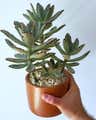





 Similar to Dyssodia sect. Gnaphalopsis
✨ Discover rare plants
Rosularia platyphylla
Anthurium papillilami…

Aloe 'Lavender Star'

Burro's Tail

Orange Lipstick Plant

Anthurium 'Fantasy Lo…
Chinese Evergreen 'Ga…

Echeveria Esther

Rhipsalis clavata
Skeleton Key Pothos
Carolina Reaper

Treasure Flower

Eden Climbing Rose

Lithops

Miss All-American Bea…

Peperomia 'Harmony's …

Milky Widow's Thrill
