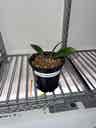
Cissus narinensis
Taxonomy

Cissus narinensis
Cissus
Vitaceae
Vitales

How to care for Cissus narinensis
How often to water your Cissus narinensis

every 9
Cissus narinensis needs 0.5 cups of water every 9 when it doesn’t get direct sunlight and is potted in a 5" pot.
Use our water calculator to personalize watering recommendations to your environment or download Greg for more advanced recommendations for all of your plants.
Water 0.5 cups every
9
Finding light for Cissus narinensis in your home

a window
Cissus narinensis may have difficulty thriving, and will drop leaves 🍃, without ample sunlight.
Place it less than 3 feet from a south-facing window to maximize the potential for growth.
Select your region to see how the current weather in your area affects the placement of Cissus narinensis in your home 🏡.
How to fertilize Cissus narinensis

Most potting soils come with ample nutrients which plants use to produce new growth.
By the time your plant has depleted the nutrients in its soil it’s likely grown enough to need a larger pot anyway.
To replenish this plant's nutrients, repot your Cissus narinensis after it doubles in size or once a year—whichever comes first.
-
My oakleaf Ivy (grape Ivy) finally arrived!!! It’s stressed from shipping so right now it’s droopy (just took it out of the package) but I gave it a thorough watering and bright indirect light and now it’s time to wait for it to bounce back! #OakLeafIvy #GrapeIvy #NewPlants #PlantMail
-
Not sure why this begonia plant is so sad, it’s beside a grow light and is watered once a week
-
New to cissus discolor I was given this plant and am not sure why it lost its variegation but I saw a video where someone said they need lots of light so I put her right by my grow light and made sure she had water any tips?
-
Help me not kill my beautiful plant please I got this beautiful vining begonia about a month and a half ago. It was PERFECT. Then my dog got sick, I piled all of the vines on its hanger, and forgot about it for a couple of weeks. When I came to, it desperately needed water, leaves falling off and yellowing, and it seemed like it's tendrils were suffocating its new growth. So I untangled all of the vines, watered, and got it under my grow lights. It's still losing leaves. I have a trellis coming tomorrow for it to grab. The humidity is at 64% in my room but I have a humidifier I can set up. Anyone have any other tips to restore and keep this beauty alive? It is currently in a wine ice bucket, about 3 feet from some barrina bar lights. #happyplants #plantsmakepeoplehappy #plantaddict #planttherapy #petsandplants #newplantmom #hangingplants
-
Finally! I found my rare wishlist plant 🥹😍 The Sugar Vine! Buttt.. its even harder finding care tips! Please share if you have one. Im excited to watch this rare beauty grow & vine 💚 #sugarvine #plantsmakepeoplehappy #plantaddict #trailingplants #rareplant #plantcaretips #hangingplants
-
I need some help Hi, I'm new to gardening and I want to know more about it. I got some typek of Ivy from my friend and I don't know why but I think it is dying.It has dry leaves but I water it twice a week. What is wrong with it?
-
How do you propagate grape ivy?? #GrapeIvy
-
Uggh #GrapeIvy a year in and this is all I got! This plant has been moved more times than me in grade school. Grow light, sunlight, non direct light, humidity no humidity, classical music, spankings and kisses and nothing. Also feed it. Uggh is all I got.
-
I just bought this little guy and half the leaves crisped up and the rest wilted over. so I gave I water and put it under a plant light and gave it plant food but idk what’s wrong with it #GrapeIvy
-
Just in time for #FreshLeafFriday, my #SwissCheeseVine, #PhiloBrasil, and #PeruvianGrapeIvy are all putting out new growth. The philo was the one plant from my #GregPlantShop pothos 4-pack that struggled in the beginning. I’m glad to see it thriving!


Care Summary for Cissus narinensis
Cissus narinensis
 Greg recommends:
 Water
Water
0.5 cups every 9 days
 Placement
< 3ft from a window
 Nutrients
Repot after 2x growth
Based on the 4” pot your plant is in, and that it doesn’t get direct sunlight.
 Trending in your area











 Similar to Cissus narinensis
✨ Discover rare plants

Blue Moon Wisteria

Scindapsus pictus 'Si…

Electric Fern
Linnaei Kunth

Hoya sipitangensis

Crassula 'Calico Kitt…

Anthurium 'Fantasy Lo…

Tuber Fleeceflower
Chinese Evergreen 'Ga…
Astroloba congesta
Thelocactus macdowell…

Begonia hydrocotylifo…

Vatricania guentheri

Betel
Philodendron 'Rio'

Scindapsus pictus 'Si…

Bonsai Crassula