
English Daisy 'Bellissima Mix'
Taxonomy

Bellis perennis 'Bellissima Mix'
Bellis
Asteraceae
Asterales

How to care for English Daisy 'Bellissima Mix'
How often to water your English Daisy 'Bellissima Mix'

every 9
English Daisy 'Bellissima Mix' needs 0.5 cups of water every 9 when it doesn’t get direct sunlight and is potted in a 5" pot.
Use our water calculator to personalize watering recommendations to your environment or download Greg for more advanced recommendations for all of your plants.
Water 0.5 cups every
9
Finding light for English Daisy 'Bellissima Mix' in your home

a window
English Daisy 'Bellissima Mix' love being close to bright, sunny windows 😎.
Place it less than 1ft from a south-facing window to maximize the potential for growth.
English Daisy 'Bellissima Mix' does not tolerate low-light 🚫.
Select your region to see how the current weather in your area affects the placement of English Daisy 'Bellissima Mix' in your home 🏡.
How to fertilize English Daisy 'Bellissima Mix'

Most potting soils come with ample nutrients which plants use to produce new growth.
By the time your plant has depleted the nutrients in its soil it’s likely grown enough to need a larger pot anyway.
To replenish this plant's nutrients, repot your English Daisy 'Bellissima Mix' after it doubles in size or once a year—whichever comes first.
-
Not sprouting :( Hi! So almost two weeks ago I put some lavender seeds in one pot and some daisy seeds in another. The packet they came in said to water everyday and put in direct sunlight, and there should begin to be sprouts in a week. Well it’s almost been two weeks and there’s literally nothing put dirt in a pot… am I just being immatiant or is there something I’m forgetting? Kinda new to this whole plant thing and would love some help. #HappyPlants #FloweringPlants #NewPlantMom #advice
-
Hello everyone!!! May I present to you the newest member of my plant family… the mighty…the greatest… HUCKLEBERRY FERN!!!!! Isn’t she cute?🥰 
-
New daisies are coming! I’m just waiting for this babies to grow a lil bit more to change them to a new pot. 🌼 Please, if you have any advice it is greatly appreciated 🪴 #HappyPlants #Daisy #flowers
-
I got these seeds from my gson for mother's day I'm very new to plants and growing them and I killed all but this lonely one should I just give up on this one and go buy some more and hope he doesn't see #Daisy
-
Watering rythm for daisy App says to water once a week but if I don't water my daisy daily it droops until I water again

Care Summary for English Daisy 'Bellissima Mix'
English Daisy 'Bellissima Mix'
 Greg recommends:
 Water
Water
0.5 cups every 9 days
 Placement
< 1ft from a window
 Nutrients
Repot after 2x growth
Based on the 4” pot your plant is in, and that it doesn’t get direct sunlight.
 Trending in your area











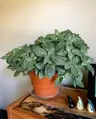

 Similar to English Daisy 'Bellissima Mix'

✨ Discover rare plants

Aglaonema Spitfire
Anthurium papillilami…

Crassula 'Calico Kitt…

Ruby Ball

Cleistocactus icosago…

Crassula 'Purple Drag…

Ace of Spades

Lithops

Sedum 'White Diamond'
Astroloba congesta

Raphionacme flanaganii

Blue Moon Wisteria

Electric Blue Gecko
Stanhopea tigrina

Munstead Lavender

Anthurium Fingers

Christmas Candle
