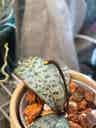
Acer griseum
About Acer griseum
Acer griseum is a super rare houseplant 🌿 that is easy to grow and needs regular watering to thrive. They do best in long-lasting, direct light ☀️ and should be less than 1 foot from a window.
Acer griseum likes soil that is good at retaining moisture. Your plant shouldn't need added fertilizers if you repot each time it doubles in size.
Acer griseum belongs to the Acer genus, and is native to Central China.
Taxonomy

Acer griseum
Acer
Sapindaceae
Sapindales

How to care for Acer griseum
How often to water your Acer griseum

every 9
Acer griseum needs 0.5 cups of water every 9 when it doesn’t get direct sunlight and is potted in a 5" pot.
Use our water calculator to personalize watering recommendations to your environment or download Greg for more advanced recommendations for all of your plants.
Water 0.5 cups every
9
Finding light for None in your home

a window
Acer griseum love being close to bright, sunny windows 😎.
Place it less than 1ft from a south-facing window to maximize the potential for growth.
Acer griseum does not tolerate low-light 🚫.
Select your region to see how the current weather in your area affects the placement of Acer griseum in your home 🏡.
How to fertilize Acer griseum

Most potting soils come with ample nutrients which plants use to produce new growth.
By the time your plant has depleted the nutrients in its soil it’s likely grown enough to need a larger pot anyway.
To replenish this plant's nutrients, repot your Acer griseum after it doubles in size or once a year—whichever comes first.
-
Hi all! I recently got this acer, but it's struggled since a storm hit soon after I got it, shifting colour quickly and dramatically after the storm. My neighbors insist it is simply thirsty, but I'm not sure that's the whole picture. What do you think? #JapaneseMaple
-
Hello! New to the app. Can someone please help and tell me what is wrong with this Japanese maple. Little spots on the leaves. #OutdoorGrowing #NewPlantMom #PlantGraveyard
-
Some of my Japanese Maple Tree leaves are green. Why? #JapaneseMaple
-
What is on my silver maple
-
Does anyone know what is wrong with this guy?
-
Japanese maple recently adopted from Lowes… suppose to be able to plant it immediately and my contractor parked his trailer where it was supposed to go . He left it there for 3 days.. finally got it planted tonight so the picture is dark… how do I get the plant to its glory??
-
Japanese maple crimson queen care I am I need of tips and caring if this plant
-
Any suggestions on what’s wrong with this Japanese Maple? #JapaneseMaple
-
If you saw my last post, you’ll recall that I have a mystery #pest. It’s been chomping on new and older growth and is showing very little mercy. Today I sprayed some #NeemOil on my tree. Here’s to hoping it’ll help!
-
Anyone know what might be eating my plant? UPDATE: potential culprit added to pictures. Closest set of ids I got are #woodlandfuzzyant, #maskedhunter, and genus Trypoxylon, a species of #wasps. Any help and suggestions on how to divert the #pest (without killing it if it’s a native or beneficial species) would be greatly appreciated!! I’ve been checking for a few days not and haven’t seen any caterpillars, but I haven’t seen any bugs around it either. Thoughts? #damage #plantdamage #mapletree #michigannative #PestControl #pestID #bugID #identify


Care Summary for Acer griseum
Acer griseum
 Greg recommends:
 Water
Water
0.5 cups every 9 days
 Placement
< 1ft from a window
 Nutrients
Repot after 2x growth
Based on the 4” pot your plant is in, and that it doesn’t get direct sunlight.
 Trending in your area








 Similar to Acer griseum
✨ Discover rare plants
Graptopetalum 'Marqui…

Rhipsalis clavata

Aloe 'Lavender Star'

Red Mistletoe Cactus

Begonia lubbersii
Philodendron 'Gabby'

Burro's Tail

Blue Moon Wisteria
Linnaei Kunth

Crassula 'Purple Drag…

Anastasia Weeping Fig

Variegated Arrowhead …
Hoya 'Memoria'

Pine Cone Plant

Begonia hydrocotylifo…

Royal Flush Split Rock