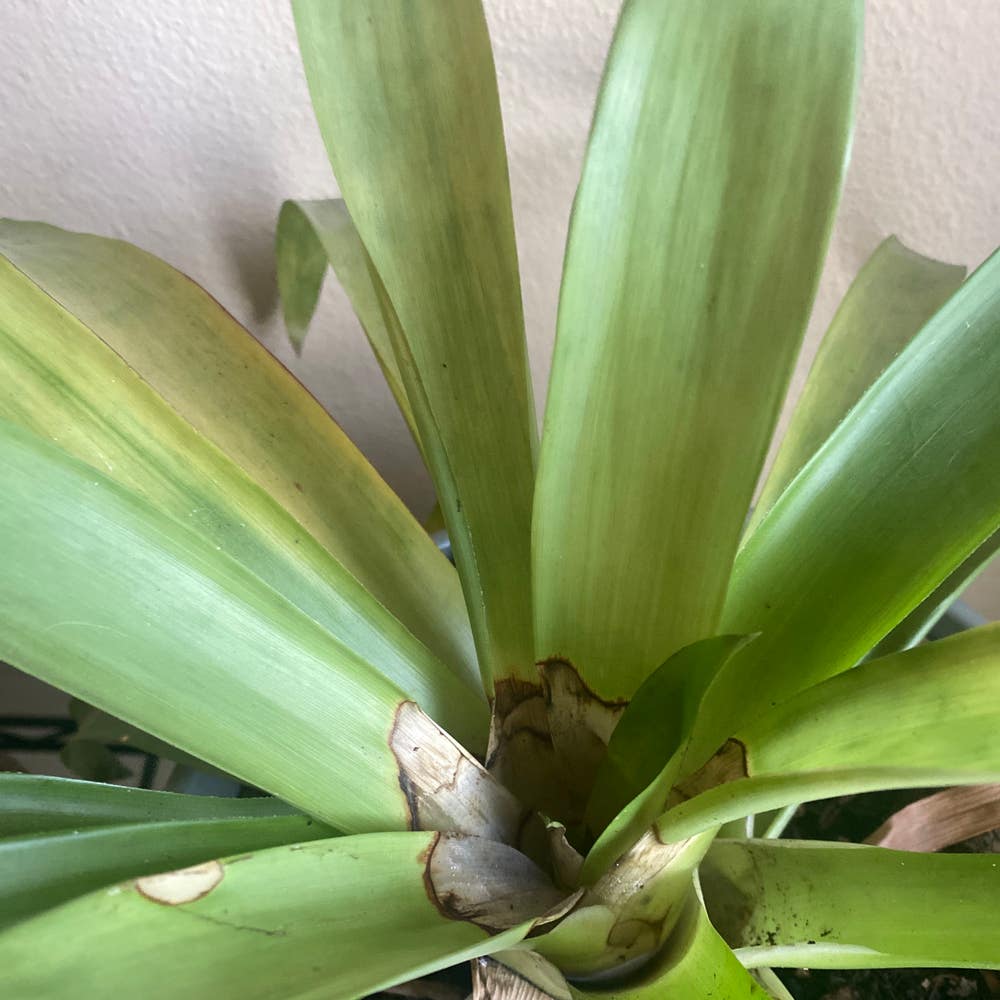
Why Is My Neoregelia 'Groucho' Not Doing Well?
Neoregelia 'Groucho'
By the Greg Editorial Team
Jun 05, 2024•3 min read
This article was created with the help of AI so we can cover more plants for you. May contain errors. See one? Report it here.
Revive your wilting Neoregelia 'Groucho' 🌿 with expert tips to tackle common yet fixable issues!
- Water wisely—too much causes root damage, too little leads to crispy leaves.
- 🌡️ Keep it cool and bright, but avoid direct sunlight and extreme temperatures.
- 🕵️♂️ Inspect regularly for root rot, pests, and use indirect light to prevent scorch.
Water Woes: Too Much or Too Little?
💦 Spotting the Signs
Yellow leaves? Roots throwing a white flag? Your Neoregelia 'Groucho' might be drowning in kindness. Over-watering turns roots into a swampy mess. Conversely, if the leaves resemble crispy autumn foliage, it's a cry for hydration.
Striking the Right Balance
💧 Watering your plant is not a set-it-and-forget-it deal. It's about tuning in to its needs. Use a moisture meter or the touch test. Top inch dry? Time to water. Remember, your plant's thirst changes with the seasons.
🚰 Drainage and Soil Health
Drainage holes are your plant's lifeline. No holes, no air, no happy roots. Choose a well-draining soil mix to avoid creating an accidental swamp for your plant's roots. It's about providing a breathable home for a thriving Neoregelia 'Groucho'.
Light and Temperature: The Balancing Act
🍃 Reading the Leaves
Leaf appearance is a tell-tale sign of your Neoregelia 'Groucho' reacting to light and temperature conditions. Leaves that are pale or elongated may be stretching out for more light, indicating insufficient light levels. On the flip side, leaves that curl inward, discolor, or look scorched are likely defending themselves against excessive light or heat.
🌞 Finding the Sweet Spot
Indirect sunlight is the sweet spot for your Neoregelia 'Groucho'. Too direct, and the leaves throw a fit; too little, and they sulk. Rotate your plant regularly to promote even growth and prevent it from developing a lean. Aim for a consistent temperature between 65°F and 80°F (18°C and 27°C), avoiding drafts and vents like they're the plague. Keep a humidity monitor handy to ensure your plant's environment isn't too dry or too humid, because let's face it, nobody likes a burrito or a sauna when they're trying to relax.
The Unseen Enemy: Root Rot and Fungal Foes
🔍 Early Warning Signals
Root rot and fungal issues are the ninjas of plant problems—silent, stealthy, and potentially deadly. Dark, mushy roots and a foul smell emanating from the soil are your plant's distress flares. If you spot lesions on the leaves or a suspicious fuzz partying on the soil surface, it's intervention time.
Rescue and Recovery
When root rot crashes your plant's party, it's time to play surgeon. Remove the plant from its pot and give the roots a thorough wash. Snip the rot with sterilized scissors, and only then consider a fungicide—like calling in the cavalry after assessing the battlefield. Repot in fresh, sterile soil and tweak your care routine to prevent an encore of the root rot drama.
🛡️ Preventative Measures
The best offense against root rot is a solid defense. Water with precision—let the soil dry out between waterings. Ensure your pot has adequate drainage and isn't a hotbed for fungal raves; good air circulation is your bouncer at the door. Regularly inspect your plant for early signs like a musty odor or discolored leaves—vigilance is your watchword.
Pests and Leaf Scorch: External Aggressors
🐜 Pests Patrol
Beware of freeloaders on your Neoregelia 'Groucho'. Regular checks under leaves and along stems are crucial. Spot aphids, spider mites, or scale insects? Isolate your plant immediately. Evict pests with insecticidal soap or neem oil—be relentless, they're tenacious.
🛡️ Shielding from Scorch
Leaf scorch is like a distress signal—dry edges or yellow patches from too much sun. Protect your Neoregelia 'Groucho' by placing it in bright, indirect light. If outdoor, use taller plants or shade cloth as a sunblock. Trim scorched leaves to help the plant focus on healthy growth.
⚠️ Safety First
This content is for general information and may contain errors, omissions, or outdated details. It is not medical, veterinary advice, or an endorsement of therapeutic claims.
Always consult a qualified healthcare professional before using any plant as food, medicine, or supplement.
Never eat any plant (or feed one to pets) without confirming its identity with at least two trusted sources.
If you suspect poisoning, call Poison Control (800) 222-1222, the Pet Poison Helpline (800) 213-6680, or your local emergency service immediately.
Spotted an error? Please report it here.
Keep your Neoregelia 'Groucho' flourishing 🌿 with Greg's custom watering reminders, tailored to prevent over or under-watering and ensure perfect plant health.