How to Fertilize Your Neoregelia 'Groucho'
Neoregelia 'Groucho'
By the Greg Editorial Team
Jun 05, 2024•5 min read
This article was created with the help of AI so we can cover more plants for you. May contain errors. See one? Report it here.
Discover the secret to dazzling Neoregelia 'Groucho' blooms with our tailored fertilizing guide! 🌺🔍
- Lower nitrogen, higher phosphorus for 'Groucho's' vibrant blooms.
- Use liquid fertilizers to avoid copper toxicity and ensure precision.
- Fertilize monthly during growth, less in rest periods to prevent damage.
Picking the Perfect Fertilizer for 'Groucho'
💡 Understanding Nutrient Ratios for Vibrant Blooms
Selecting a fertilizer for Neoregelia 'Groucho' is less about green thumb mystique and more about science. The N-P-K ratio on fertilizer labels is your cheat sheet. For 'Groucho', a ratio with lower nitrogen (N) is key, as too much can lead to all leaves, no show. Aim for a blend that promotes flowering, like a 5-10-5 or 10-20-10 mix, where phosphorus (P) takes the lead.
💡 The Lowdown on Low Copper: Why It Matters for 'Groucho'
Copper is a micronutrient that often flies under the radar but plays a pivotal role in plant health. However, 'Groucho' is sensitive to copper, so a fertilizer with low copper levels is non-negotiable. This isn't just a quirky preference; it's about avoiding toxicity and keeping those vibrant leaves and blooms safe.
💡 Liquid vs. Granular: Which is Best for Your Bromeliad Buddy?
The debate between liquid and granular fertilizers is like choosing between a burger and a steak—both can be great, but it depends on the occasion. For 'Groucho', go for a liquid or water-soluble fertilizer. Why? It's about control and precision. You can dilute it to a 1/4 strength, ensuring your bromeliad gets a balanced diet without the risk of overfeeding. Plus, liquid fertilizers are easier to apply to the central cup of bromeliads, which is where 'Groucho' prefers to sip its nutrients.
Timing is Everything: When to Fertilize for Optimal Blooms
⏰ Growing Season Guidelines: Feeding Your 'Groucho' Right
To coax the best blooms from your Neoregelia 'Groucho', timing your fertilizer applications is crucial. Spring marks the start of the growing season, triggering 'Groucho' into active growth mode. This is when you should begin a regular fertilization regimen. Monthly feedings are generally recommended, but stay observant; if your bromeliad seems lackluster, it may be pleading for a nutrient boost.
🛑 Resting Period: When to Hold Back on the Nutrients
As the days grow shorter and temperatures drop, 'Groucho' will slow down. This is your cue to reduce fertilization. During autumn and winter, your plant is resting, conserving energy for the next growth spurt. Overfeeding now can do more harm than good, leading to nutrient build-up and potential damage to your plant. Think of it as giving your 'Groucho' a light snack rather than a full meal, keeping it satisfied but not overindulged.
The Fertilizing Technique: Boosting 'Groucho' Blooms Without the Burn
💧 Central Cup vs. Soil: Where to Apply the Magic Potion
Fertilizing your Neoregelia 'Groucho' is less about brute force and more about finesse. Central cup application is the way to go. Pour your diluted fertilizer solution directly into the central cup, ensuring the plant gets a direct hit of nutrition without soil interference. This mimics the natural way these plants receive nutrients in their rainforest homes.
For soil dwellers, a granular approach might seem tempting, but remember, 'Groucho' is an epiphyte. It's used to catching its meals on the fly, from water and debris accumulating in its central reservoir. So, keep the granules for your garden veggies and give 'Groucho' the liquid diet it craves.
🌊 Dilution Solutions: Preventing Salt Buildup and Root Shock
Dilution is not just a solution; it's a lifesaver. Overzealous fertilization is like serving a steak to a baby – it's overkill. Mix your liquid fertilizer with water, following the less-is-more philosophy. Think of it as a gentle nudge rather than a shove. This prevents the dreaded salt buildup that can lead to root burn, a surefire way to send 'Groucho' into a downward spiral.
Always water before you fertilize. It's like prepping the dinner table before serving the feast. This ensures the roots are hydrated and ready to absorb nutrients without getting overwhelmed. And remember, if the soil feels like the Sahara, water first, fertilize later. It's about creating a welcoming environment for those nutrients, not a hostile takeover.
Recognizing and Rescuing Over-Fertilized 'Groucho'
🚨 Spotting Trouble: Early Signs of Fertilizer Overdose
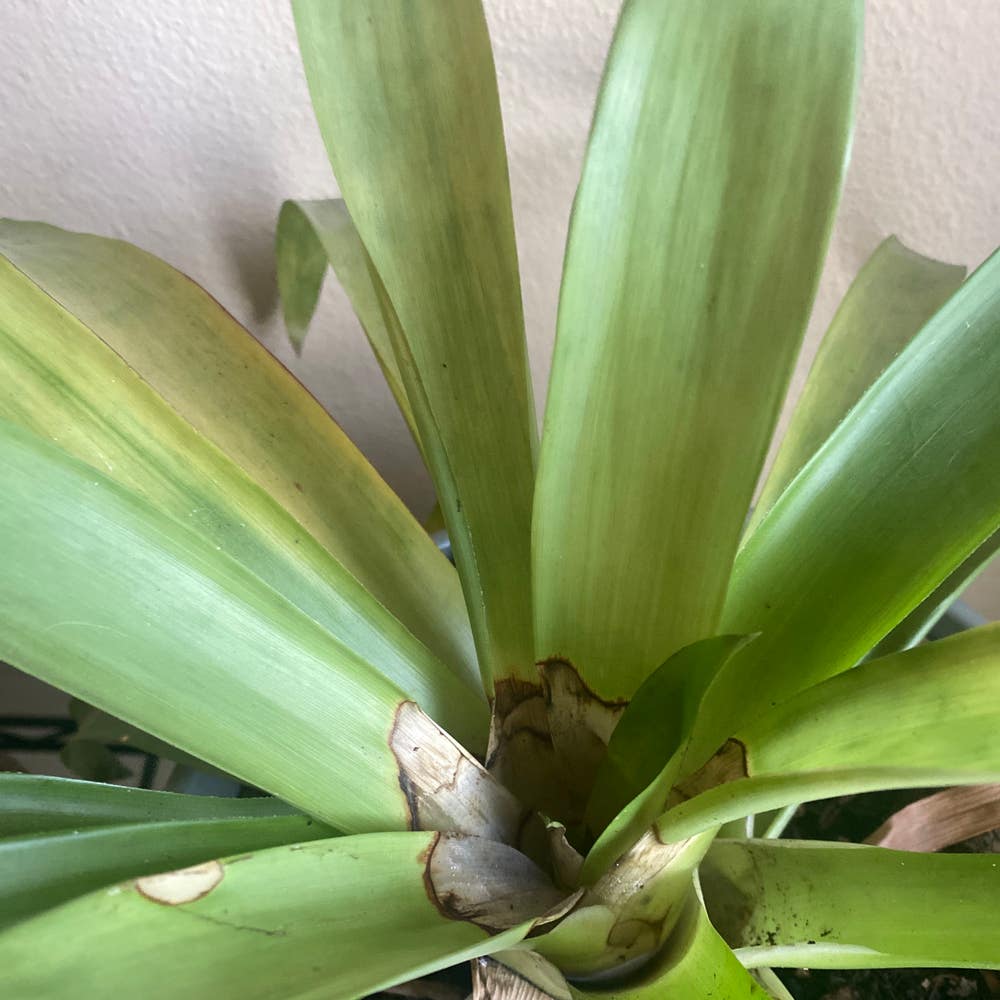
Yellowing leaves, stunted growth, and a crusty buildup on the soil's surface are your Neoregelia 'Groucho' crying out for help. These symptoms scream over-fertilization. If you notice the edges and tips of leaves turning brown, it's as if your plant is waving a white flag in defeat. Leaf scorch isn't a new punk rock band, it's a distress signal from your 'Groucho'.
🛠️ The Recovery Plan: Bringing 'Groucho' Back to Blooming Health
First, stop fertilizing—full stop. Your 'Groucho' needs a break from the buffet. If you see any fertilizer granules lounging on the soil, consider them persona non grata and remove them. Next, it's time for a rinse cycle; flush the soil with water to wash away the excess nutrients. This might be a repeat affair, so don't put away the watering can just yet.
Prune the damaged foliage to help your plant focus on the comeback. It won't resurrect the dead leaves, but it will give the healthy ones a fighting chance. If the situation looks dire, a soil transplant could be your 'Groucho's' ticket to recovery. Hold off on the nutrient boost for at least three to four weeks—patience is your new best friend. Remember, over-fertilization is a hiccup, not a death sentence, for your vibrant 'Groucho'.
⚠️ Safety First
This content is for general information and may contain errors, omissions, or outdated details. It is not medical, veterinary advice, or an endorsement of therapeutic claims.
Always consult a qualified healthcare professional before using any plant as food, medicine, or supplement.
Never eat any plant (or feed one to pets) without confirming its identity with at least two trusted sources.
If you suspect poisoning, call Poison Control (800) 222-1222, the Pet Poison Helpline (800) 213-6680, or your local emergency service immediately.
Spotted an error? Please report it here.
Ensure your Neoregelia 'Groucho' achieves flourishing beauty 🌺 with Greg's tailored reminders for precise fertilizer applications from these expert tips.