🌂 Should I Repot My Umbrella Tree And If So, How?

Heptapleurum actinophyllum

By the Greg Editorial Team

Jun 08, 202411 min read

This article was created with the help of AI so we can cover more plants for you. May contain errors. See one? Report it here.

Boost your Umbrella Tree's vigor and beauty with timely repotting tips—your green thumb's secret weapon! 🌿✨

Umbrella tree
  1. 🌱 Root visibility and yellow leaves signal it's time to repot.
  2. Repot in spring for best results; avoid winter or when plant is stressed.
  3. Choose a slightly larger pot with well-draining soil for healthy growth.

Signs That Your Umbrella Tree Needs Repotting

Roots making a break for it outside the pot? That's your Umbrella Tree crying out for a new home. Visible roots on the soil's surface or peeking from the drainage holes are the plant's version of a white flag.

🩹 Root-bound conditions are like tight shoes; they stunt your plant's groove. If you spot a root tangle, it's time to give your green buddy some legroom.

Notice your Umbrella Tree's growth has hit the brakes? Yellow leaves, wilting, or a general look of despair are not just bad plant days—they're SOS signals.

Water pooling on top like a mini lake? Not good. This could mean the soil's too compacted or the roots are too crowded. Either way, your plant's not getting the drinks it needs.

If your Umbrella Tree is more yellow than green, don't just blame the light. It could be screaming for a soil temperature that doesn't give it the chills.

🌧️ Blackened leaves are the plant's way of saying you've overdone the hydration. And if the leaves look like they're on a diet (read: wrinkled), you've swung too far the other way.

Got a moss party on the soil surface? It's not just unsightly—it's a sign that your plant might be ready for a change of scenery.

Remember, repotting isn't just about upsizing; it's about giving your plant the reset it needs to thrive.

Potted umbrella tree with full green canopy and slight yellowing on some leaflets, situated on a shelf by a window.

Choosing the Right Time for Repotting

Spring ushers in a growth spurt for your Umbrella Tree, making it the prime time for repotting. This season aligns with the plant's natural cycle to recover swiftly from the stress of moving homes.

🌱 Why Spring?

During spring, the Umbrella Tree is in its element, stretching out roots and leaves with gusto. Repotting now means the plant can immediately take advantage of the fresh soil and space to expand.

😴 The Dormancy Dilemma

Avoid repotting when the Umbrella Tree is taking its winter nap. Disturbing it during dormancy is like waking a bear mid-hibernation—not a good idea.

🩺 Health Check First

Before you even think about repotting, give your plant a thorough once-over. Only healthy plants should face the shake-up of repotting; stressed or sickly ones might not handle the change well.

🌦 Seasonal Exceptions

If your plant is in dire straits—think cramped roots or soil that's more dust than dirt—then you may need to repot out of season. Do so with care, providing extra TLC afterward.

Healthy umbrella tree plant with lush green leaves in teal polka dot pot, held in hand against window.

How to Repot Your Umbrella Tree

💼 Preparing the New Home

Choose a pot that's just a size up from the old one—too large and you risk waterlogged soil leading to root rot. Ensure it has drainage holes. Fill the bottom with a layer of fresh, well-draining potting mix, rich in organic matter.

🔄 Out With the Old

Water your Umbrella Tree to ease the transition. Tilt the plant sideways and gently coax it out, avoiding harsh tugs that could damage the stem. If it's stubborn, tap the pot's edges or use a knife to loosen the soil.

🌱 Root TLC

Inspect the root ball. Snip off any dead or rotting roots—think of it as a plant pedicure. If roots are circling, tease them out gently. This encourages them to explore their new digs.

🏡 Settling In

Place the plant in the center of the new pot. The top of the root ball should sit an inch below the rim—no deeper, or you'll have a mudslide when you water. Fill in around the roots with more potting mix, firming lightly as you go.

💧 The First Drink

Water thoroughly until it drains out the bottom. This helps settle the soil and hydrates the roots. If the soil level drops after watering, top it off. Skip the fertilizer for now; the fresh soil's got nutrients covered.

🌱 Post-Repotting Care

Keep an eye on your plant. It might sulk a bit—transplant shock is real. But with proper light and watering, it'll perk up. Remember, plants are like us after a big move; they need time to adjust.

Close-up of a healthy, lush Umbrella Tree houseplant with dense green foliage and no signs of discoloration or damage.

Selecting the Right Pot and Soil

🌱 The Quest for the Perfect Pot

Size matters when it comes to pots. Your Umbrella Tree craves a new home that's just a tad larger than its current one—think 2-3 inches in diameter more. This gives the roots the space they need without drowning them in soil, which can lead to waterlogging. And let's not forget about drainage holes; they're non-negotiable unless you fancy root rot.

🌿 Soil: The Root of All Growth

Soil is not just dirt—it's the life support system for your plant. Well-draining is the mantra here. A mix that holds moisture but doesn't act like a wet sponge is your goal. Ingredients like coco coir, perlite, and organic matter are your best friends, creating that airy, fluffy mix that roots adore. And if you're feeling adventurous, crafting your own blend can be a horticultural high.

🏺 Material World: Pot Choices

Plastic or clay? It's not just an aesthetic choice. Clay pots breathe more, reducing the risk of waterlogging and salt buildup, but they'll have you watering more often. Plastic is lightweight and less thirsty. Choose based on your plant-parenting style and your Umbrella Tree's thirst level.

🚰 The Drainage Dilemma

If your pot's drainage is more of a suggestion than a feature, you're in trouble. Water should flow freely out the bottom—if it doesn't, consider a different pot or get handy with a drill. Your plant's roots need to breathe, not swim.

🌱 Soil Mix Showdown

Grab a premium potting mix or channel your inner green-thumbed alchemist and mix your own. Think peat, perlite, and mycorrhizae for a superstar soil that supports strong roots and happy plants. Remember, your Umbrella Tree doesn't want to sit in a swamp, so keep it light and airy.

🛏️ The Bottom Line

Ultimately, your plant's pot and soil are its bedroom and bed. Get it right, and you'll have a thriving Umbrella Tree that's the envy of the neighborhood. Get it wrong, and well, let's not go there. Choose wisely, plant parent.

Potential Risks and Challenges of Repotting

Repotting your Umbrella Tree isn't without its hazards. The biggest bogeyman here is transplant shock—a real drama queen of a condition that can leave your plant droopy, yellow, and generally miserable.

🌪 Transplant Shock: The Plant's Nemesis

Transplant shock can turn your Umbrella Tree's world upside down. Root exposure to air for too long during the switcheroo is a classic blunder. Also, a sudden change in soil type or lighting can send your plant into a tizzy. It's like moving from a cozy apartment to a vast mansion overnight—overwhelming and a bit scary.

🌱 Root Damage: A Delicate Dance

When you're freeing your plant from its pot, think of it as defusing a bomb—gentle and precise. Root damage can occur if you're too rough, leading to a plant that's more about surviving than thriving.

🛠 Overcoming the Challenges

To minimize the risks, keep it simple. Same soil, same light, and for the love of leaves, don't dilly-dally with the roots in the open air. It's like exposing your plant's private diary—just don't do it.

Tips to Avoid a Repotting Disaster

  1. Avoid repotting during bloom time; it's like waking up a teenager at 5 AM—just wrong.
  2. Inspect the roots carefully for a health check. It's a bit like playing doctor, but for your plant.
  3. Handle with care. Imagine the roots are fine china, and you're the clumsy waiter.
  4. Water wisely post-repotting. Not too much, not too little—like Goldilocks' porridge, it needs to be just right.

Remember, the goal is to have your Umbrella Tree singing in its new pot, not sulking.

Common Mistakes to Avoid

🌱 Excessively Large Pots

Oversizing the pot can be a rookie mistake. It's like giving a goldfish a swimming pool; the extra space doesn't equate to a better life. More soil means more water retention, which can lead to root rot. Stick to a pot that's just 1-2 inches larger in diameter than the current one.

🌿 Compacting the Soil

When adding soil, think of making a bed for your plant, not packing a suitcase. Compaction eliminates air pockets, which roots need to breathe. After repotting, water the plant to settle the soil, but resist the urge to tamp it down like you're making a sandcastle.

🌳 Root System Damage

Be gentle with the roots. They're the lifeline of your plant, not old wires to be yanked out of a wall. If you encounter root-bound conditions, carefully tease the roots apart. If they're more tangled than last year's Christmas lights, consider root-pruning, but only as a last resort.

🌻 Ignoring the Roots' Health

Before you repot, examine the roots like a doctor would a patient. Healthy roots are like fresh mozzarella—firm and white. If they're brown and mushy, like overripe avocados, you've got a problem. Address any root rot before moving your plant to its new home.

🌷 Overcrowding

Trying to create a lush look by crowding multiple plants in one pot is like expecting good traffic flow in a one-lane street during rush hour—it's not going to happen. Give your plants the space they need to grow without competition.

💧 Overwatering Post-Repotting

After repotting, your plant isn't ready to run a marathon; it needs to recuperate. Water thoroughly but don't drown it in enthusiasm. Overwatering can suffocate roots that are just trying to settle into their new digs.

Remember, repotting is like a plant spa day—it should be rejuvenating, not traumatic. Avoid these pitfalls, and you'll be the plant whisperer your green friends need.

Aftercare and Maintenance

After repotting, acclimation is key. Place your Umbrella Tree in a shaded area to prevent water loss and stress. This spot should be protected from direct sunlight and harsh winds for about a week.

💡 Light and Watering

Indirect sunlight is your plant's best friend post-repotting. Aim for a location that mimics its previous light conditions but without the intensity of full sun. Watering should be thorough but not excessive; let the soil's dampness guide you. Overwatering is a common misstep, so keep the soil moist, not soggy.

👩‍🌾 Monitoring Plant Health

Keep an eye out for yellowing leaves or wilting—signs your plant might be in distress. Resist the urge to change up your care routine too quickly. If issues persist after a month, it's detective time—find the cause and address it.

🌿 Adjusting Care Routines

As your plant settles, it's normal for it to undergo some leaf changes. Trim off any declining leaves to help it focus its energy on rooting into the new soil. Maintain good airflow around the plant, especially if you're in a warmer climate.

🌡️ Humidity and Fertilization

Consider the plastic bag trick for humidity control, opening it occasionally to refresh the air and let out excess moisture. Hold off on fertilizing for at least a month, or until you see new growth, indicating that the root system is getting comfortable in its new home.

Remember, patience is a virtue when it comes to plant recovery. With the right balance of light, water, and TLC, your Umbrella Tree will thank you with lush, vibrant growth.

Benefits of Repotting

Repotting an Umbrella Tree isn't just about giving it a new home—it's a total refresh. This process invites a burst of growth and vitality, akin to a plant spa day.

💥 Impact on Growth and Appearance

When you repot, you're not just changing the scenery. You're giving those cramped roots room to breathe. It's like moving from a cramped apartment to a spacious house; the roots stretch out, and the plant responds with enthusiastic growth. The result? A lusher, fuller Umbrella Tree that's visibly thriving.

🌿 Health and Vitality

Fresh soil equals new nutrients, which is like a gourmet meal for your plant. This nutrient boost can lead to healthier leaves and a stronger structure. Plus, by getting rid of old, exhausted soil, you're also reducing the risk of soil-borne diseases. It's a win-win.

🌱 Long-Term Benefits

Think of repotting as an investment. Sure, it's a bit of work now, but it pays off in spades. A repotted Umbrella Tree will not only look better but will also be more resilient to stress and less likely to succumb to pests and diseases. It's setting the stage for years of lush growth and enjoyment.

⚠️ Safety First

This content is for general information and may contain errors, omissions, or outdated details. It is not medical, veterinary advice, or an endorsement of therapeutic claims.

Always consult a qualified healthcare professional before using any plant as food, medicine, or supplement.

Never eat any plant (or feed one to pets) without confirming its identity with at least two trusted sources.

If you suspect poisoning, call Poison Control (800) 222-1222, the Pet Poison Helpline (800) 213-6680, or your local emergency service immediately.

Spotted an error? Please report it here.

Revitalize your Umbrella Tree's growth by spotting the repotting signs and using Greg's 🌱 tailored reminders for post-repotting care, ensuring a vibrant and healthy plant.


You Might Also Want to Know...

Should I repot my umbrella tree?

Yes, repotting your umbrella tree can help provide it with fresh soil and more space for growth.

What kind of soil should I use when repotting my umbrella tree?

Use a good quality potting soil mixed with perlite to provide proper drainage and aeration for the plant.

Can I use a pot without drainage holes for my umbrella tree?

It is recommended to use a pot with drainage holes to prevent overwatering and ensure proper drainage for the plant.

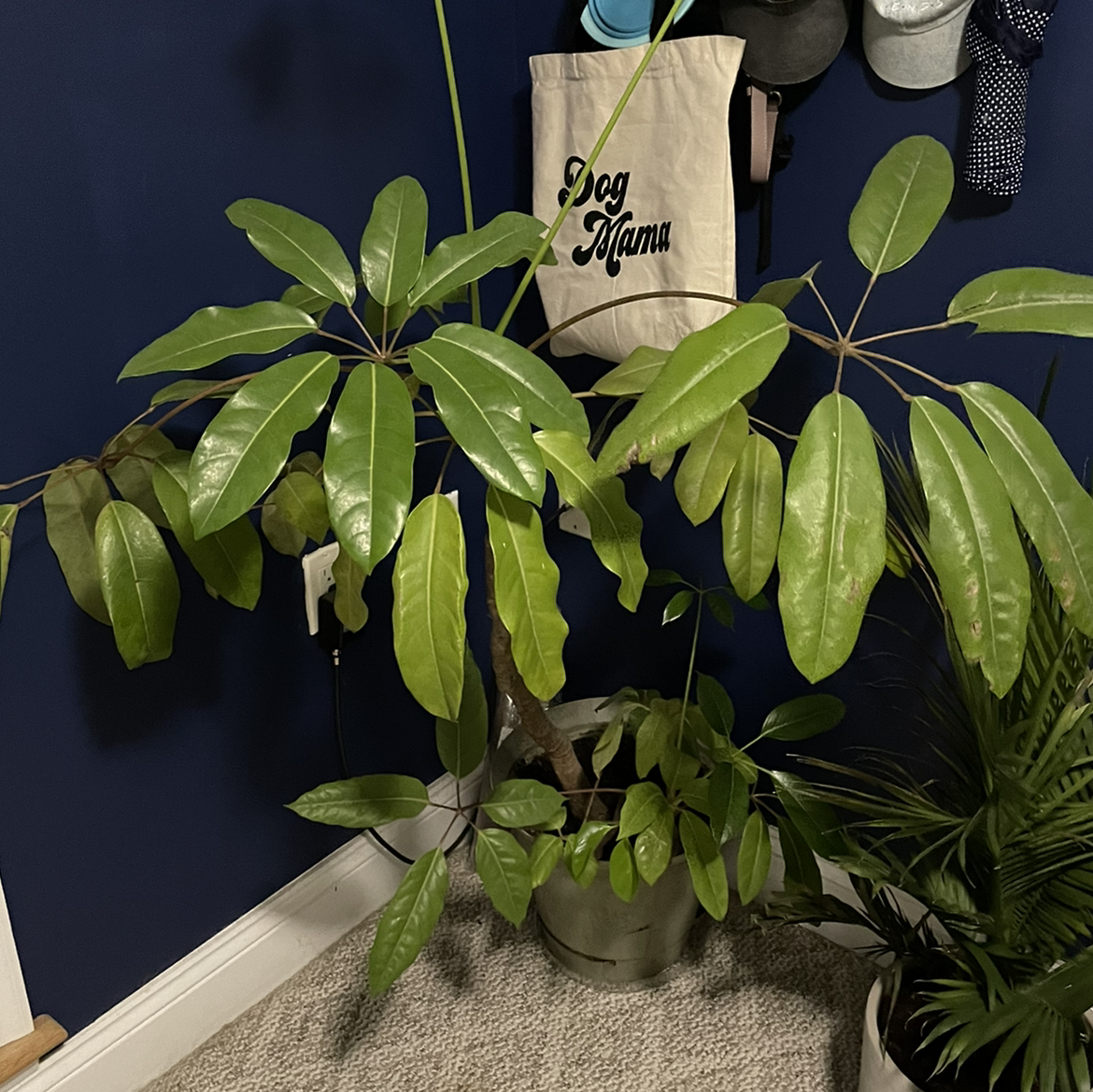
What other plant can I under plant my umbrella tree with?

You can under plant your umbrella tree with philodendron scandens, which has beautiful heart-shaped dark green leaves.

Do philodendron scandens and umbrella tree have similar care requirements?

Yes, both plants like the same amount of moisture and drying out, and they can thrive in a shady place.

How can I encourage my philodendron scandens to spread and grow?

By placing the plant on the soil, it will set out runners and spread quickly. You can also propagate it by cutting off the top and placing it in water or soil.

Can I propagate my umbrella tree by cutting off the top?

Yes, you can propagate your umbrella tree by cutting off the top and either placing it in water or soil.

How can I make my umbrella tree look fuller?

You can chop off the top of the umbrella tree and put the pieces around the edge of the pot to encourage more branches to grow and create a fuller appearance.

Should I remove the lower leaves of my umbrella tree?

It is recommended to remove the lower leaves of the umbrella tree to allow better visibility of the under planted plants and encourage growth at the top.

Can I combine different plants together in one pot?

Yes, combining different plants in one pot can create a beautiful and lush effect in your space.