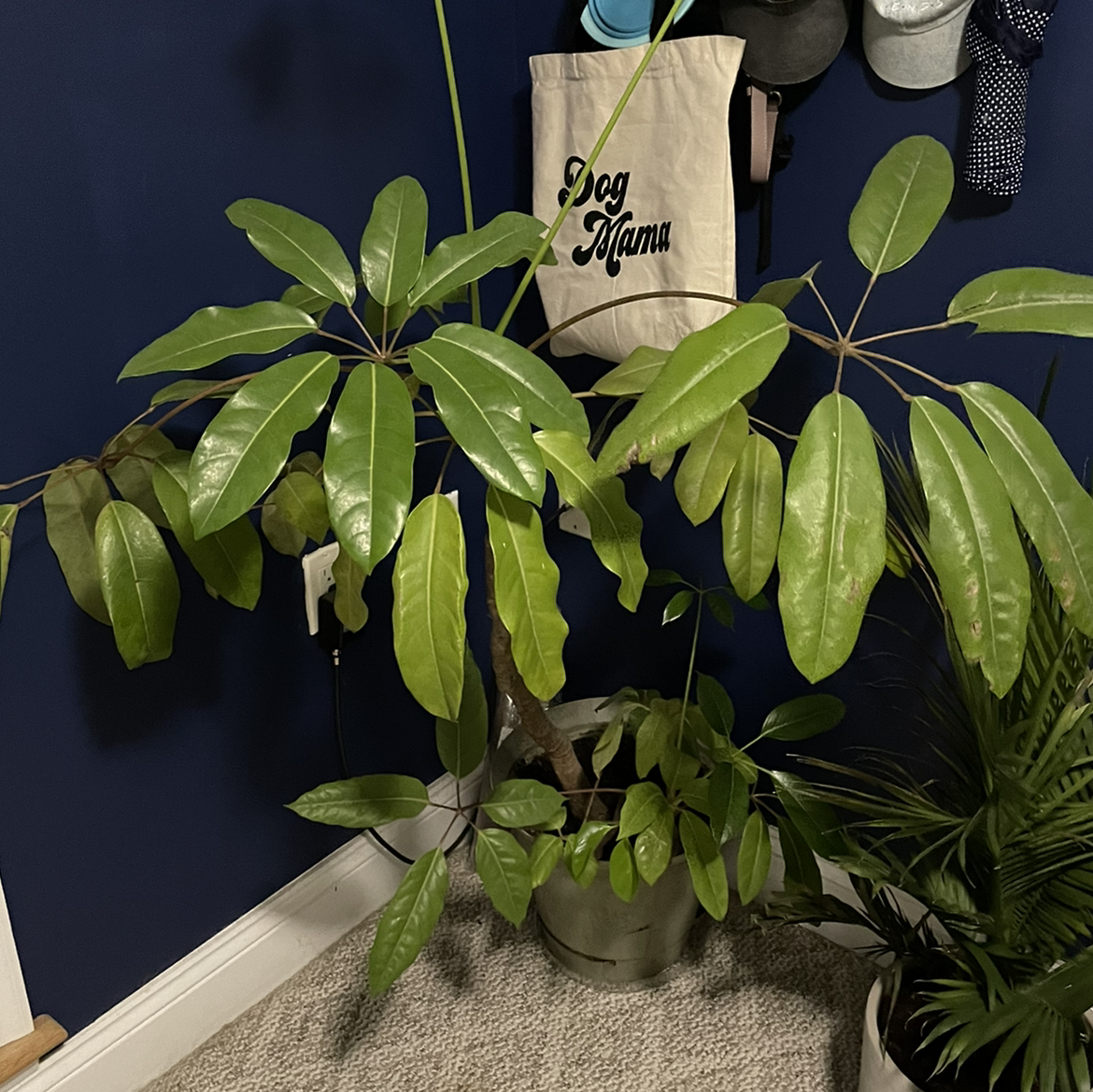
Umbrella Tree

Best Soil for Umbrella Tree

Heptapleurum actinophyllum
Reviewed by Kiersten Rankel M.S.
Quick Answer
Umbrella Tree wants a loose, well-aerated mix that drains quickly and doesn't stay wet. A blend of potting soil, perlite, and orchid bark works well. Keep pH around 6.0 to 7.0 and let the top layer dry out between waterings.

What Soil Does an Umbrella Tree Need?

In tropical Queensland and Taiwan, Umbrella Trees grow in humid forests where rains come and go quickly and the soil drains fast between downpours. Indoors, they do best in a chunky, open mix that allows air to reach the roots and water to move through without pooling.

Stays wet
Damp
Waterlogged wet & suffocating
Damp & Airy moisture + oxygen
Compacted dense & dry
Gritty & Fast drains in seconds
Umbrella Tree
Regular Potting Soil
Airy
Dries quickly

Straight potting soil compacts over time and holds more water than an Umbrella Tree's roots want. The plant is prone to root rot when drainage is poor, so the mix needs enough structure to stay open and breathable season after season.

Orchid bark adds chunkiness and keeps the mix from collapsing, while perlite creates pockets of air throughout. Together, these two amendments transform a dense potting mix into something much closer to what the roots encounter in the wild. The fibrous root system of the Umbrella Tree appreciates this lighter texture and will spread through it more readily than through a compacted medium.

Avoid mixes formulated for moisture-loving plants, and skip the water-retentive crystals or gels sometimes added to budget potting soils. The goal is a mix that drains freely within a minute or two of watering.

What Soil Mix Should I Use for My Umbrella Tree?

Recommended Mix
Potting soil 50%
Perlite 25%
Orchid bark 25%
Stay on top of plant care
Get seasonal reminders for watering and fertilizing โ€” personalized for your plants.
Try Greg Free

What pH Does My Umbrella Tree Need?

Umbrella Tree is comfortable in a pH range of 6.0 to 7.0, which is slightly acidic to neutral. Most quality potting mixes fall naturally in this range. A basic soil pH meter or test strips from a garden center will confirm where your mix stands.

If the pH climbs above 7.5, the plant may struggle to absorb iron and manganese, showing up as yellowing leaves especially on younger growth. A pH that drops below 5.5 can interfere with uptake of calcium and magnesium, sometimes showing as leaf edges that look scorched or pale.

Ideal pH Range
Ideal range 6.0โ€“7.0
Tolerable range 5.5โ€“7.5
To lower pH Mix in peat moss or a sulfur amendment
To raise pH Add a small amount of garden lime

When Should I Replace My Umbrella Tree's Soil?

Plan to repot and refresh the soil every one to two years. Umbrella Trees are upright growers that can put on decent size when healthy, so roots can fill a pot faster than you might expect. More importantly, the bark and organic components in the mix break down over time, creating a denser medium that drains less efficiently.

Spring is the ideal time to repot. You'll see the plant push new growth soon after, which helps it settle into the fresh soil quickly. When you remove the old root ball, trim any circling or mushy roots before setting it into fresh mix.

Signs Your Soil Needs Replacing
Water drains slowly or pools on the surface
Roots wrapping around the inside of the pot
Soil feels dense and compacted between waterings
Yellowing leaves despite consistent watering and light
Plant feels unstable or tips easily in the pot

How Do I Amend Garden Soil for an Umbrella Tree?

Umbrella Trees develop strong, spreading roots that need loose soil with steady drainage. In their native habitat they grow in rich, slightly acidic ground under a tree canopy, so aim for something similar.

For clay soil, dig in plenty of compost and bark fines to improve aeration and prevent the roots from sitting in heavy, wet ground. If your soil is sandy, mix in compost and aged leaf mold so the soil retains enough moisture between rain. A spot with filtered light or morning sun and afternoon shade works well.


Got More Questions?

Can I use regular potting soil for my Umbrella Tree?
Regular potting soil works as a base but tends to compact and hold too much moisture on its own. Mix in about 25% perlite and some orchid bark to keep the drainage where it needs to be.
Do I need to sterilize soil before repotting?
Fresh potting mix from a sealed bag doesn't need sterilizing. If you're reusing old soil or mixing in garden soil, a brief bake in the oven can help, but starting with fresh commercial mix is simpler.
Why are my Umbrella Tree's leaves turning yellow?
Overwatering in poor-draining soil is the most common cause. Check that the top inch of soil is dry before watering again and confirm water moves freely through the drainage holes.
Can I plant my Umbrella Tree in a self-watering pot?
Self-watering pots can work but require extra care since Umbrella Trees are rot-prone. Let the reservoir empty fully before refilling, and use a very well-draining mix to reduce waterlogging risk.
How do I know if my soil is too dense?
Water it and watch. If it takes more than a few minutes for water to drain out of the bottom, or if it pools on the surface, the mix is too compacted and needs replacing with a chunkier blend.
Stay on top of plant care
Get seasonal reminders for watering and fertilizing โ€” personalized for your plants.
Try Greg Free

About This Article

Kiersten Rankel M.S.
Botanical Data Lead at Greg ยท Plant Scientist
About the Author
Kiersten Rankel holds an M.S. in Ecology & Evolutionary Biology from Tulane University. A certified Louisiana Master Naturalist, she has over a decade of experience in science communication, with research spanning corals, cypress trees, marsh grasses, and more. At Greg, she curates species data and verifies care recommendations against botanical research.
See Kiersten Rankel's full background on LinkedIn.
Editorial Process
Soil recommendations verified against Heptapleurum actinophyllum growth data from Greg's botanical database, cross-referenced with USDA hardiness zone data and published horticultural research.
4,165+ Greg users growing this plant
USDA hardiness zones 10aโ€“12b