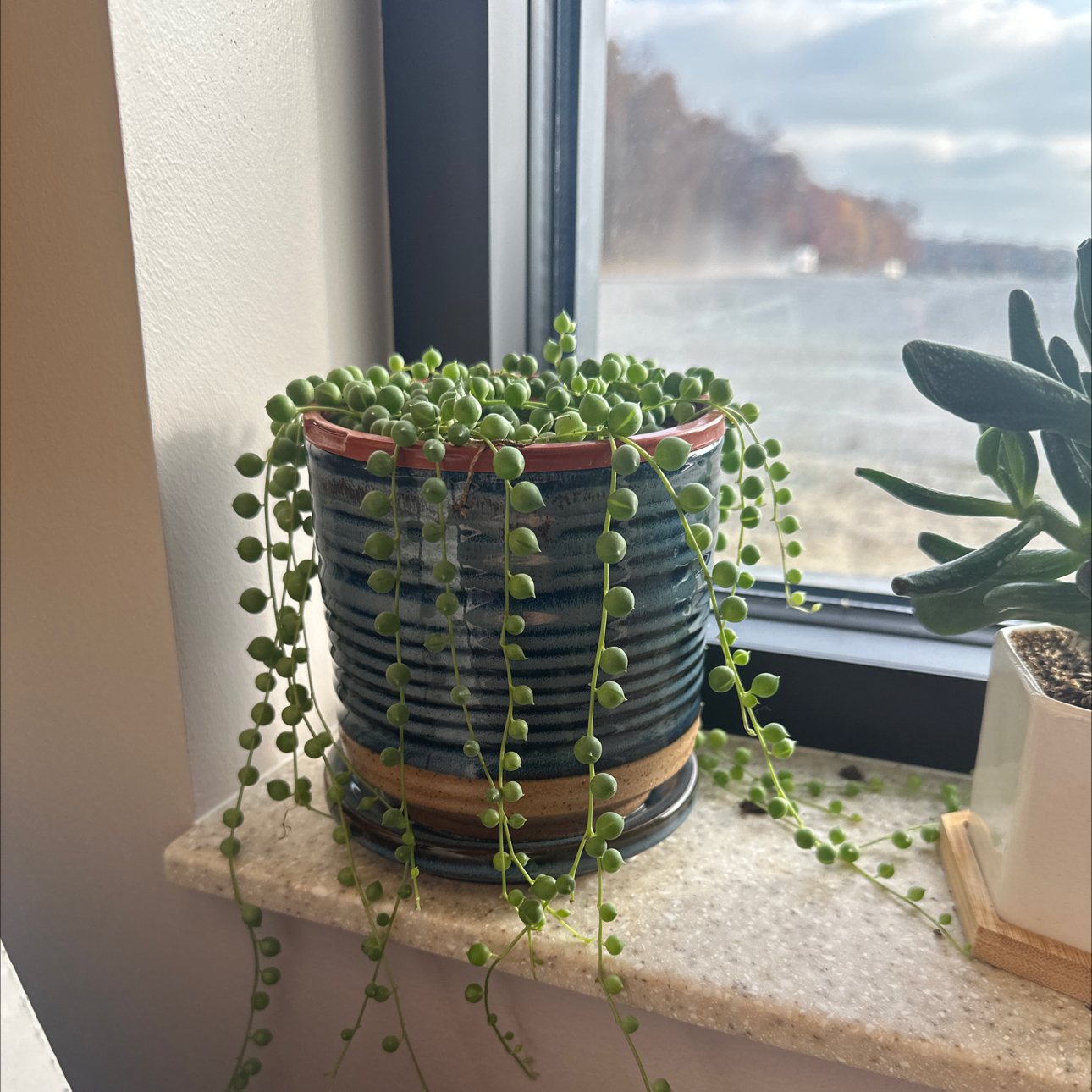
π What To Do About Bugs on My String of Pearls?
Curio rowleyanus
By the Greg Editorial Team
Jun 17, 2024•7 min read
This article was created with the help of AI so we can cover more plants for you. May contain errors. See one? Report it here.
- Pests damage String of Pearls' health and appearance; early detection is key.
- Use neem oil, alcohol, or soap to treat common pests like mites and mealybugs.
- Prevent infestations with regular inspections, isolation, and avoiding overwatering.
Impact of Pests on String of Pearls
Pests are unwelcome guests that can wreak havoc on your String of Pearls, a plant known for its cascading tendrils of pea-like leaves. They can compromise not just the aesthetic appeal but also the plant's health.
π The Toll of Tiny Invaders
Spider mites suck the life out of leaves, leaving behind a telltale pattern of stippling and webbing. These minuscule critters can cause leaves to yellow and drop, sapping the plant's vigor.
Scale insects are like unwanted squatters, setting up camp on stems and leaves. They appear as small bumps, often mistaken for part of the plant, but they're feeding on your String of Pearls, stunting its growth.
π¦ Fungus Gnats and Root Rot: A Double Whammy
Fungus gnats, those pesky little fliers, are more than just annoying. They lay eggs in the soil, and their larvae feast on organic matter and, more worryingly, your plant's roots. This can lead to root rot, a condition that can spell disaster for your String of Pearls if not caught in time.
π Mealybugs: The White Plague
Mealybugs, with their cottony white appearance, can quickly colonize a plant, leaving behind a sticky residue known as honeydew. This not only looks gross but can also lead to sooty mold, further compromising the plant's health.
π‘οΈ Prevention: Better Than Cure
Regular inspections are key to catching these pests early. Isolate new plants to prevent the spread of any stowaways they might bring. And remember, overwatering is a sin in the world of String of Pearlsβit's the fast track to root rot and a pest's paradise. Keep the soil well-draining and let it dry out between waterings.
In the battle against pests, knowledge is power. Recognize the enemy, understand their impact, and take swift action to protect your String of Pearls. After all, a healthy plant is the best defense against the scourge of pests.
Common Pests Affecting String of Pearls
π·οΈ Spider Mites
Tiny but mighty, spider mites can wreak havoc on your String of Pearls. These pests sap the life out of your plant, leaving behind a telltale trail of webbing, stippling, and leaf damage.
Fight back with neem oil or insecticidal soap, and keep the humidity up to deter these thirsty critters. Prevention is key: mist your plant regularly, inspect newbies before they join the gang, and keep your plant's home spick and span.
π‘οΈ Scale
Scale insects are like uninvited guests that refuse to leave. They cling to your String of Pearls, appearing as small, stubborn bumps on stems and leaves.
To evict them, use rubbing alcohol, horticultural oil, or insecticidal soap with determination. Prevent future infestations by keeping a watchful eye on your plant, isolating newcomers, and ensuring the air around your plant isn't stale.
π¦ Fungus Gnats / Fruit Flies
Fungus gnats and fruit flies are the party crashers of the plant world, buzzing around your String of Pearls and its soil.
To send them packing, drench the soil with hydrogen peroxide, lay down some sticky traps, and let the soil dry out before giving your plant another drink. Keep these pests at bay by not drowning your plant in love (or water) and using soil that doesn't hold a grudge, I mean, moisture.
π Mealybugs
Mealybugs are the fluffy white nightmares of plant parents, setting up camp in the cozy nooks of your String of Pearls.
Show them the door with a dab of rubbing alcohol, a splash of neem oil, or a wash of insecticidal soap. Keep your plant's social circle clean by inspecting it often, quarantining new plants, and ensuring everyone gets enough personal space for good airflow.
π¦ Aphids (Optional)
Aphids are the clingy friends of the bug world, latching onto new growth in clusters.
Dislodge these pests with a blast of water, a lather of insecticidal soap, or a coat of neem oil. Keep your plant healthy and less appealing to pests by inviting some natural predators to the party, like ladybugs, and by not neglecting your plant care routine.
Integrated Pest Management for String of Pearls
Integrated Pest Management (IPM) is the strategic approach to keeping your String of Pearls plant pest-free. It's about being smart, not just heavy-handed with chemicals.
π± Cultural Control Methods
Prevention is your first line of defense. Ensure your String of Pearls has the right soil, light, and water conditions to thrive without stress. Stressed plants are bug magnets. Overwatering is a no-go; it's like setting up a free buffet for pests.
π Biological Control Tactics
Natural predators are your tiny allies. Ladybugs don't just look cute; they munch on aphids like candy. Introducing beneficial insects can be more effective than any spray, and it's chemical-free.
π Chemical Control: A Last Resort
When all else fails, spot treatments with neem oil or insecticidal soap can save the day. But think sniper, not shotgun. Target the pests, not the whole plant. And always test on a small area first.
π Regular Monitoring
Keep an eye on your plant. Regular inspections can catch an infestation before it becomes a full-blown crisis. Early intervention is key and can often mean less drastic measures are needed.
πΏ Minimizing Pesticide Use
Less is more when it comes to pesticides. By using non-toxic options first, you're not only protecting your String of Pearls but also the environment. And who doesn't want to be a green-thumb hero?
Remember, IPM is about balance. It's a dance of observation, intervention, and patience. Your String of Pearls will thank you for it.
General Care Tips for String of Pearls
π§ Watering Techniques and Frequency
Watering your String of Pearls can feel like a high-stakes game of 'Will it Rot or Not?' To win, water only when the top inch of soil is dry, typically every two weeks. In winter, chill on the watering; once a month is plenty. Overzealous watering is a surefire way to send your pearls to an early grave.
π Light Requirements
Your String of Pearls is a bit of a Goldilocks when it comes to light; it craves bright, indirect sunlight. Too much direct sun and it'll sizzle; too little and it'll stretch out like it's trying to escape the pot. If you're keeping it indoors, a spot near a window that gets plenty of natural light is ideal. If your home is more cave than greenhouse, consider a fluorescent life support system 6-12 inches above the plant for about 12-16 hours a day.
π± Soil and Fertilization
Think of soil for your String of Pearls as a bed at a five-star hotelβit needs to be just right. Well-draining sandy soil is your best bet to avoid the dreaded root rot. As for the feeding schedule, a light buffet of balanced fertilizer every couple of weeks during spring and summer will suffice. When winter hits, give it a rest; your plant is not in the mood to eat.
πΏ Potting and Placement
Remember, this plant has shallow roots, so choose a shallow pot that's more saucer than deep dish. And don't forget the drainage holes unless you want a swampy mess. Place your potted friend in a spot where it can bask in the glow of indirect sunlight and live its best life.
Preventative Measures
π΅οΈ Regular Inspection and Quarantine
Inspect your String of Pearls like it's a top-secret mission. New recruits (plants) should be isolated faster than a suspicious character in a spy movie. This quarantine period is your buffer against unwanted pests hitching a ride into your plant sanctuary.
π¨ Air Circulation and Watering Discipline
Airflow is the unsung hero in the plant world. Ensure your String of Pearls isn't suffocating in stagnant air; think of it as needing a gentle breeze, not a hurricane. Overwatering? Big no-no. Let the soil dry out like a desert between waterings to avoid creating a pest paradise.
π Natural Predators and Beneficial Insects
Ladybugs are more than just cute; they're your tiny, spotted mercenaries against pests. Encourage these natural allies to patrol your plant haven. Remember, in the bug world, it's eat or be eaten, and you want your team to come out on top.
β οΈ Safety First
This content is for general information and may contain errors, omissions, or outdated details. It is not medical, veterinary advice, or an endorsement of therapeutic claims.
Always consult a qualified healthcare professional before using any plant as food, medicine, or supplement.
Never eat any plant (or feed one to pets) without confirming its identity with at least two trusted sources.
If you suspect poisoning, call Poison Control (800) 222-1222, the Pet Poison Helpline (800) 213-6680, or your local emergency service immediately.
Spotted an error? Please report it here.