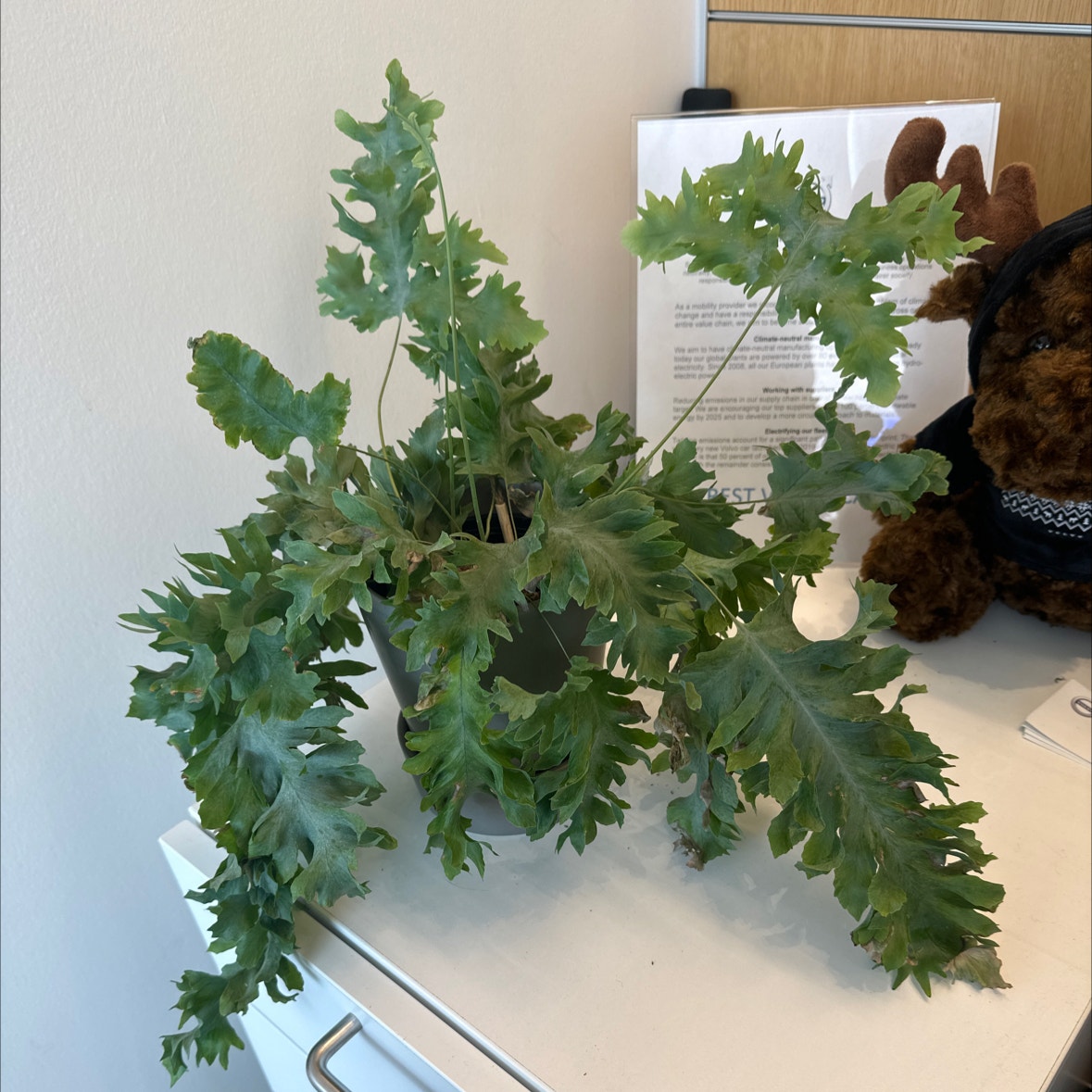
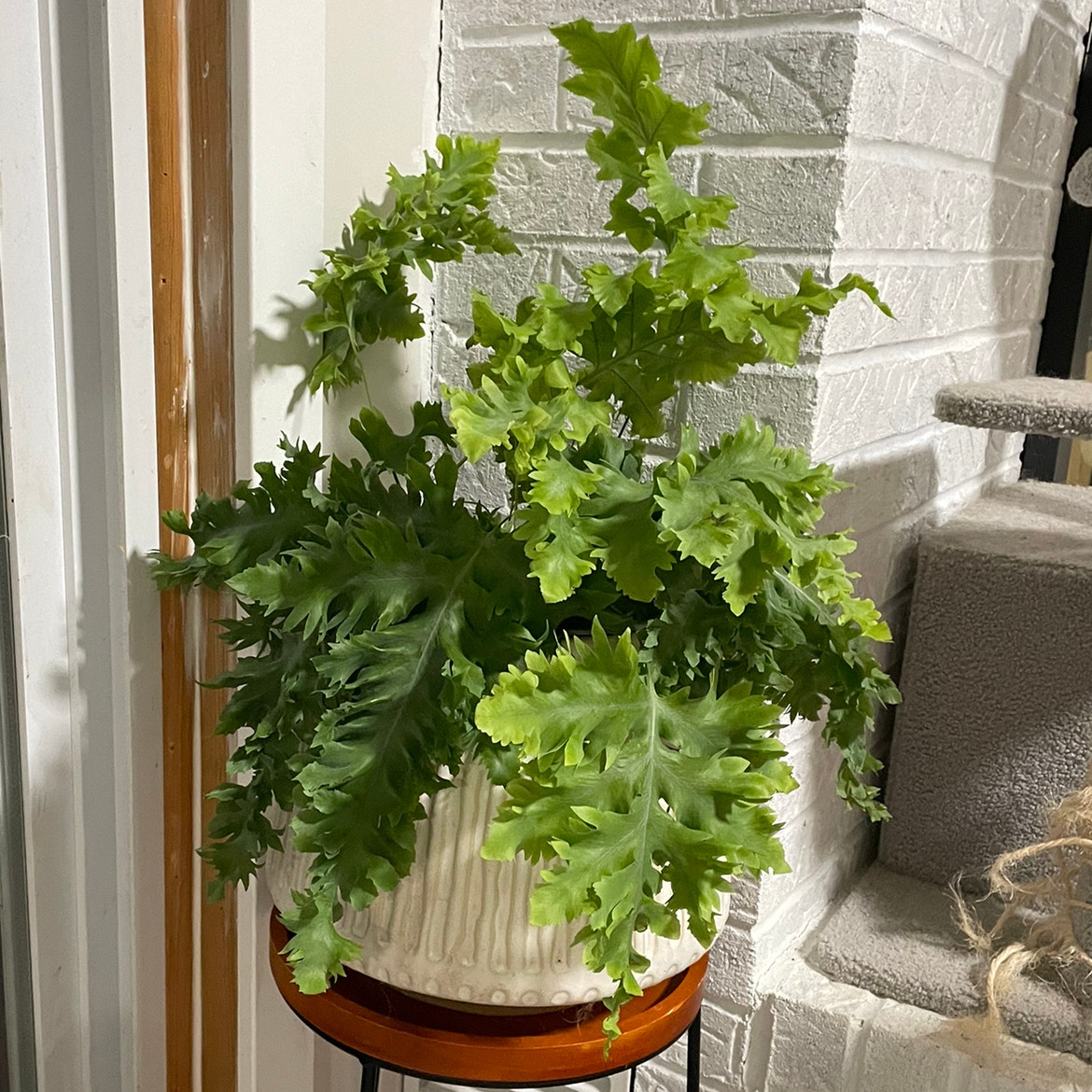
Why Are My Blue Star Davana Fern Leaves Falling Over?
Phlebodium aureum 'Davana'
By the Greg Editorial Team
Jun 18, 2024•3 min read
This article was created with the help of AI so we can cover more plants for you. May contain errors. See one? Report it here.
Stop your Blue Star Davana Fern's droop and restore its vigor with these proven tips! 🌿✨
- Check soil moisture before watering to prevent root rot.
- Balance light and temperature for healthy fern leaves.
- Fertilize carefully with micronutrients to avoid droop.
Pinpointing the Culprits Behind the Collapse
💦 Overwatering Overwhelm
Root rot is the plant's silent scream for help, turning robust roots into mushy messes. When leaves start slumping, it's a telltale sign of overindulgence in water.
To avoid drowning your fern in affection, check the soil's moisture level before watering. Soggy equals stop; let it dry out a bit.
🏜️ Underwatering Wilt
Conversely, leaves that droop like a Monday morning attitude could be crying out for more hydration.
Craft a watering calendar that aligns with your fern's needs, not your convenience. Consistency is key to keeping those leaves perky.
🌞 Light and Temperature Tumbles
Too much sun and your fern's leaves will wilt like a forgotten salad. Not enough, and they'll stretch out, searching for light like a midnight fridge raider.
Maintain a cool environment and balance the light to avoid leaf lethargy. It's about finding that sweet spot where your fern feels like it's on a permanent spring break.
🍽️ Nutrient Deficiency Droop
When your fern's leaves start looking as lackluster as a diet without dessert, it's likely missing some vital nutrients.
Fertilize with a gentle hand to avoid overwhelming your plant. Think of it as a nutrient nudge, not a shove.

Turning the Tide: Rescue and Recovery Tactics
💧 Watering Wisdom
Finding the watering sweet spot is crucial. Overdo it, and you're auditioning for "Swamp Thing"; underdo it, and your fern's as parched as a desert. Use the finger test or a soil moisture meter to ensure the soil is dry before you water again. Remember, it's a drink, not a pool party.
🚰 Drainage Dos and Don'ts
Your soil should be the life vest for your fern's roots. Mix in perlite or sand to improve drainage. Elevate pots on gravel or feet to prevent the dreaded "saucer of doom" scenario. Proper drainage means no more swampy surprises.
🌞 Light and Temperature Tuning
Shedding light on the situation means finding that Goldilocks zone of brightness. Too much sun, and your fern's leaves are toast; too little, and they're searching for the light like a lost soul. Aim for bright, indirect light, and watch your fern perk up.
🌡 Climate Control
Keep the temperature steady; your fern doesn't appreciate a roller coaster ride. Avoid drafts and sudden temperature changes. Think of your plant's ideal environment as a cozy, stable nook, not a backseat on a cross-country road trip.
🍽 Nutrient Know-How
When it comes to feeding, think of your fern as a gourmet, not a glutton. A balanced fertilizer is your best friend, but ease up in the winter months. Overfeeding is the dietary sin of the plant world; it's about nourishment, not indulgence.
🌿 The Role of Micronutrients
Micronutrients are the unsung heroes, providing that extra oomph for your fern's leaf backbone. They're like the secret spices in a master chef's pantry; a little goes a long way in bolstering your fern's health.
⚠️ Safety First
This content is for general information and may contain errors, omissions, or outdated details. It is not medical, veterinary advice, or an endorsement of therapeutic claims.
Always consult a qualified healthcare professional before using any plant as food, medicine, or supplement.
Never eat any plant (or feed one to pets) without confirming its identity with at least two trusted sources.
If you suspect poisoning, call Poison Control (800) 222-1222, the Pet Poison Helpline (800) 213-6680, or your local emergency service immediately.
Spotted an error? Please report it here.
Keep your Blue Star Davana Fern from drooping by letting Greg remind you 🌱 when to water and how to find that perfect light, ensuring your fronds stay fabulous.


