🔍 What To Do About Black Spots On Monstera Leaves
Hoya 'EPC-301'
By the Greg Editorial Team
Dec 16, 2023•5 min read
This article was created with the help of AI so we can cover more plants for you. May contain errors. See one? Report it here.
Rescue your Monstera 🌿 from the dreaded black spots with our all-in-one guide to spotting, treating, and preventing them! 🕵️♀️💦🛡️
- 💦 Overwatering and underwatering both lead to black spots on Monstera leaves.
- 🍄 Fungal infections and pests can cause black spots; fungicides and air circulation help.
- 🌿 Regular leaf inspection, cleaning, and proper plant placement prevent black spots.
Identifying Causes of Black Spots
💦 Overwatering: The Sneaky Saboteur
Overwatering is a classic misstep in the plant parenting playbook. It's like giving your Monstera an endless buffet - it sounds like a good idea, but it's actually a one-way ticket to Root Rot City.
Root rot is a nasty business. It turns roots into a mushy, dark brown or black mess. And it doesn't stop there. It's like a bad houseguest, spreading its chaos upstairs to the leaves, manifesting as those dreaded black spots.
🍄 Fungal Infections: The Uninvited Guests
Fungal infections, like the infamous anthracnose, love a good party, especially in overly moist environments. Dead plant matter is their favorite snack, and they leave behind unsightly black spots as evidence of their midnight feasts.
Rust fungus is another unwelcome visitor. It's a fan of damp, poorly ventilated areas, creating red or black spots on leaves, especially on the underside. Overwatering is often the culprit that invites this fungus to the party.
🐜 Pests: The Tiny Vandals
Pests are the tiny vandals of the plant world. Spider mites, for instance, are so small they're practically invisible. But they leave behind a trail of destruction, draining leaves of chlorophyll and causing white spots or stippling on the foliage.
Mealybugs are another common pest. They feed on plant sap, causing yellowing or brown spots, and can eventually kill your Monstera.
💧 Underwatering: The Neglected Hazard
While overwatering is a common mistake, let's not forget about its less talked about sibling, underwatering. If your Monstera's leaves are turning light brown and crispy, it might be crying out for more water. Underwatering can also lead to black spots, proving that balance is key in plant care.
🌿 Other Factors: The Usual Suspects
Remember, black spots can also be a sign of other issues like improper fertilization, low humidity, or sunburn. It's a bit like a plant's version of a bad skin day. So, keep an eye out for these usual suspects as well.
In the end, identifying the cause of black spots is like playing detective. It involves a keen eye, a bit of knowledge, and a whole lot of love for your leafy friend.
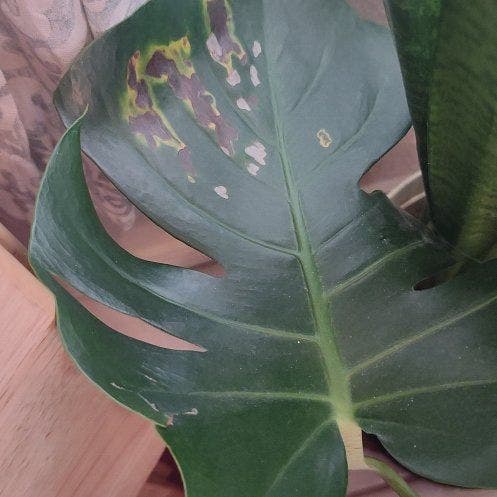
Alleviating Black Spots
💧 Adjusting Watering Practices
Overwatering is a common mistake that can lead to black spots on your Monstera leaves. It's like feeding your plant a feast one day and then starving it the next. Not cool, right? Plants, like us, crave consistency.
So, how do we fix this?
First, stop watering your plant until the soil dries out a bit. It's like giving your plant a breather after a heavy meal.
Next, re-pot your plant in a clean pot with fresh soil. It's like moving your plant into a new, clean apartment after a messy party.
While re-potting, gently work the root ball open, and use a sanitized pair of scissors or pruners to trim away any brown or soft sections of roots. It's like giving your plant a much-needed haircut.
After re-potting, don't water for a few days. This gives the trimmed roots a chance to heal and encourages them to spread out in search of moisture.
🍄 Fungal Infection Management
Now, let's talk about those pesky fungal infections. They're like uninvited guests at your plant's party, causing all sorts of chaos and leaving black spots in their wake.
Fungicides can be your plant's bouncer, kicking out these unwelcome intruders. Use them as directed, and remember, more isn't always better.
Air circulation is another key player in managing fungal infections. It's like opening a window in a stuffy room. It helps to keep things fresh and prevents the party from getting too crowded.
If the infection is localized to one leaf or portion of the plant, remove that leaf or plant portion. It's like isolating a troublemaker before they can stir up more trouble.
Lastly, keep a sharp eye out for any returning black spots or signs of pests. Vigilance is key. It's like keeping a watchful eye on the party to make sure everyone's behaving.
Remember, your Monstera plant is relying on you to keep its leaf party spot-free and fun. So, let's get to it!

Preventing Black Spots
🧼 Embrace Plant Hygiene
Regular leaf inspection is your first line of defense against black spots. It's like your plant's annual check-up, but more frequent.
Look for signs of pests or disease. If you spot something suspicious, don't panic. Instead, take action.
Cleaning your Monstera leaves is not just about making them shine for the 'gram. It's about health. Wipe each leaf gently with a damp cloth.
Avoid commercial leaf shine products. They're like plastic wrap for your plant's pores.
🏡 Be Prudent with Plant Placement
Location, location, location. It's not just for real estate. Your Monstera's spot in your home can make or break its health.
Avoid sudden temperature fluctuations. They're like the plant equivalent of jumping into a cold pool after a hot sauna.
Keep your Monstera away from drafts and cold windows. It's a tropical plant, not a snow-loving pine tree.
Harsh sunlight is a no-no. Your Monstera loves light, but not the harsh, direct kind. It's like us humans - we love the sun, but too much can lead to sunburn.
🌿 Keep the Crowd in Check
Overcrowding your plants can lead to a humidity party that your Monstera didn't ask to attend. Too much humidity can trigger bacterial leaf spot.
So, give your Monstera some space. It's not antisocial, it just values its personal bubble.
💧 Water Wisely
Overwatering is like giving your Monstera an unwanted bath. It can lead to root rot and black spots.
Find the right balance. Your Monstera should be well-hydrated, not waterlogged.
👀 Check Regularly
Make it a habit to check your Monstera every 3-5 days. Look for any changes in leaf color or texture.
Remember, prevention is better than cure. And in this case, it's also easier. So, keep an eye on your leafy friend. It'll thank you for it.
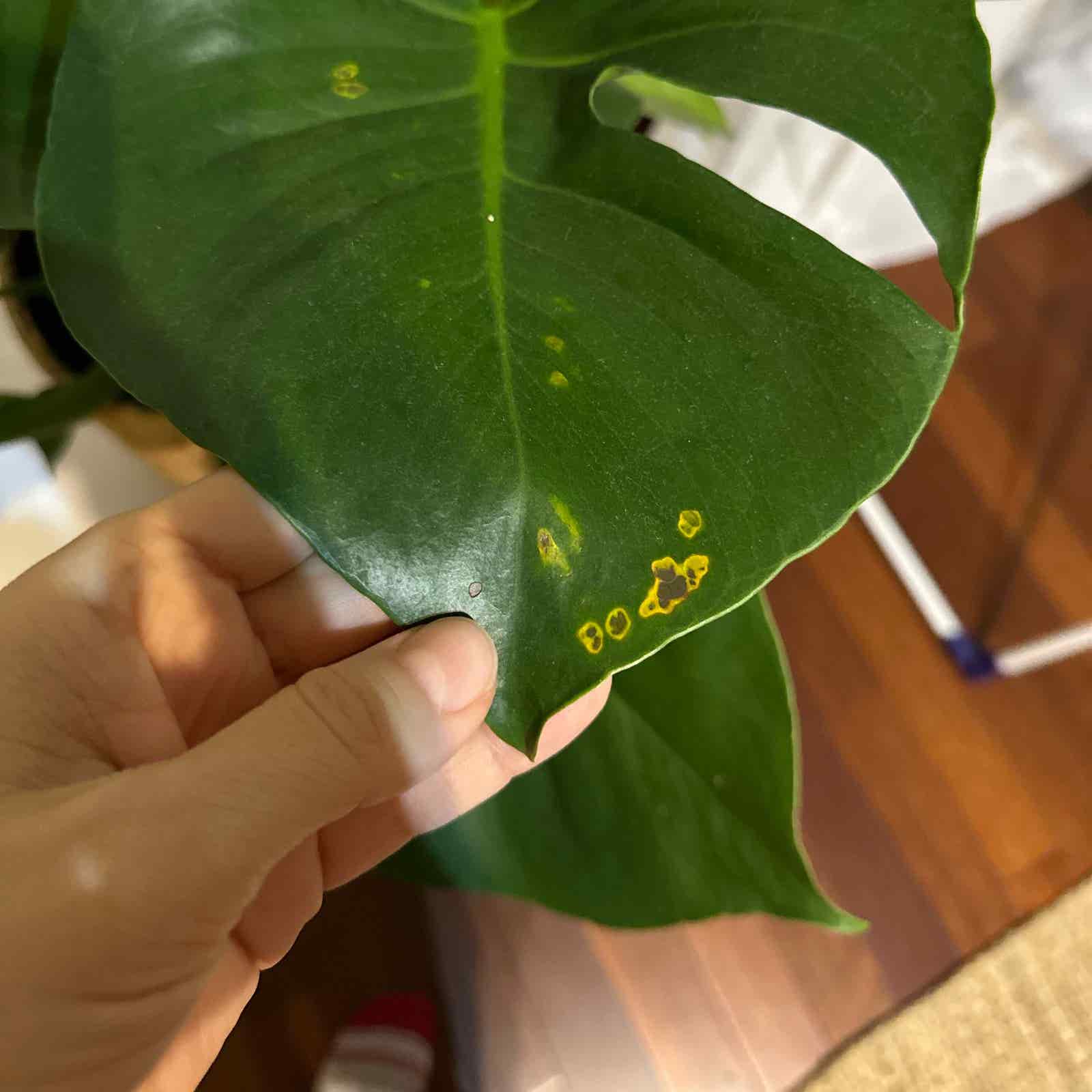
⚠️ Safety First
This content is for general information and may contain errors, omissions, or outdated details. It is not medical, veterinary advice, or an endorsement of therapeutic claims.
Always consult a qualified healthcare professional before using any plant as food, medicine, or supplement.
Never eat any plant (or feed one to pets) without confirming its identity with at least two trusted sources.
If you suspect poisoning, call Poison Control (800) 222-1222, the Pet Poison Helpline (800) 213-6680, or your local emergency service immediately.
Spotted an error? Please report it here.
Keep your Monstera spot-free and thriving 🌿 with Greg's custom watering plans and community advice, helping you tackle overwatering, pests, and more!


