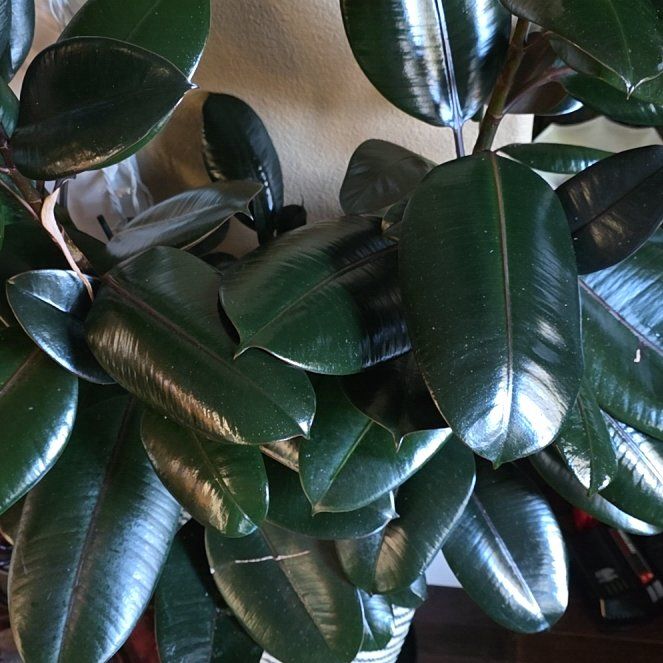
What's Wrong with My Rubber Plant?

Common Rubber Plant Problems
Leaf drop
Rubber Plants are native to humid, stable tropical forest in India and Malaysia. Moving the pot, a sudden change in light direction, cold drafts from vents or windows, or bringing the plant home from the store all count as shock. The plant responds by shedding leaves to reduce the canopy it has to support. Unlike its cousin the Fiddle Leaf Fig, a Rubber Plant usually drops a handful of leaves rather than stripping itself bare, but the trigger is the same.
Chronic overwatering rots the roots, which cuts off water and nutrients to the canopy. The leaves yellow first, then fall. The soil will feel damp or wet even days after the last watering. Because Rubber Plants have thick, fleshy roots, the damage builds quietly before it shows above the soil.
When the pot runs completely dry, the thick glossy leaves lose pressure and droop, then yellow and fall if the drought continues. Rubber Plants are more tolerant of dry spells than many tropical houseplants, but prolonged drought tips them into leaf drop. The soil will feel bone dry down to the base of the pot.
Yellow leaves
Rubber Plants have thick, fleshy roots that store some moisture but suffocate quickly in waterlogged soil. When the roots rot, the plant pulls nutrients back from its oldest lower leaves first. The yellowing starts at the bottom of the plant and moves upward as root damage accumulates.
As a Rubber Plant grows taller, it naturally sheds its oldest lower leaves to redirect energy into new growth at the top. If just one or two bottom leaves are yellowing and the growing tip looks healthy, this is normal energy reallocation. No action needed.
Drooping leaves
The thick, glossy leaves of a Rubber Plant go limp and droop when the rootzone dries out completely. The leaves look heavy and point downward rather than out. Recovery is usually quick once the plant gets a thorough drink, often within 24 hours.
A Rubber Plant placed near a cold window, exterior door, or air conditioning vent can droop suddenly from chilling, even without soil issues. The large oval leaves lose turgor in response to cold temperatures below about 50°F (10°C). The soil may be fine while the leaves hang limp.
Brown spots on leaves
Dark, water-soaked brown patches spreading from the center of the leaf are a sign of root rot damage. As waterlogged roots die and stop moving water, cells in the leaf break down from within. The spots are soft to the touch, often with a yellow border around them.
Rubber Plants evolved under a forest canopy and are adapted to bright indirect light, not direct sun. Sudden exposure to harsh direct sun, especially through south or west glass, bleaches pale tan or washed-out patches on the leaf surface. The damage appears on the side facing the window.
Leggy growth
In low light, a Rubber Plant stretches its stem and produces smaller, paler new leaves spaced farther apart as it reaches for more light. The normally deep green or burgundy color fades and the upright form becomes lanky. This species tolerates lower light than many tropicals but will still etiolate without enough.
Pests
Scale insects are the most common Ficus pest. They appear as small brown or tan bumps fixed to the stems and along the thick midrib on the underside of the leaves. They suck sap and leave sticky honeydew that drips down the stem and can develop a dark sooty mold coating. They are often mistaken for part of the plant until the honeydew appears.
Dry indoor air invites spider mites. On a Rubber Plant, look for fine webbing in the joints where leaves meet the stem and stippled or dull speckling on the upper leaf surface. The thick glossy leaves can mask the early signs until the infestation is already established.
White cottony clusters at leaf axils and in the growing tip are mealybugs. They feed on the milky latex-rich sap that Rubber Plants produce and can spread quickly in warm indoor conditions if left unchecked.
Preventing Rubber Plant Problems
About This Article
