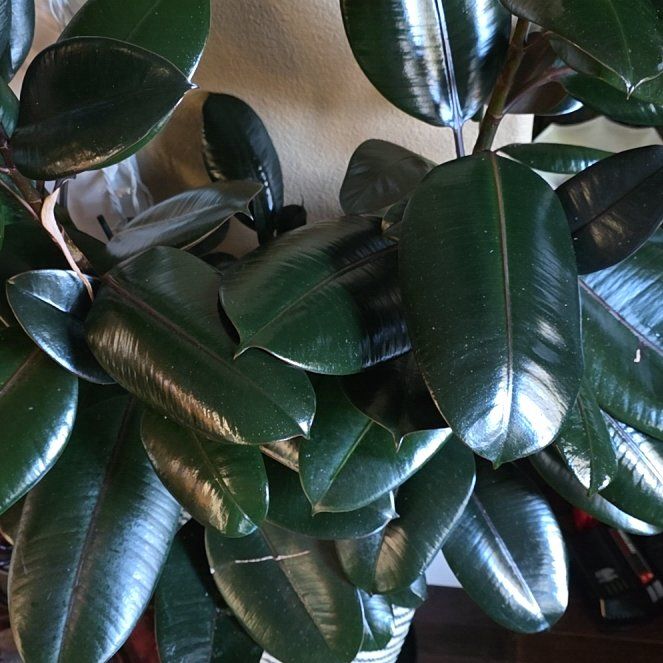
How to Plant a Rubber Tree
Pot your Rubber Tree in a container one to two inches wider than its root ball, using a chunky well-draining mix of houseplant soil, perlite, and bark. The pot must have drainage holes. Set the plant in bright indirect light, three to six feet from a sunny window. Water only when the top inch of soil feels dry. Expect a new leaf from the growing tip within four to six weeks.

Where to put it
A Rubber Tree wants bright indirect light, the kind of brightness you find three to six feet back from a south or east-facing window. Direct hot afternoon sun bleaches the glossy leaves, but a low-light corner causes leggy growth and dull color. If new leaves come in smaller than the older ones, the spot is too dim.
Keep the plant in a room that stays between 60°F and 80°F year-round. Cold drafts from doors and windows below 55°F can trigger leaf drop, and so can hot dry air blowing from a heating vent. Pick a spot away from both.
Average household humidity, around 40 to 50 percent, is fine. No misting needed. Give the plant breathing room so air can circulate around the leaves, since stagnant air around a crowded plant invites pests like scale and mealybugs.
Planting from a nursery transplant
Give your new Rubber Tree two to three weeks in its nursery pot before potting it up. Moving it the day it comes home stacks repotting stress on top of the change from greenhouse to your home, and the plant often responds by dropping leaves. Once it has settled into your light and watering rhythm, pot whenever you are ready. The critical rule is drainage. Ficus elastica rots quickly in soggy soil, so the new pot must have drainage holes and the mix must drain freely.
-
1Acclimate the plant for two to three weeks Set the nursery pot in its long-term spot and let the Rubber Tree adjust to your home's light, temperature, and air. Water only when the top inch of soil feels dry. A few yellow or dropped leaves during this stretch is normal and not a reason to rush the repot.
-
2Pick a pot one to two inches wider Choose a container only one to two inches wider than the current root ball, with drainage holes in the bottom. Sizing up too aggressively leaves a large volume of wet soil around a small root system, which is the fastest path to root rot. Terracotta breathes and dries faster, while plastic and glazed ceramic hold moisture longer, so match the pot to your watering habits.
-
3Mix a chunky well-draining blend Combine roughly two parts standard houseplant or indoor potting soil with one part perlite and one part orchid bark. The bark and perlite create air pockets so water moves through quickly and roots get oxygen. A plain bagged potting mix on its own holds too much water for this plant.
-
4Pot and water in Add a base layer of mix to the new pot, set the plant on top so the top of the root ball sits about an inch below the pot rim, then backfill around the sides with more mix and press lightly to firm. Water until you see liquid run out the drainage holes, then empty the saucer so the roots are not sitting in standing water. Place the plant back in its bright indirect spot.
Planting from a rooted cutting
A rooted Rubber Tree cutting usually starts as a leaf-and-node piece taken from a healthy parent and rooted in water or moist sphagnum until it has white roots an inch or two long. Pot it once the roots reach about one inch, since shorter roots struggle to support the plant and longer roots break easily during the move. Water-rooted cuttings are more fragile than soil-rooted ones, so handle them gently and expect a brief adjustment period as the roots learn to draw moisture from soil instead of water.
-
1Confirm the roots are ready Look for at least one inch of healthy white root growth from the node, ideally with a few branched root tips rather than a single long thread. Cuttings potted too early often stall or rot at the cut. Rinse any algae off water-rooted cuttings under lukewarm water before potting.
-
2Pick a small starter pot Use a 4-inch pot with drainage holes, no larger. A small pot keeps the limited root system in contact with the mix and dries out at a healthy pace. Moving a cutting straight into a 6 or 8-inch pot surrounds it with too much wet mix and slows establishment.
-
3Use a chunky draining mix Mix two parts houseplant potting soil with one part perlite and one part orchid bark. This blend drains well enough to keep delicate new roots from sitting in water but holds enough moisture between waterings to keep the cutting from drying out. Avoid dense seed-starting mixes, which stay too wet for Ficus elastica.
-
4Pot, water in, and shelter for a week Place a base layer of mix in the pot, set the cutting upright with the node and roots about an inch below the rim, then backfill around the roots and firm gently so the cutting stands on its own. Water until liquid runs out the bottom and place the pot in bright indirect light away from direct sun. Keep the soil lightly moist for the first two weeks while roots transition, then return to a normal water-when-the-top-inch-is-dry routine.
The first month and a half
A freshly potted Rubber Tree spends most of its energy below the soil, pushing new roots into the fresh mix before it commits to new top growth. So the visible story for the first few weeks is mostly stillness, with the real action hidden underground.
The most common new-grower mistake during this stretch is overwatering. Slow visible change reads as a sign of distress, and the instinct is to do something, anything, to help. Resist that. Wet soil suffocates the roots that are trying to establish, and root rot from those first few overgenerous waterings is the leading cause of a young Rubber Tree failing.
Healthy first-month signs look like leaves that hold their posture, glossy color that does not fade, and steady weight in the pot as water moves through at a normal pace. A few older leaves dropping is fine. A wave of mass leaf drop or a sour smell from the soil is not.
What can go wrong
-
Leaf drop in the first weeks
Sudden environmental change is almost always the cause. The plant reacts to the move from greenhouse to your home, a shift in light intensity, or repotting too soon by dropping a flush of older leaves. Hold steady on watering and light, and resist the urge to fertilize or move the plant to fix it. Most leaf drop stops within two to three weeks once the plant adjusts. -
Yellow lower leaves with damp soil
Overwatering is the leading cause. The lower leaves yellow and drop because waterlogged roots can no longer move oxygen and nutrients up the plant. Check that the pot has drainage holes, empty any standing water in the saucer, and let the top two inches of soil dry before the next water. If the soil smells sour or roots are mushy, repot into fresh dry mix and trim away any black soft roots. -
Brown crispy leaf edges
Underwatering or very dry air is usually behind crispy brown edges. The plant is losing moisture from the leaves faster than the roots can replace it. Soak the pot thoroughly until water runs from the drainage holes, then settle into a regular check-the-top-inch routine. If you run heat or AC nearby, move the plant farther from the vent. -
Pale or bleached patches on the leaves
Direct hot sun is the cause. The glossy leaves scorch when they sit in direct afternoon light from a south or west-facing window without a sheer curtain. Move the plant a few feet back from the window or filter the sun with a curtain. The damaged leaves do not recover, but new growth in the corrected spot comes in fully green. -
Soft mushy black roots
Root rot from soggy soil and poor drainage is the cause. Lift the plant out of the pot, rinse the roots gently, and use clean scissors to trim away any black or mushy sections back to firm white tissue. Repot into a smaller pot with fresh chunky mix and drainage holes, water in once, then let the soil dry out more between sessions going forward. -
White milky sap leaking from a cut
Ficus elastica naturally bleeds a sticky white latex anywhere it is cut or broken, and this is normal rather than a sign of damage. The sap can irritate skin and eyes and is toxic to pets if chewed, so wipe spills with a damp cloth and keep the plant out of reach of cats and dogs. Dab the cut with a tissue until the flow stops, usually within a few minutes. -
Rooted cutting fails to push new growth
The cutting is likely sitting in soil that is too wet, too cold, or too dim. Roots need temperatures above 65°F and bright indirect light to start moving energy upward into a new leaf. Move the pot to a brighter warmer spot, let the top half inch of soil dry between waterings, and give the cutting another four to six weeks before assuming it has stalled. -
Plant leaning toward the light
Light from one direction pulls all the new growth toward the brightest source over time. Rotate the pot a quarter turn every week or two so every side gets equal exposure. Plants that have already developed a strong lean usually correct over a few months of rotation, with the trunk slowly straightening as new growth balances out.
About This Article
