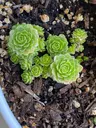
Rosita Potato
Taxonomy

Solanum tuberosum 'Rosita'
Solanum
Solanaceae
Solanales

How to care for Rosita Potato
How often to water your Rosita Potato

every 9
Rosita Potato needs 0.5 cups of water every 9 when it doesn’t get direct sunlight and is potted in a 5" pot.
Use our water calculator to personalize watering recommendations to your environment or download Greg for more advanced recommendations for all of your plants.
Water 0.5 cups every
9
Finding light for Rosita Potato in your home

a window
Rosita Potato love being close to bright, sunny windows 😎.
Place it less than 1ft from a south-facing window to maximize the potential for growth.
Rosita Potato does not tolerate low-light 🚫.
Select your region to see how the current weather in your area affects the placement of Rosita Potato in your home 🏡.
How to fertilize Rosita Potato

Most potting soils come with ample nutrients which plants use to produce new growth.
By the time your plant has depleted the nutrients in its soil it’s likely grown enough to need a larger pot anyway.
To replenish this plant's nutrients, repot your Rosita Potato after it doubles in size or once a year—whichever comes first.
-
I just bought an eggplant is it in the right place or should I move it The spot in question is in direct sunlight
-
Luna hates the wind and low humidity. I have thrown every economical idea to combat it. Always stresses in the evening. Today high of 78 windy and 25% humidity.
-
Is this normal? My cherry tomato has become a shade princess, is this normal? Its real protective of new top vegetation and its future flowers. It could still be the humidity and wind also, in the sun the top veg sweats and becomes really delicate and im afraid and just give it morning sun and partial shade.
-
Sodium toxicity? I was in a pinch on a windy day and wanted to mulch the top of my cherry tomatoes and used rice husks with no info about how they were processed. Could they introduce a sodium toxicity? Im trying to diagnose a transplant shock or water problem. Plus the cost of straw and the waisted leftovers.
-
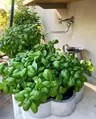
Spring is finally about to start and my first herb garden is progressing. They all seem very happy today after a rough early spring. Rosemary not pictured but shes happy
-
Edema She has started to develop edema and the stem curls late after noon. It will be raining and down to mid 45’s again. Could Inwait until Thursday to transplant? With size of container it seems plausible that it has outgrown it.
-
Hey, I went to check on my tomatoes plants today’s and I saw these spots on them and I was wondering what they were and how to prevent it if possible if anyone knows can you please let me know? #TomatoPlant
-
Just got my Big Beef tomato plant, now what? My reptiles have passed over the rainbow bridge and my home feels empty. I needed something to take care of so I bought a Big Beef plant at work. I dont really know anything about plants so I don't even know where to start. What soil do I use, pot size and type, fertilizer and the things I need to know with growing in the desert of Arizona. Thanks y'all.
-
Are they okay?
-
Why are my leaves turning yellow? #TomatoPlant it’s a baby dwarf tomato plant (orange hat), and it’s started growing tomatoes already, but now the leaves are turning yellow? It’s under a grow light btw.


Care Summary for Rosita Potato
Rosita Potato
 Greg recommends:
 Water
Water
0.5 cups every 9 days
 Placement
< 1ft from a window
 Nutrients
Repot after 2x growth
Based on the 4” pot your plant is in, and that it doesn’t get direct sunlight.
 Trending in your area
















 Similar to Rosita Potato


✨ Discover rare plants

Hoya kalimantan

Blue Moon Wisteria

Red Mistletoe Cactus

Rhipsalis clavata

Hoya sipitangensis

Parrot Pitcher Plant

Electric Blue Gecko

Scindapsus pictus 'Si…

Burro's Tail

Echeveria Arrow

Eden Climbing Rose
Hoya 'Memoria'

Philodendron eximium

Chinese Evergreen 'Ga…

Stomatium acutifolium

Euphorbia baioensis

Tillandsia caerulea A…