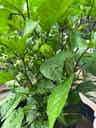
Sicklepod
Taxonomy

Senna obtusifolia
Senna
Fabaceae
Fabales

How to care for Sicklepod
How often to water your Sicklepod

every 9
Sicklepod needs 0.5 cups of water every 9 when it doesn’t get direct sunlight and is potted in a 5" pot.
Use our water calculator to personalize watering recommendations to your environment or download Greg for more advanced recommendations for all of your plants.

Water 0.5 cups every
9
Finding light for Sicklepod in your home

a window
Sicklepod love being close to bright, sunny windows 😎.
Place it less than 1ft from a south-facing window to maximize the potential for growth.
Sicklepod does not tolerate low-light 🚫.
Select your region to see how the current weather in your area affects the placement of Sicklepod in your home 🏡.
How to fertilize Sicklepod

Most potting soils come with ample nutrients which plants use to produce new growth.
By the time your plant has depleted the nutrients in its soil it’s likely grown enough to need a larger pot anyway.
To replenish this plant's nutrients, repot your Sicklepod after it doubles in size or once a year—whichever comes first.
-
I have a pest problem with my African senna, can someone tell me what I’m dealing with? #AfricanSenna
-
Does anyone else have an African Senna? It smells *just* like a movie theater!! 🍿 I love the shape of the leaves and it blooms pretty yellow flowers. I have him out on my back porch right now and he seems happy! ☺️ #africansenna #popcorntree #tree #porchplants #greggang #gregfeedback #greggers #happyplants #plantsmakepeoplehappy #plantaddict #planttherapy
-
Extra Droopy Leaves. My orchid has recently become very sad. Just sad. Her flowers have begun dropping, her roots are turning brown, and her leaves are super droopy. One of her leaves has turned brown, actually. Could anyone help? #orchidlovers #rootrot #sicklepod


Care Summary for Sicklepod

Sicklepod
 Greg recommends:
 Water
Water
0.5 cups every 9 days
 Placement
< 1ft from a window
 Nutrients
Repot after 2x growth
Based on the 4” pot your plant is in, and that it doesn’t get direct sunlight.
 Trending in your area











 Similar to Sicklepod

✨ Discover rare plants
Graptopetalum 'Marqui…

Stomatium acutifolium

Ruby Ball

Black Monkey Thorn Tr…

Hoya 'Millie'

Echeveria Esther

Hoya sipitangensis
Anthurium papillilami…

Chinese Evergreen 'Ga…

Peperomia 'Harmony's …

Fagraea ceilanica

Dinteranthus microspe…

Haworthia emelyae com…

Parrot Pitcher Plant

Euphorbia

Philodendron 'Glorius'