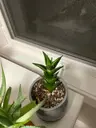
Turtleback
Taxonomy

Scaevola tortuosa
Scaevola
Goodeniaceae
Asterales

How to care for Turtleback
How often to water your Turtleback

every 9
Turtleback needs 0.5 cups of water every 9 when it doesn’t get direct sunlight and is potted in a 5" pot.
Use our water calculator to personalize watering recommendations to your environment or download Greg for more advanced recommendations for all of your plants.
Water 0.5 cups every
9
Finding light for Turtleback in your home

a window
Turtleback love being close to bright, sunny windows 😎.
Place it less than 1ft from a south-facing window to maximize the potential for growth.
Turtleback does not tolerate low-light 🚫.
Select your region to see how the current weather in your area affects the placement of Turtleback in your home 🏡.
How to fertilize Turtleback

Most potting soils come with ample nutrients which plants use to produce new growth.
By the time your plant has depleted the nutrients in its soil it’s likely grown enough to need a larger pot anyway.
To replenish this plant's nutrients, repot your Turtleback after it doubles in size or once a year—whichever comes first.
-
I went on vacation and my gull feed has grown about 4 inches into a long spiky mess. My son was watering my plants during my absence, but I’m wondering if this is normal. It is in a south facing window. 
-
Hi im@new here … can someone tell me what’s wrong . I planted her two days ago n now she’s floppy #FairyFanFlower
-
Good morning! I received this beautiful girl from my son and his girlfriend for Mother’s Day (they know me very well!) on Mayas little tag it says “annual” and I’m hoping that she’s not going to die at the end of the season! Is this indeed an annual, or can I look forward to many happy years with her?

Care Summary for Turtleback
Turtleback
 Greg recommends:
 Water
Water
0.5 cups every 9 days
 Placement
< 1ft from a window
 Nutrients
Repot after 2x growth
Based on the 4” pot your plant is in, and that it doesn’t get direct sunlight.