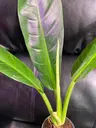
Lion's Ear Sage
Taxonomy

Salvia leonuroides
Salvia
Lamiaceae
Lamiales

How to care for Lion's Ear Sage
How often to water your Lion's Ear Sage

every 9
Lion's Ear Sage needs 0.5 cups of water every 9 when it doesn’t get direct sunlight and is potted in a 5" pot.
Use our water calculator to personalize watering recommendations to your environment or download Greg for more advanced recommendations for all of your plants.
Water 0.5 cups every
9
Finding light for Lion's Ear Sage in your home

a window
Lion's Ear Sage love being close to bright, sunny windows 😎.
Place it less than 1ft from a south-facing window to maximize the potential for growth.
Lion's Ear Sage does not tolerate low-light 🚫.
Select your region to see how the current weather in your area affects the placement of Lion's Ear Sage in your home 🏡.
How to fertilize Lion's Ear Sage

Most potting soils come with ample nutrients which plants use to produce new growth.
By the time your plant has depleted the nutrients in its soil it’s likely grown enough to need a larger pot anyway.
To replenish this plant's nutrients, repot your Lion's Ear Sage after it doubles in size or once a year—whichever comes first.
-
Showing signs of browning. Shipped to me and was showing signs of stress. Any suggestions to help in recovery? #PlantsMakePeopleHappy #HappyPlants #PlantAddict
-
Is my Russian sage supposed to hang over like that? It looks pretty healthy and is blooming, I just don’t know why it’s doing that. 😂
-
Please help! This is like the fifth rosemary plant I have gotten and killed:( I live in Nevada I see them growing wild everywhere and thriving. I don’t know what I’m doing wrong.
-
Too much love or not enough? 🥲 New plant mom, so far I’ve succeeded keeping succulents alive which is a win to begin with. Decided to try taking on this Black & Bloom Salvia Sage and within a few weeks only one stalk is hanging on. Is this transplant shock? Or something worse? It’s in well draining soil - watered about every 2 days with this AZ heat, gets partial direct light as it was burning before. Accidentally put succulent fertilizer in the bottom but attempted to correct it by adding a 10/10/10 on top. Heeeeeelp please 🙏🏽 #NewPlantMom
-
How do I save my baby #Sage
-
What’s going on with my salvia? I took it out of direct sun because I figured maybe it was getting too much direct sun. Im cutting back between watering. Any tips? #help
-
My rosemary is leaning Hi!! I’ve had my rosemary for a while, my grandma gave her to me, however it’s grown a LOT and it’s leaning. I’m afraid it will snap the roots or something, it looks like it’s gonna run away. What’s the best option to hold it in place? Or do I let her lean? Sorry if this is a stupid question lol #Rosemary #Leaning
-
Is there a way to make this rosemary rise up? I got this rosemary for a week and I know the pot is having a small mouth but the body is actually very long, but I did check on the roots, they look white and strong, long as well. I made a mistake of watering it too frequently but I had stopped it, which was 2 days ago. Since the weather at my place was gloomy and still pretty cold, I have the rosemary inside (24°C) and an indoor growing light installed 2 days ago. Please let me know if I can do anything- I also checked the soil, it is very drainage. Thanks #rosemary #droopy #wilted
-
Crispy Hey! So my leaves are getting 'crispy' and are starting to fall off, and I have no idea why. Can anyone give me some tips?
-
Is this some sort of root rot or just natural browning #outdoorgrowing #floweringplants #newplantmom #rootrot Ok so this is my blood sage (saliva coccina) and I was wondering if theres something wrong with it because theres some browning and its a lot smaller than when I first got it. Im wondering if the soil isn't well draining enough because I just got some cheap potting soil at home depot. Should I get some sand/perlite and add it to the soil or should I just leave it be and see what happens as to not shock it?


Care Summary for Lion's Ear Sage
Lion's Ear Sage
 Greg recommends:
 Water
Water
0.5 cups every 9 days
 Placement
< 1ft from a window
 Nutrients
Repot after 2x growth
Based on the 4” pot your plant is in, and that it doesn’t get direct sunlight.
 Trending in your area









 Similar to Lion's Ear Sage


✨ Discover rare plants

Cereus peruvianus 'Pa…
Anthurium papillilami…

Christmas Candle
Philodendron 'Gabby'

Orange Lipstick Plant

Tuber Fleeceflower

Electric Blue Gecko

Electric Fern

Eden Climbing Rose

Caladium

Pseudorphipsalis 'Blu…

Euphorbia

Begonia hydrocotylifo…

Large Leaf Elephant B…
Skeleton Key Pothos

Aeonium 'Blushing Bea…

Euphorbia baioensis