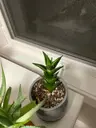
Rosa 'Boule de Neige'
Taxonomy

Rosa 'Boule de Neige'
Rosa
Rosaceae
Rosales

How to care for Rosa 'Boule de Neige'
How often to water your Rosa 'Boule de Neige'

every 9
Rosa 'Boule de Neige' needs 0.5 cups of water every 9 when it doesn’t get direct sunlight and is potted in a 5" pot.
Use our water calculator to personalize watering recommendations to your environment or download Greg for more advanced recommendations for all of your plants.
Water 0.5 cups every
9
Finding light for Rosa 'Boule de Neige' in your home

a window
Rosa 'Boule de Neige' love being close to bright, sunny windows 😎.
Place it less than 1ft from a south-facing window to maximize the potential for growth.
Rosa 'Boule de Neige' does not tolerate low-light 🚫.
Select your region to see how the current weather in your area affects the placement of Rosa 'Boule de Neige' in your home 🏡.
How to fertilize Rosa 'Boule de Neige'

Most potting soils come with ample nutrients which plants use to produce new growth.
By the time your plant has depleted the nutrients in its soil it’s likely grown enough to need a larger pot anyway.
To replenish this plant's nutrients, repot your Rosa 'Boule de Neige' after it doubles in size or once a year—whichever comes first.
-
My rose is in a pot still should it be in sunny shady area or full sun? I live in south texas & it doesn’t seem to matter where i put it, its leaves get yellow & crispy. It has good drainage and i water when the top layer is dry
-
Rose newbie overthinking 👍 #ChinaRose Hello! I got this plant as a gift from an important person and I'm afraid I'll kill it with my little experience. I do know roses are hard and I hope that if any person who knows better will tell me if I'm doing anything wrong. 🩷 It does have drainage holes, I watered it yesterday after I guessed the soil was getting dry enough. But I might have done that wrong.. the bottom leaves are getting a bit yellow.. dammit. Something tells me that the browning edges are not good, and that bud the buds that just seem to die.. (Didn't give it any fertiliser yet - total newbie with that, kinda embarrassed right now) It sits at about 25 centimeters from the window, was thinking of putting it on the balcony, but it's scorching hot and bright out there, so I guessed this was the best place. (Facing south) I do have brighter zones in the house for indirect sunlight if that's better.
-
Help with Roses I need help with roses. I planted a rose from the root and it started to do well but now all the leaves are gone. I’ve watered everyday because it’s Las Vegas and over 100 degrees everyday. Am I watering too much? I read that no leaves means too much water. How can it recover? Any help is much appreciated. I’m new here so hello everyone from sunny Las Vegas, NV.
-
Why are my flowers not blossoming and the leaves are becoming red? This is my #ChinaRose I have been growing this for the past month and initially it blossomed a lot of roses but, now it has stopped even the buds are not coming and to make things worse (or better, idk yet) the leaves are turning red. I am watering everyday, is there somewhere i am lacking? Can yall’ please help me. Thank you!
-
Does a Rosa Love Song plant thrive better outdoors or indoors?
-
is my Alpine rose dying she's grown little black dots on most of her leaves (some more than others) and i don't know if she's sick. many of the leaves were wilting so i pruned them this morning. is there anything I'm doing wrong?
-
Hi! I'm a very new plant parent, this is my first time and I'd first like to ask some help identifying if this is a type of #MiniatureRose. I got him March 22, he looked like the orange photo when I got it. After the blooms were spent I deadheaded and added a bit of slow release fertilizer, they are placed out in the yard and few days later there were a lot of new shoots coming out! My problem was a lot of blooms are coming out small and are browning before they open, like in the third picture. I may have made a mistake of overwatering almost everyday for a week but I'm not entirely sure if it was the only problem. A couple of yellow leaves start forming but I removed them already, and I would like to ask for help on what to do. Thank you so much! #HappyPlants #PlantsMakePeopleHappy #PlantAddict #PlantTherapy #NewPlantMom #NewPlants #Newbie #help #helpneeded #planthelp
-
My plant has yellow leaves, why? #ChinaRose
-
Hi! My china rose has yellowed leaves closer to the base. It was away from direct sunlight over the winter, now it's moved back to an east facing window. What does it need? #ChinaRose
-
My china rose seems to have caught something. I’m new with roses, can anyone direct me? What does she need? Fertilizer? Vitamins? Help me please #ChinaRose


Care Summary for Rosa 'Boule de Neige'
Rosa 'Boule de Neige'
 Greg recommends:
 Water
Water
0.5 cups every 9 days
 Placement
< 1ft from a window
 Nutrients
Repot after 2x growth
Based on the 4” pot your plant is in, and that it doesn’t get direct sunlight.
 Trending in your area










 Similar to Rosa 'Boule de Neige'
✨ Discover rare plants

Large Leaf Elephant B…

Kilimanjaro Plant

Cereus peruvianus 'Pa…

Crassula 'Purple Drag…

Lithops
Hoya crassipetiolata

Begonia hydrocotylifo…

Lavandula Pedunculata

Anastasia Weeping Fig

Treasure Flower

Hoya kalimantan

Philodendron eximium

Croton Nervia
Philodendron 'Gabby'

Stomatium acutifolium
Rosularia platyphylla