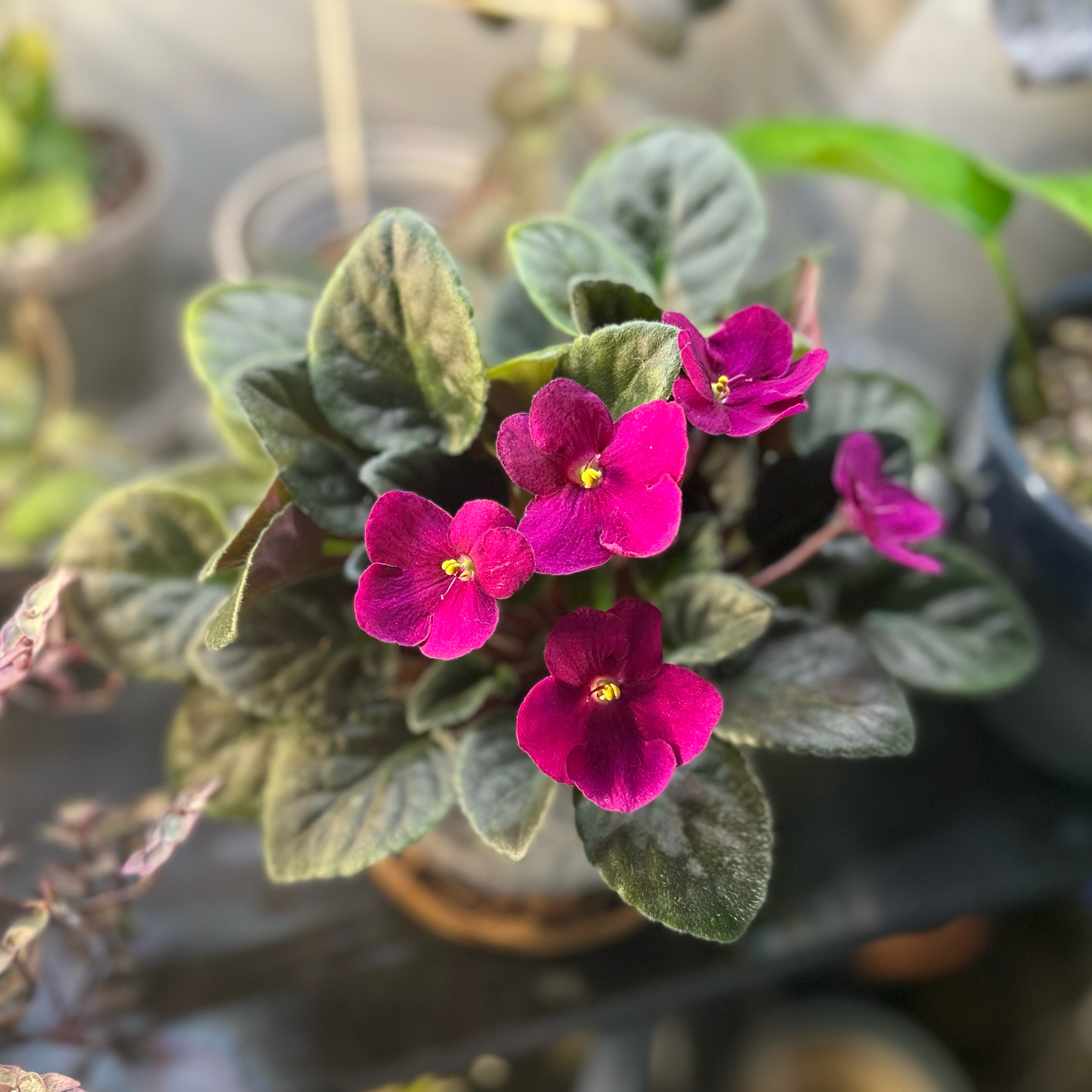
When to Repot an African Violet
African Violet wants a fresh pot every one to two years, mostly to refresh the soil rather than to size up. Move into the same pot or one a single inch wider in spring, and use a light, airy African violet mix or a custom blend of peat moss and perlite.

How to Know It's Time to Repot
African Violet prefers a snug pot more than almost any other houseplant, so repotting is usually about refreshing the soil rather than upsizing. The plant itself gives a few clear signals when it's time, and you don't need to wait for all of them.
-
1The lowest stem section, called the neck, has grown tall and bare above the soil line.
-
2The plant has roughly doubled in size since the last time it was potted up.
-
3Soil compacts noticeably and water sits on the surface before soaking in.
-
4Flowering has weakened or stopped, even with steady bright indirect light and regular feeding.
Most African Violets need a new pot every one to two years to refresh the soil, and acting on even one or two of these signs is enough. The same pot can usually be reused or sized up by no more than a single inch, since this plant flowers best when its roots are gently crowded.
The Best Time of Year to Repot
Spring through early summer is the sweet spot for repotting an African Violet. Longer days mean stronger indoor light, which helps the plant push out fresh roots and recover from the disturbance quickly. Avoid the depths of winter, when blooming pauses and recovery drags on for weeks in low light. The exact window shifts a little depending on your latitude, so use the map below to find yours.

How to Choose a Pot and Soil Mix
Pot Size
Pick a shallow pot rather than a deep one, even when you do size up. African Violet has a small surface-growing root system, and a deep pot holds far too much wet soil below the roots where it just sits and risks rot. The right diameter is about one-third the diameter of the leaf spread, which usually means a 4-inch pot for most home plants and a 5 to 6-inch pot for a mature African Violet. Width matters far more than depth here.
Pot Material
Plastic pots and self-watering African violet pots both work beautifully for this plant. Plastic holds moisture longer than terracotta, which suits a plant that prefers steadily moist soil between drinks. Self-watering pots designed specifically for African Violets are even better, since they wick water up from below while keeping the fuzzy leaves and crown completely dry. Skip terracotta, since it dries far too fast for this plant's steady-moisture needs.
Soil Mix
A light, airy mix sold as African violet mix is the easiest option, or you can blend your own from equal parts peat moss, perlite, and vermiculite. This recipe gives the surface-growing roots the airflow they need alongside the steady moisture the plant prefers, all without compacting over time. Skip standard potting soil and dense garden soil, since both pack down within months and suffocate the fine roots.
How to Repot an African Violet, Step by Step
-
1Water lightly the day before. Give the plant a small drink the day before you plan to repot so the soil is just barely moist, not soaked. Slightly damp soil releases the root ball cleanly, while saturated soil makes the fragile leaves bruise the moment you start handling the plant.
-
2Lift carefully. Squeeze the sides of the pot to loosen the root ball, then slide the plant out by gently grasping the base of the leaves where they meet the soil. Never pull on a single leaf, since African Violet leaves snap cleanly at the petiole and you'll lose a healthy one in the process.
-
3Refresh the neck. If the bare lower stem, called the neck, has grown tall over the years, scrape a thin layer off with a clean knife or your fingernail to expose green tissue underneath. That freshly exposed section will root into the new soil over the next few weeks, which keeps the plant compact and refreshes the root system at the same time.
-
4Set lower in the new pot. Add an inch of fresh mix at the bottom of the new pot and settle the plant in so the lowest leaves sit just above the new soil line, burying any exposed neck. Sinking it slightly deeper than before is the point here, since the scraped neck needs soil contact to push out fresh roots.
-
5Fill, firm, water from below. Add mix around the roots, press gently to remove air pockets, and water by sitting the pot in a tray of room-temperature water for 20 to 30 minutes. Bottom-watering keeps the fuzzy leaves bone dry and prevents the crown rot that splashes from above can cause. Return the plant to its usual bright, indirect spot to settle in.
What to Expect After Repotting
Week 1
Some leaf droop is completely normal as the roots resettle into their new home. Keep the plant in bright indirect light, water from below only when the top of the soil feels dry, and skip fertilizer for now. Make sure no water sits on the fuzzy leaves, since droplets cause brown spots and can trigger crown rot.
Weeks 2 to 4
New leaves should start unfurling from the center of the crown, often a brighter green than the older outer ones. That's your signal the roots have taken hold. Resume a balanced liquid fertilizer made for African Violets at half strength every two weeks, and flowers usually return within four to six weeks as long as light is steady and bright.
Got More Questions?
About This Article
