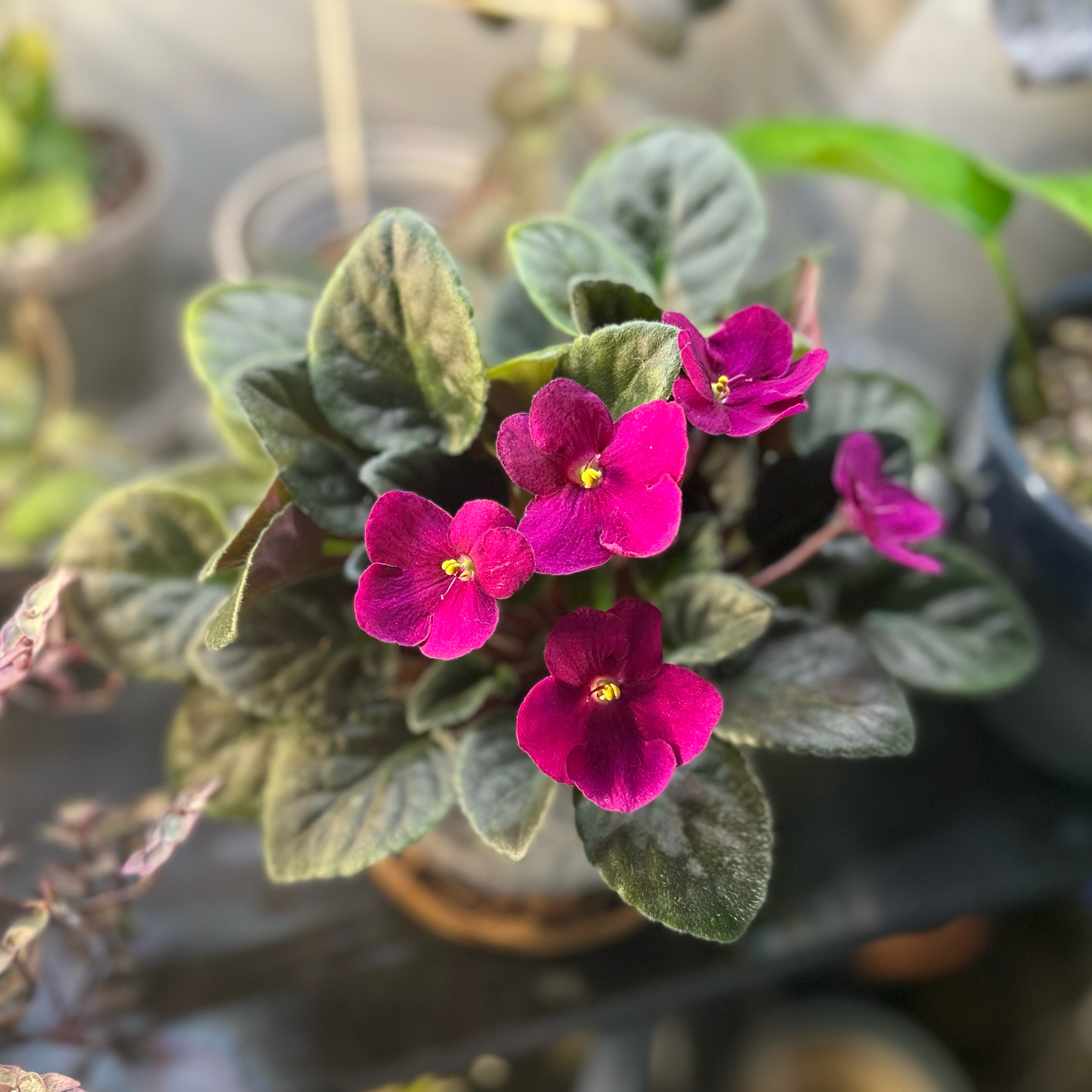
African Violet

How to Prune African Violet

Streptocarpus ionathus
Reviewed by Kiersten Rankel M.S.
Quick Answer
Remove spent flowers and their stems at the base as soon as they fade, and pull away any yellow or old outer leaves to keep the rosette tidy. This light maintenance is all the pruning an African Violet needs and can be done any time of year. Avoid removing healthy green leaves, which would reduce the plant's ability to flower.

When is the best time to prune?

As a tropical houseplant (zones 11โ€“12) grown indoors year-round, African Violet can be groomed at any time without concern for seasons or outdoor temperature.

US pruning regions map
Pacific
Year-round indoors
Mountain
Year-round indoors
Midwest
Year-round indoors
Northeast
Year-round indoors
Southeast
Year-round indoors
Stay on top of plant care
Get seasonal reminders for watering and fertilizing โ€” personalized for your plants.
Try Greg Free

Why Should I Prune My African Violet?

African Violets bloom almost continuously indoors with proper care, and keeping them tidy is mostly a matter of regular small removals rather than any seasonal pruning event.

The most important step is removing spent blooms promptly. Once a flower fades, pinch off the entire flower and its stem at the base where it meets the leaf cluster. Leaving spent flowers on the plant can lead to a gray mold called botrytis, which spreads quickly in humid conditions.

Old leaves on the outer ring of the rosette will eventually yellow and die back. Remove these as they appear, again at the base. This keeps the rosette looking round and full and allows light to reach the center of the plant.

If the plant develops multiple crowns, you can separate them to give each one more room and more energy for blooming. A single-crown rosette tends to bloom more reliably than a crowded multi-crown plant. Use a clean knife to divide them and repot each section in its own small pot.

Know Before You Cut

Difficulty Easy
Max removal Spent blooms and old outer leaves only; no hard cutback needed
Growth pattern Rosette-forming
Tools Fingers or small scissors

What Should I Remove?

Pinch off spent flowers and their stems at the base
Remove yellow or old outer leaves as they appear
Separate multiple crowns to improve flowering
Wipe tools clean before touching plants to avoid spreading disease
Don't remove healthy green leaves โ€” they support flowering
Don't leave spent flowers to sit and rot on the plant
Don't wet the leaves when grooming โ€” water on leaves causes spotting

How Do I Prune Step by Step?

1
Remove spent flowers promptly
As each flower fades, pinch or cut the entire flower stem at its base close to the leaf rosette. Leaving dead flowers on the plant invites mold, especially in humid indoor conditions.
2
Pull away old outer leaves
Gently pull or snip any outer leaves that are yellowing, shriveled, or clearly old. Remove them at the base of the leaf stalk. The fresh inner leaves form the active rosette and should be left alone.
3
Check for multiple crowns
Look at the base of the plant for extra crowns, which look like separate rosettes growing from the same pot. African Violets bloom best with a single crown per pot.
4
Divide multiple crowns if present
If multiple crowns are crowding each other, unpot the plant and use a clean knife to separate them. Each crown should have some roots attached. Pot each one in a small, snug container.

Got More Questions?

How often should I deadhead my African Violet?
Check the plant every week or two and remove any spent blooms. In a healthy plant that is blooming well, this might mean removing a flower or two each time you check. It takes only a minute and makes a big difference in keeping the plant clean and disease-free.
My African Violet has a bare, leggy stem at the base. What should I do?
A long, exposed stem is common as the plant ages from leaf removal and growth. You can repot the plant deeper so the bare stem is buried in soil, which encourages new root growth along the stem. Alternatively, take a stem cutting from a healthy outer leaf to propagate a fresh plant.
Can I cut back the leaves to refresh the plant?
Only remove leaves that are old, yellow, or damaged. Cutting back healthy leaves reduces the rosette and can stop flowering temporarily. African Violets recover slowly from significant leaf loss compared to many other houseplants.
What if I accidentally removed a healthy leaf?
One missing leaf will not hurt the plant significantly. If you removed a healthy leaf with its stem intact, you can actually propagate it by placing the stem in moist potting mix. The plant will fill in the gap with new leaves over time.
Stay on top of plant care
Get seasonal reminders for watering and fertilizing โ€” personalized for your plants.
Try Greg Free

About This Article

Kiersten Rankel M.S.
Botanical Data Lead at Greg ยท Plant Scientist
About the Author
Kiersten Rankel holds an M.S. in Ecology & Evolutionary Biology from Tulane University. A certified Louisiana Master Naturalist, she has over a decade of experience in science communication, with research spanning corals, cypress trees, marsh grasses, and more. At Greg, she curates species data and verifies care recommendations against botanical research.
See Kiersten Rankel's full background on LinkedIn.
Editorial Process
Pruning guidance verified against Streptocarpus ionathus growth data from Greg's botanical database, cross-referenced with USDA hardiness zone data and published horticultural research.
2,518+ Greg users growing this plant
USDA hardiness zones 11aโ€“12b
Grow plants with confidence