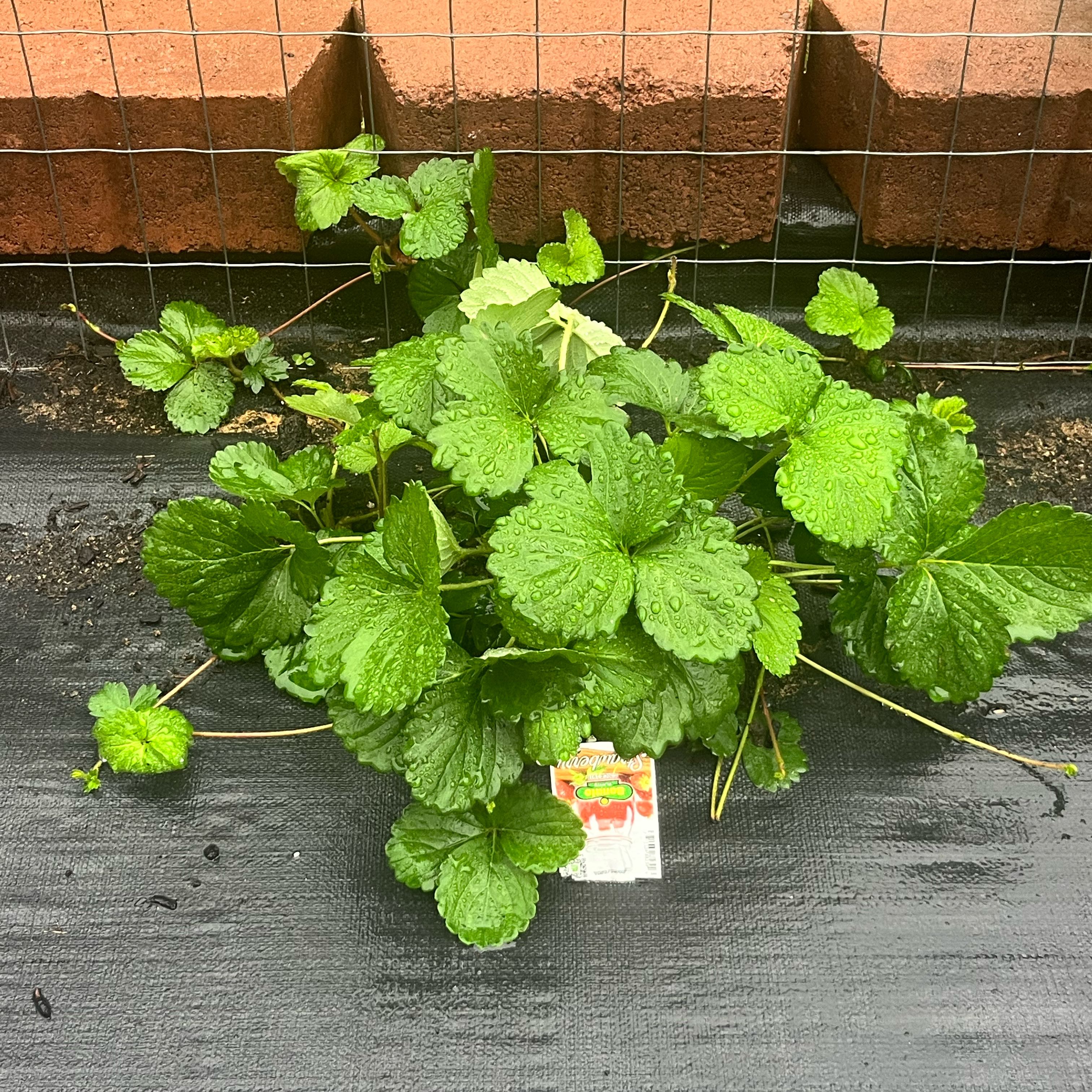
Strawberry

What's Wrong with My Strawberry?

Fragaria x ananassa
Reviewed by Kiersten Rankel M.S.
Quick Answer
1.
Most problems trace back to moisture.
Wet fruit and foliage invite gray mold and leaf spot. Wet crowns invite crown rot. Check where the water is landing.
2.
Check for pests if foliage or fruit looks damaged.
Slugs eat fruit from the soil contact point up. Spider mites stipple leaves in hot, dry spells. Both move fast once they establish.
3.
New runners and developing fruit signal health.
If the plant is sending out runners and flowers are setting fruit, it is still fighting. Damaged older leaves do not tell the whole story.
Stay on top of plant care
Get seasonal reminders for watering and fertilizing โ€” personalized for your plants.
Try Greg Free

Common Strawberry Problems

Gray mold on fruit

Botrytis fruit rot

Botrytis cinerea is the most common disease of strawberries and targets the fruit directly. Strawberries ripen close to the ground where air barely moves and humidity pools, which is exactly where this fungus thrives. Infected fruit starts as a small soft brown patch and collapses into a mass of gray fluffy spores within days.

1. Remove and dispose of all infected or overripe fruit immediately, since each fuzzy mass releases millions of spores
2. Lay straw mulch under the plants to lift ripening fruit off moist soil
3. Improve airflow by thinning crowded runners and spacing plants at least 12 inches apart
4. Apply a copper or sulfur fungicide if the disease is spreading to healthy fruit

Spots on leaves

Common leaf spot

The most frequent cause of leaf spotting on strawberries is Mycosphaerella fragariae, which produces small round spots with a dark purple border and a pale tan center. Strawberries hold their trifoliate leaves close to the ground where rain splash carries spores upward from the soil, and the disease cycles quickly in wet springs.

1. Remove badly spotted leaves and discard them, not compost them
2. Water at the soil level to keep foliage dry
3. Apply a copper fungicide spray if spotting is spreading to new leaves
4. Rotate planting beds every 3 years since the fungus overwinters in soil and old leaf debris
Angular leaf spot

Angular leaf spot is a bacterial disease that produces water-soaked, angular spots on the undersides of leaves that dry into pale papery patches. Unlike fungal leaf spot, the lesions have straight edges defined by leaf veins. It spreads in overhead irrigation or rain and is most damaging on young transplants.

1. Stop overhead watering and switch to drip or ground-level irrigation
2. Remove infected leaves and improve airflow between plants
3. Copper bactericide sprays can slow spread but will not cure existing lesions

Yellow leaves

Nitrogen deficiency

Strawberries are heavy feeders during fruiting and exhaust available nitrogen quickly, especially in raised beds or sandy soil that drains fast. The plant pulls nitrogen from the oldest leaves first, so yellowing starts in the outer, more mature leaves while the center of the crown stays green.

1. Side-dress with a balanced berry fertilizer or diluted fish emulsion
2. Water it in well so nutrients reach the shallow fibrous roots
3. Feed every 3 to 4 weeks from late spring through fruiting, then reduce after the harvest window closes
Overwatering

Strawberry roots are shallow and fine. Waterlogged soil suffocates them fast, especially in heavy clay or containers without drainage. When the roots fail, the plant cannot pull up nutrients even in wet soil, and the older leaves yellow and collapse across the whole plant rather than progressing neatly from the outermost leaves inward.

1. Let the top inch of soil dry between waterings
2. Check that containers have drainage holes and that beds do not pool after rain
3. If soil has stayed wet for more than a week, pull back one plant and look at the roots. White and firm is fine. Brown and mushy means root rot has started

Wilting plants

Crown rot

The crown is the compressed stem at the base of every strawberry plant where all the leaves emerge. It sits just at the soil surface and rots when buried too deep, held too wet, or hit by Phytophthora root rot. A rotting crown turns brown and soft at the center, and the whole plant wilts suddenly even if the soil is moist.

1. Pull the plant and inspect the crown. If the center is brown and soft, the plant cannot be saved
2. Remove affected plants and as much surrounding soil as possible to limit spread
3. Replant in a new location with fresh soil. Do not replant strawberries in the same spot for at least 3 years
4. Ensure crown tops sit at soil level, not buried, when planting replacements
Verticillium wilt

Verticillium is a soil-borne fungus that infects strawberry roots and plugs the water-conducting tissue inside the plant. The outer leaves collapse and brown first while the inner crown leaves may stay green briefly. Cutting across the crown reveals dark discoloration inside. The fungus persists in soil for years and is a common reason why replanting strawberries in the same bed fails.

1. Remove affected plants entirely, roots and all
2. Do not replant strawberries or other susceptible crops in that bed for at least 4 years
3. Choose certified disease-free transplants from a nursery rather than divisions from an infected bed

Misshapen fruit

Poor pollination

Strawberry fruits are actually clusters of many tiny individual fruits fused around a central receptacle, each requiring pollination by a separate pollen grain. When pollination is incomplete, sections of the fruit fail to develop and the berry comes out knobby, button-shaped, or lopsided. Cool, wet, or windy weather during bloom reduces bee activity, and few pollinators will work strawberry flowers in those conditions.

1. Gently brush an open flower with a soft paintbrush to hand-pollinate if weather has been cold or rainy during bloom
2. Plant flowering companion herbs nearby to attract pollinators during the bloom window
3. Remove row cover during the day once flowers open so pollinators can access them
Heat stress or water shortage during fruiting

Strawberry fruit development happens fast, usually within 4 to 6 weeks of pollination, and the plant needs steady moisture the whole time. Water stress during that window shrinks the developing berry because there is not enough turgor pressure to fill out the tissue. Heat above 85 degrees Fahrenheit during berry sizing produces the same result and fruit comes out small and soft, ripening too quickly.

1. Keep soil consistently moist during active fruiting, especially when daytime temperatures climb
2. Mulch heavily around plants to buffer soil temperature and retain moisture
3. Shade containers with 30% shade cloth on afternoons above 85 degrees Fahrenheit

Pests

Slugs

Slugs are among the most common strawberry pests and do their damage overnight, eating into the soft side or base of ripening fruit. Strawberries ripen at ground level where slugs hide under leaves and in mulch by day and emerge after dark. Damage looks like scooped-out cavities in red fruit, often with a slime trail nearby.

1. Harvest ripe fruit daily so it does not sit on the ground and attract slugs overnight
2. Remove excess mulch from directly around the crowns to reduce daytime hiding spots
3. Set out iron phosphate bait granules around the plants in the evening
Spider mites

Spider mites explode on strawberries during hot, dry weather. They cluster on the undersides of the trifoliate leaves and produce fine webbing between leaflets. Leaves take on a bronzed, dusty, or stippled appearance. Drought-stressed plants are hit hardest because low humidity and dry foliage are exactly the conditions mites prefer.

1. Hose the undersides of leaves hard with water to knock mites off
2. Spray insecticidal soap or neem oil, coating leaf undersides thoroughly
3. Repeat every 5 to 7 days until stippling stops spreading
4. Keep plants well watered since drought stress makes outbreaks worse
Aphids

Aphids cluster on new growth and on the undersides of young leaves, sucking sap and causing leaves to curl, pucker, or turn yellow at the growing tips. Strawberries push tender new leaves and runners all season, giving aphids a continuous food source. Dense colonies also leave sticky honeydew that can coat developing fruit.

1. Blast new growth and leaf undersides with a strong stream of water from the hose
2. Follow with insecticidal soap if colonies return within a few days
3. Repeat every 3 to 4 days until new growth looks clean

Preventing Strawberry Problems

A few consistent habits prevent most of what goes wrong with strawberries.
Weekly Check
1
Water at the base, not on the leaves or fruit.
Keeping foliage and fruit dry is the single biggest defense against gray mold and leaf spot. Use drip irrigation or a soaker hose and water in the morning.
2
Lay straw mulch under ripening fruit.
Straw lifts fruit off moist soil, blocking Botrytis infection from the bottom up and creating a drier surface that slugs avoid.
3
Plant with crown tops at soil level.
Burying the crown invites crown rot. Setting it too high exposes it to drying out. The crown should sit right at the surface at planting.
4
Remove old leaves, spent runners, and overripe fruit promptly.
Dead foliage and overripe berries are the primary source of Botrytis spores. Clearing them reduces the fungal pressure on the whole planting.
5
Rotate to a new bed every 3 to 4 years.
Verticillium wilt and several other soil-borne pathogens build up in beds that grow strawberries repeatedly. Moving to fresh soil resets the disease load.
Stay on top of plant care
Get seasonal reminders for watering and fertilizing โ€” personalized for your plants.
Try Greg Free

About This Article

Kiersten Rankel M.S.
Botanical Data Lead at Greg ยท Plant Scientist
About the Author
Kiersten Rankel holds an M.S. in Ecology & Evolutionary Biology from Tulane University. A certified Louisiana Master Naturalist, she has over a decade of experience in science communication, with research spanning corals, cypress trees, marsh grasses, and more. At Greg, she curates species data and verifies care recommendations against botanical research.
See Kiersten Rankel's full background on LinkedIn.
Editorial Process
Every problem and fix in this article was verified against Greg's botanical database, cross-referenced with USDA hardiness zone data and published horticultural research from the Missouri Botanical Garden, university extension programs, and species-specific literature. The Fragaria x ananassa care profile reflects documented species behavior combined with years of community grower feedback in Greg.
2,813+ Greg users growing this plant
USDA hardiness zones 3aโ€“10b