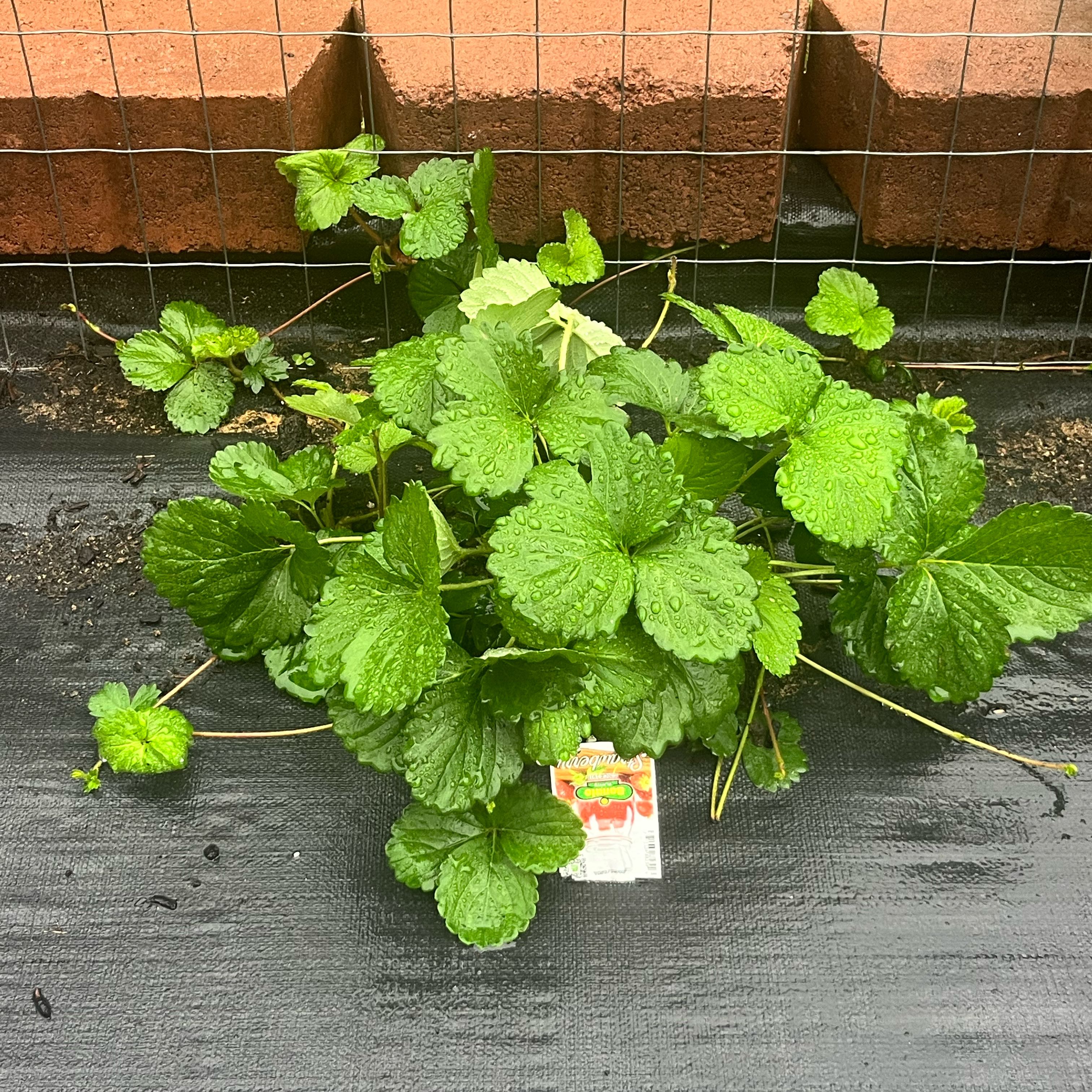
How to Water Strawberry
Fragaria x ananassa
Reviewed by Kiersten Rankel M.S.
Quick Answer
Water your Strawberries every 2–3 days through the growing and fruiting season, when the top inch of soil is dry. Container plants in summer often need daily attention.
Strawberries are shallow-rooted and dry out fast in pots and raised beds. Inconsistent moisture is the leading cause of small bland berries.

Stay on top of plant care
Get seasonal reminders for watering and fertilizing — personalized for your plants.
How Often and How Much to Water
Adjust the sliders below for your pot size, light, and setting. The numbers assume rich well-draining soil with compost and a setup with drainage.
Setting
Every
9days
Use
1cup
Your Watering Rhythm Across the Year
Soil dries faster in the growing season, which varies by region. Slow down watering in the off-season to avoid overwatering.
Pacific
Mountain
Midwest
Northeast
Southeast
JFMAMJJASOND
Growing season
Growing season
9days
Resting season
3–4weeks
How to Water Your Strawberry
Water at the base, never on the leaves or fruit. Wet leaves invite fungus problems and wet ripe fruit goes mushy fast.
1
Pour at the soil line around the crown, not over the leaves or developing berries.
2
Soak slowly until the top 4 to 6 inches of soil are damp. A long slow drink beats a fast splash.
3
Water in the morning so any splash on the leaves dries before night.
4
For containers, soak until water runs out the drainage holes and empty the saucer after 15 minutes.
Should You Water Your Strawberry Today?
Always check before you pour. Strawberries punish both extremes. Dry plants drop flowers and shrink berries, while soggy crowns rot and the fruit turns gray with mold.
Hold off
Leaves stand firm and outward
Crowns sit dry and clean
Soil 1 inch down feels damp
Mulch surface still cool to the touch
Container or root zone feels heavy
Ready for water
Leaves wilting in the afternoon
New flowers drop before setting fruit
Top inch of soil dry and crumbly
Mulch dry and warm on top
Container or root zone feels light
If Something Looks Off
Underwater and overwater both make a strawberry plant look unhappy. The difference is the soil at the crown and how the fruit holds up.
Underwatered
Soil
Bone-dry and pulled away from the pot or bed edge
Leaves
Whole plant wilting in the afternoon and not perking back up overnight
Fruit
Berries small with dry pale spots
Pace
Slow decline over days that bounces back after a deep soak
Next steps
Soak slowly until the top 4 inches of soil are evenly damp
Mulch with 1 to 2 inches of straw or compost to hold moisture in for next time
Resume a steady rhythm of soaking when the top inch dries
Existing damaged berries won't recover but new flowers will set clean fruit once moisture is steady
Overwatered
Soil
Stays dark and waterlogged for days with a sour smell
Crown
Soft or browning at the soil line
Leaves
Yellow from the base up with new growth limp
Fruit
Berries turn gray and fuzzy with mold
Next steps
Stop watering immediately and improve drainage if the spot puddles
For container plants, repot into fresh well-draining mix and a pot with drainage
Remove any mushy berries and yellowed leaves to slow the spread of mold
Wait until the top 2 inches of soil are dry before the first watering
Got More Questions?
Why are my berries small or bland?
Inconsistent watering is the leading cause. Strawberries need steady moisture from flowering through fruit ripening. Long dry stretches followed by heavy soaks lead to small dry berries.
Mulch heavily and aim to keep the top 4 inches damp without ever soaking the crown.
Why are some berries turning gray and mushy?
Gray fuzzy mold on berries is botrytis, a fungus that thrives on wet fruit and damp leaves. It spreads fast in humid conditions or when plants are crowded.
Water at the base, not on the leaves. Pick ripe berries promptly. Remove any moldy fruit and surrounding mulch immediately to slow the spread.
Should I water in winter?
In most climates, normal winter rainfall is enough for in-ground beds. The plants are dormant or barely growing.
Container plants need an occasional drink during long dry winter stretches but only when the soil is fully dry. Wet roots in cold soil rot fast.
Can I use a sprinkler?
Skip overhead sprinklers if you can. Wet leaves and fruit invite fungus problems including the gray mold that ruins berries.
Soaker hoses, drip lines, or hand-watering at the soil line are far better. If sprinklers are your only option, run them in the early morning so leaves dry by midday.
How long can I leave container strawberries alone for vacation?
Three to four days at most in summer. Container strawberries dry out fast in heat and a hot week can fry an unattended plant.
For longer trips, move the pots into shade, soak deeply, and ask someone to soak them again at the four-day mark.
Are self-watering pots OK?
Yes, this is one of the better self-watering candidates. Strawberries like consistent moisture and the reservoir keeps the soil from swinging dry.
Use rich well-draining mix and don't let the reservoir run dry for weeks at a time. Refill before it empties fully.
Stay on top of plant care
Get seasonal reminders for watering and fertilizing — personalized for your plants.
About This Article

Kiersten Rankel M.S.
Botanical Data Lead at Greg · Plant Scientist
Editorial Process
Watering guidance verified against Fragaria x ananassa growth data from Greg's botanical database, cross-referenced with USDA hardiness zone data and published horticultural research.
2,958+ Greg users growing this plant
USDA hardiness zones 3a–10b