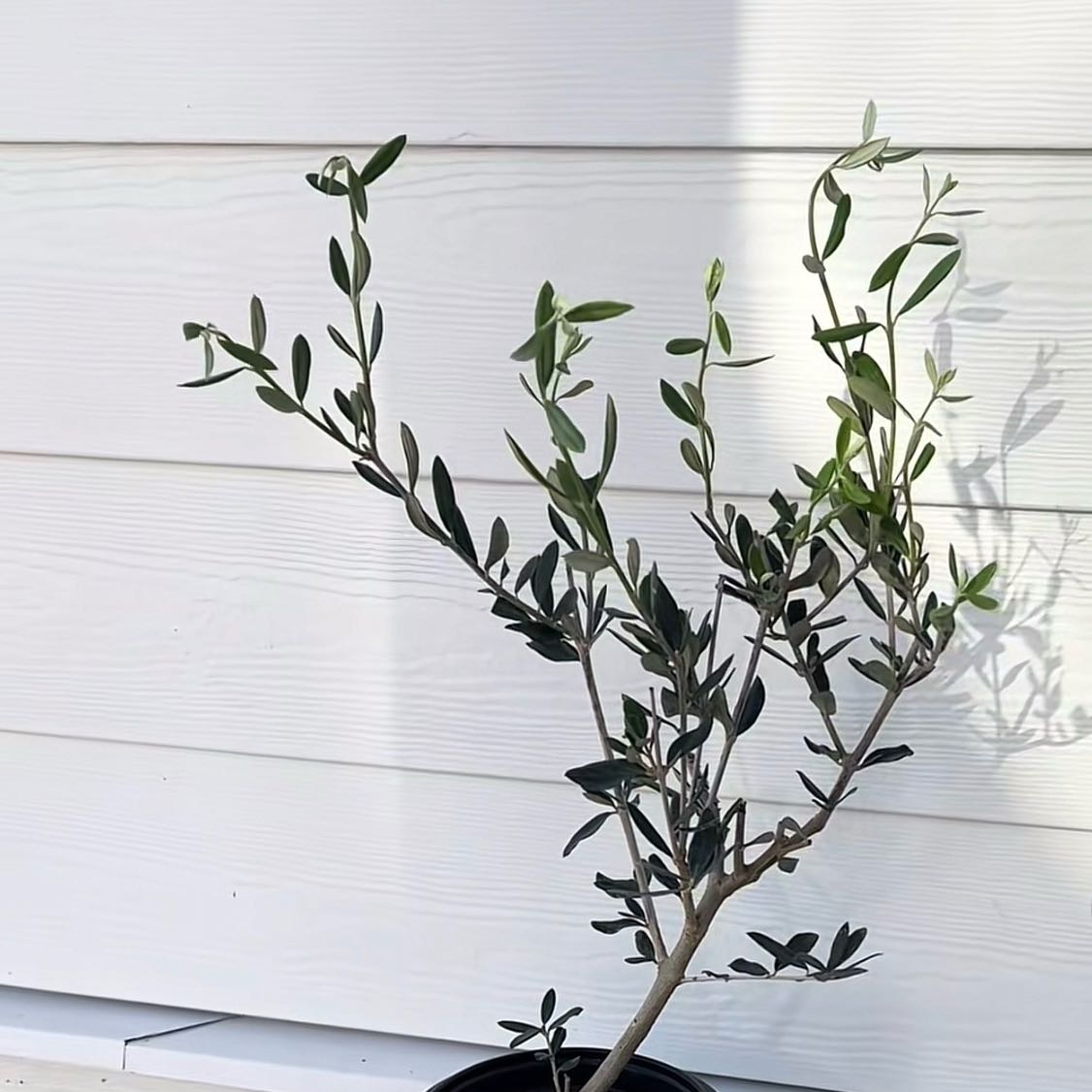
Olive Tree

What's Wrong with My Olive Tree?

Olea europaea
Reviewed by Kiersten Rankel M.S.
Quick Answer
1.
Most problems trace back to overwatering.
Olive trees are built for drought. Wet feet are the number one killer, especially in containers indoors. Check the soil two inches down before watering again.
2.
Check light if watering looks right.
No fruit, leggy growth, and pest pressure all spike when an olive is not getting full sun. This tree evolved in open Mediterranean sun and needs at least six hours of direct light to stay healthy.
3.
New silver-green leaves at branch tips mean recovery.
A flush of fresh silver-green growth emerging at branch tips, or small flower bud clusters on a mature tree in spring, signals the tree still has healthy vascular tissue and is actively fighting.
Stay on top of plant care
Get seasonal reminders for watering and fertilizing — personalized for your plants.
Try Greg Free

Common Olive Tree Problems

Leaf drop

Overwatering

Olive trees evolved in rocky Mediterranean hillsides with fast-draining soil and long dry spells between rains. Their roots are not built to sit in wet soil and begin to rot quickly when drainage is poor. Once the roots fail, the tree sheds leaves to reduce its water demand, often rapidly and without much prior yellowing.

1. Press your finger two inches into the soil. If it still feels damp, do not water
2. Check that the pot has drainage holes and nothing is blocking them
3. If the soil stays wet for more than a week, repot into a faster-draining gritty or sandy mix
4. Once the soil dries, resume watering only when the top two inches are dry
Cold shock or a sudden move

Olives are evergreen but they react strongly to abrupt environmental change. Moving the tree from outdoors to indoors in autumn, exposing it to temperatures below 20°F, or placing it near a cold drafty window can trigger sudden leaf drop within days. The tree is not dying. It is shedding leaves as a stress response to the change.

1. Move the tree to a stable spot with temperatures above 25°F and away from cold drafts or heating vents
2. Give the tree four to six weeks to stabilize before expecting new growth
3. Avoid moving it again until recovery is visible

Yellow leaves

Overwatering

Soggy soil starves olive roots of oxygen and triggers rot. As roots fail, the tree pulls nutrients back from its oldest leaves first. The yellowing tends to be uniform across older leaves near the interior of the canopy, distinct from the patchy pattern of a deficiency.

1. Let the soil dry out fully before watering again
2. Check drainage and switch to a gritty, fast-draining mix if the soil stays wet
3. Once the tree is back in balance, yellow leaves will not green up but new growth should come in healthy
Iron deficiency

Olive trees are shallow feeders that absorb iron efficiently in well-drained acidic soil, but lock out of it when the soil pH rises above 7 or when roots are waterlogged. The symptom is yellowing between the veins while the veins themselves stay green, and it shows up on the newest growth first. Container olives fed heavily with alkaline tap water are prone to this.

1. Check whether the yellowing is between the veins with green veins remaining. If so, iron lockout is likely
2. Apply a chelated iron supplement or a fertilizer formulated for acid-loving plants
3. If watering with hard tap water, switch to filtered water or add a small amount of acidifying fertilizer to bring the soil pH toward 6.0 to 6.5
4. New leaves should emerge with better color within four to six weeks

No fruit

Plant too young or no cross-pollination

Olive trees take three to five years from planting to reach fruiting maturity, even in ideal conditions. Most single-variety trees are self-fertile but produce far more fruit with a second olive variety nearby to cross-pollinate. Indoors there is no wind or bee traffic to carry pollen between flowers, so blossoms drop without setting fruit even on a mature tree.

1. Hand-pollinate open flowers by gently shaking the branches or swirling a dry paintbrush inside each cluster during the bloom period
2. Plant a second olive variety within 50 feet for outdoor trees
3. If the tree is under three years old, wait. Fruiting before year three or four is uncommon regardless of care
Insufficient cold winter chill

Olive trees require a winter dormancy period of several hundred hours below 45°F to trigger spring flowering. Indoor and container trees kept in warm rooms all year often skip this chill requirement and produce no flowers at all. Without flowers there is no fruit, regardless of tree age or sun exposure.

1. Move the tree to an unheated garage, shed, or cool porch where temperatures drop to 35 to 45°F for at least eight weeks in winter
2. Bring it back to full sun in early spring once nighttime temps stay above freezing
3. Expect flowers within four to eight weeks of returning to warmth

Stem swellings

Olive knot disease

Olive knot is a bacterial disease caused by Pseudomonas savastanoi. It enters through pruning wounds, frost cracks, or leaf scars and forms rough, dark, knobby swellings on stems and branches. Once inside, the bacteria travel short distances through the branch tissue and can spread to neighboring cuts on the same tool. The knots themselves look alarming but the main damage is that they girdle branches over time, cutting off water flow above the infection.

1. Prune out affected branches at least 4 inches below each gall into clean, healthy wood
2. Sterilize pruning tools with 70% isopropyl between every single cut
3. Remove all pruned material from the site and do not compost it
4. Apply copper-based bactericide to fresh cuts and around the pruning sites to slow spread

Scale insects

Scale insects

Olive scale and black scale are the most common pests on olive trees. They attach to branches and the undersides of the narrow silver-green leaves, feeding on sap and excreting sticky honeydew. Black sooty mold grows on the honeydew and coats the leaf surface, reducing the photosynthesis the tree depends on. Olive's dense, small-leaved canopy gives scale insects plenty of sheltered spots to build up undetected.

1. Scrub visible scale off stems and branch joints with a soft brush dipped in soapy water
2. Spray the entire tree including the undersides of all leaves with horticultural oil or insecticidal soap
3. Wipe sooty mold off leaves with a damp cloth after treating the scale
4. Repeat the spray every seven to ten days for a month to kill hatching eggs

Dark leaf spots

Olive peacock spot (fungal)

Peacock spot is a fungal disease that appears as dark circular blotches with a yellowish halo on the upper side of the leaves, often with a sooty or velvety center. It spreads in cool, wet weather when water stays on the foliage. Olives grown in regions with wet winters or overhead-irrigated in cool conditions are most affected. Severe infections cause widespread leaf drop.

1. Remove and dispose of all infected leaves from the tree and ground
2. Spray with a copper-based fungicide when symptoms first appear, coating both sides of the leaves
3. Water at the base of the tree, not overhead, to keep foliage dry
4. Repeat the copper spray every two to three weeks during cool, wet periods

Preventing Olive Tree Problems

A few consistent habits prevent most of what goes wrong with olive trees.
Weekly Check
1
Water only when the top two inches of soil are dry.
Olive trees are drought-tolerant and suffer far more from overwatering than from underwatering. Tying the rhythm to soil moisture rather than the calendar prevents root rot, which is the most common cause of leaf drop and decline.
2
Plant or pot in fast-draining gritty or sandy mix.
Good drainage is the single most important structural defense for olive trees. A mix with 50% or more coarse grit, perlite, or sand combined with a pot or planting site that drains freely prevents root rot before it starts.
3
Give the tree at least six hours of direct sun.
Full sun is what keeps the canopy healthy, supports flowering, and helps the tree resist pest pressure. An olive in too much shade will drop leaves, fail to fruit, and attract scale more readily.
4
Sterilize pruning tools before and between every cut.
Olive knot bacteria enter through fresh wounds. Wiping blades with 70% isopropyl between cuts takes seconds and prevents a disease that cannot be cured once it is established in the wood.
5
Move container trees to a cool spot for winter dormancy.
Eight or more weeks below 45°F triggers the flowering response. Without that chill, indoor and patio olives rarely fruit. An unheated garage or cool porch through winter is enough.
Stay on top of plant care
Get seasonal reminders for watering and fertilizing — personalized for your plants.
Try Greg Free

About This Article

Kiersten Rankel M.S.
Botanical Data Lead at Greg · Plant Scientist
About the Author
Kiersten Rankel holds an M.S. in Ecology & Evolutionary Biology from Tulane University. A certified Louisiana Master Naturalist, she has over a decade of experience in science communication, with research spanning corals, cypress trees, marsh grasses, and more. At Greg, she curates species data and verifies care recommendations against botanical research.
See Kiersten Rankel's full background on LinkedIn.
Editorial Process
Every problem and fix in this article was verified against Greg's botanical database, cross-referenced with USDA hardiness zone data and published horticultural research from the Missouri Botanical Garden, university extension programs, and species-specific literature. The Olea europaea care profile reflects documented species behavior combined with years of community grower feedback in Greg.
6,640+ Greg users growing this plant
USDA hardiness zones 8a–11b